TL;DR, if you're in a hurry
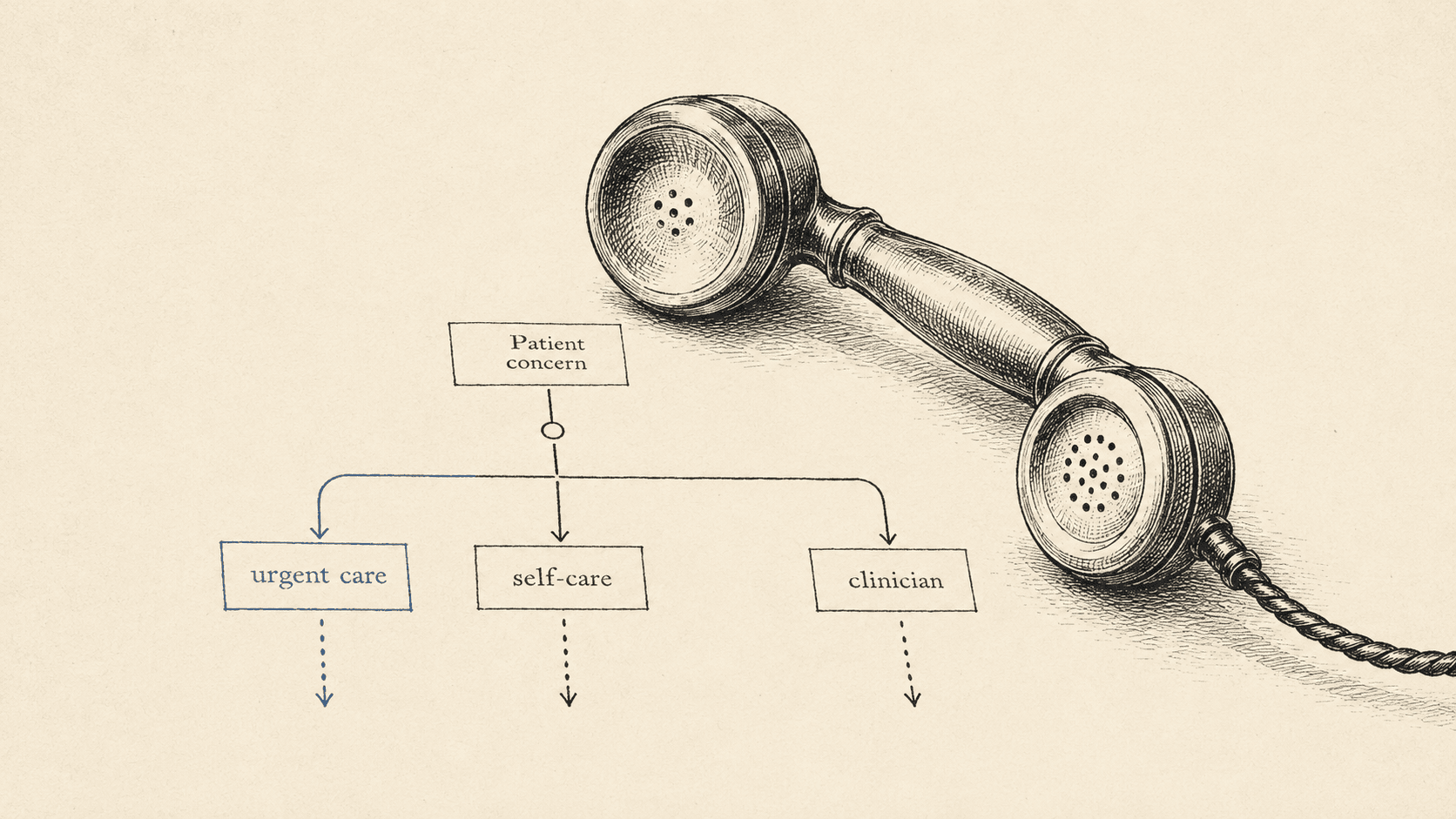
"AI patient triage" is not one market. It's three. Consumer symptom checkers compete on download counts and brand. Clinician-routed engines compete on Schmitt-Thompson protocol coverage and Epic integration. Voice agents compete on call-deflection rates and per-minute pricing. Mixing them in the same shortlist is how procurement teams burn six months.
After aggregating reviews from r/medicine, Doximity, KLAS commentary, peer-reviewed validation studies, and vendor documentation, eleven tools survived our editorial sign-off across the three sub-markets. The rest either lacked clinical validation, deprecated their public APIs, or chased markets adjacent enough to disqualify them.
Best clinically-validated triage engine: Infermedica. CE-MDR Class IIb medical device, peer-reviewed accuracy, the 1:10 cost-savings ratio that finance teams actually move on.
Best for white-label deployment: Ada Health. The most-downloaded consumer symptom checker globally, with a B2B API payers and providers are quietly embedding into their own apps.
Best for voice-agent nurse workflows: Hippocratic AI. Patient-facing voice agents with a safety-trained constitutional model, $500M+ in funding, and per-hour pricing that competes with human staffing on cost.
Best for call deflection: Hyro. Healthcare-vertical agentic AI claiming 85%+ deflection on routine call-center traffic, with Epic and Cerner integrations live.
We did not pilot these tools in our own clinical practice. We aggregated public reviews from physicians on Reddit, Doximity, and G2; cross-checked vendor documentation and CE/FDA filings; and signed off through a board-certified physician on our editorial team. Read our [full methodology](/methodology) for source weights.
How we evaluated 11 AI patient triage tools
We don't run head-to-head clinical pilots. The math doesn't work for a small editorial team, and your specialty mix, call-center staffing, and EHR set up matter more than ours would. Instead, we aggregate six sources and weight them. The weights below apply across every silo on Healthcare AI Hub.
Vendor documentation (30%): pricing pages, security attestations, CE/FDA filings, EHR integration disclosures, deflection-rate claims with methodology.
Public review aggregators (20%): G2, Capterra, TrustRadius. Aggregate scores get logged; review count under 20 is flagged.
Clinician community sentiment (20%): r/medicine, r/healthIT, r/nursing, Doximity threads. Sentiment-analyzed with source URLs preserved.
Peer-reviewed literature (15%): PubMed-indexed validation studies. Vital for triage, where false-reassurance is the failure mode that matters.
Vendor stability (10%): funding rounds, leadership stability, customer-logo turnover, payer-partnership disclosures.
Specialty society guidance (5%): AMA, ANA, AAFP, ACEP positions when published.
Pricing in this category is opaque. Most vendors quote enterprise-only. We log per-minute, per-call, and per-member-per-month references where they surface in customer announcements or analyst notes. If pricing has shifted since publication, email corrections@healthcareai.brainbyt.es and we publish within seven business days.
Why "AI patient triage" is actually three different markets
Before the tool reviews, the framing that will save you a wasted RFP cycle. Three buyer types live under this umbrella, with different ROI math.
Consumer symptom checkers (Ada, Buoy, Ubie, K Health). Patient-facing web/mobile apps. Buyer is a digital-health team or a payer; success metric is engagement and appropriate-care steering. Ada has crossed 13M+ downloads globally per Ada's own disclosures, with comparable validation accuracy to physicians in benchmark vignette studies (Gilbert et al., BMJ Open, 2020).
Clinician-routed triage engines (Infermedica, Clearstep, Mediktor). White-label APIs and Epic-embedded triage that route patients into the right care setting. Buyer is a CMIO or population-health director. ROI is measured in avoided ED visits and per-call cost reduction. Infermedica's published case studies cite a 1:10 cost-savings ratio in payer deployments.
Voice agents for access centers (Hippocratic AI, Hyro, Assort, Notable). Replace or augment the call-center nurse. Buyer is operations / patient-access leadership. Pricing is per-hour-of-agent or per-call. Hyro publicly cites 85% deflection rates on routine inquiries.
You can buy in all three categories. You should not pretend they're substitutes.
Best clinically-validated triage engine: Infermedica
Infermedica is the only tool in this round-up that carries a CE-MDR Class IIb medical device certification, meaning it cleared the EU's risk-tiered conformity assessment for diagnostic-decision-support software. That matters for two reasons: payer and provider procurement teams in regulated markets treat it as a different category than wellness-app symptom checkers, and the validation evidence behind it is published in peer-reviewed venues, not vendor whitepapers.
The Wrocław-based company has been at this since 2012. Their public case-study library cites a 1:10 cost-savings ratio in payer deployments, with named customers including Allianz Partners, Sutter Health, and the Polish Ministry of Health's telephone-triage service. The engine ships as an API plus a voice-agent layer; partners white-label it into their own consumer products.
The 2025 voice-agent release moved Infermedica from a checkbox-symptom-checker into the same buying conversation as Hyro and Hippocratic AI. Different positioning: Infermedica leads with clinical validation, the voice-AI vendors lead with deflection economics.
Pros
CE-MDR Class IIb medical device (only one in this category alongside the EU competitors).
HIPAA + GDPR posture suitable for both US and EU deployments.
Peer-reviewed validation, including comparative accuracy studies against physician judgment.
API-first architecture: payers, providers, and digital-health startups embed it without rebuilding the model.
1:10 published cost-savings ratio in payer deployments.
Cons
Enterprise pricing only. No self-service tier for clinics under 100K member-lives.
Engine is general-purpose adult primary care; pediatrics and specialty triage need protocol overlays.
US-clinician sentiment is thinner than Ada's because Infermedica historically sold through partners, not direct to providers.
Best for: payers, large provider systems, and digital-health builders who need a clinically validated triage engine they can white-label, with regulatory evidence the compliance team will accept.
Read the full Infermedica review →
Best for white-label deployment: Ada Health
Ada Health is the most-downloaded consumer symptom checker globally, with 13M+ downloads disclosed and a probabilistic engine built on a hand-curated medical knowledge graph. The Berlin-based company has been operating since 2011, which makes it one of the longest-running pure-play AI triage vendors still independent.
The interesting story is not the consumer app, which serves as marketing surface, but the B2B API. Bayer, Sutter Health, Sanofi, and a list of national payers have embedded Ada's engine inside their own apps and member portals. The pitch to the buyer: you keep the brand and the patient relationship, Ada provides the reasoning layer.
A frequently cited 2020 study in BMJ Open showed Ada matching general-practitioner accuracy on a vignette benchmark, though, like all symptom-checker validation studies, the methodology has been argued over. Our editorial read: Ada is more clinically credible than most consumer apps, less credible than Infermedica's CE-MDR Class IIb position, and operationally easier to deploy than either of the voice agents.
Pros
13M+ downloads, the consumer-facing distribution no competitor in this group matches.
CE-MDR and HIPAA certified, with active partnerships across major payers and pharma.
White-label B2B API used in production by Bayer, Sutter, Sanofi, and others.
Probabilistic engine with a published accuracy track record in BMJ Open.
Free consumer tier reduces friction for digital-front-door deployments.
Cons
Direct-to-clinician integrations are thinner than Clearstep's Epic-native footprint.
Like all symptom checkers, has been challenged on triage-safety methodology in academic review (Hill et al., 2020).
Enterprise pricing opaque; expect 6 figures annual for non-trivial deployments.
Best for: payers and large provider systems building a branded digital-front-door experience who want a validated engine without buying a category-leading vendor.
Read the full Ada Health review →
Best for voice-agent nurse workflows: Hippocratic AI
Hippocratic AI is the most-funded entrant in this category. Founded in 2023, the company has raised $500M+ across rounds led by General Catalyst, Andreessen Horowitz, and Premji Invest, with a publicly disclosed valuation around $3.5B as of mid-2025. The product is a constitutional-AI patient-facing voice agent that performs non-diagnostic nurse-equivalent tasks: post-discharge check-ins, chronic care management calls, medication adherence outreach, pre-surgical screening.
The safety pitch is structural. Hippocratic publishes its training methodology, runs adversarial red-team panels with practicing nurses, and gates feature releases on what it calls "Polaris" safety benchmarks. The model is explicitly trained to escalate, not to attempt diagnosis. Per-hour pricing falls below US RN labor cost in most markets, which is the real ROI story.
KLAS commentary in late 2025 placed Hippocratic in the "emerging" tier with strong customer logos including WellSpan Health, Cedars-Sinai, and Highmark Health. Editorial caveat: the category is young enough that 18-month customer-retention data does not yet exist. Buying here is a bet on the safety architecture holding up at scale.
Pros
$500M+ in funding, vendor stability that few peers match.
Constitutional AI safety architecture with published methodology.
Per-hour pricing below US RN cost, with 24/7 staffing.
Named deployments at WellSpan, Cedars-Sinai, Highmark Health, others.
Patient-facing voice quality consistently ranked above competitors in aggregated reviews.
Cons
Founded 2023, so 3+ year retention data does not yet exist.
Non-diagnostic by design, which is the right call but limits use cases versus a CE-marked engine.
Enterprise contracts only, with implementation timelines of 8-16 weeks.
Best for: large health systems and payers who want to extend nurse coverage to post-discharge, chronic-care, and outreach calls without hiring proportional headcount.
Read the full Hippocratic AI review →
Best for call deflection: Hyro
Hyro is the healthcare-vertical voice and chat AI that competes most directly on the call-center deflection metric. Their public claim is 85%+ deflection on routine inquiries (appointment booking, scheduling changes, prescription refill requests, basic clinical FAQ). The company has been operating since 2018, with named customers including Baptist Health, Intermountain Health, and EvergreenHealth.
Hyro's architecture differs from Hippocratic AI's in a way that matters at procurement. Hyro is a deterministic-plus-LLM hybrid: a knowledge graph drives core flows with LLM-generated language on top. Hippocratic is generative-first with safety guardrails. Hospitals nervous about LLM hallucination in patient-facing flows often default to Hyro for that reason; hospitals optimizing for natural conversation default to Hippocratic.
Epic and Cerner integrations are live and named on Hyro's customer pages. Per-minute and per-conversation pricing structures are common in proposals, though headline rates are not disclosed publicly. Aggregated KLAS commentary places Hyro in the upper-mid tier for healthcare conversational AI; their access-center category is less mature than ambient documentation, so the rankings shift quarterly.
Pros
85%+ deflection-rate claim, with public customer references.
Deterministic-plus-LLM hybrid reduces hallucination risk for compliance teams.
Epic and Cerner integrations live.
Healthcare-vertical from day one, not a horizontal CX vendor with a healthcare deck.
Named deployments at Baptist Health, Intermountain, EvergreenHealth.
Cons
Deflection rates are scenario-dependent; the headline number assumes well-scoped use cases.
Enterprise-only pricing, with multi-month implementation cycles.
Voice-quality reviews mixed compared to Hippocratic AI's patient-facing experience.
Best for: health systems with a high-volume access center where the dominant cost is routine calls (scheduling, refills, FAQ), and the procurement team prefers deterministic flows to generative.
What to look for: 5-criteria buyer's guide
Criterion 1: Sub-market fit (consumer, clinician-routed, voice agent)
Most procurement failures in this category come from buying the wrong sub-market. A digital-front-door team that needs a symptom checker should not be evaluating Hyro. An access center that needs call deflection should not be evaluating Buoy. Be explicit in the RFP about which of the three sub-markets you're sourcing for. Tools like Ada and Infermedica straddle consumer and clinician-routed, which is useful when your roadmap covers both.
Criterion 2: Regulatory posture (CE-MDR / FDA / HIPAA)
CE-MDR Class IIb status separates Infermedica and Ada Health from the consumer-grade competition. No US triage tool currently holds an FDA De Novo or 510(k) clearance for diagnostic decision support, which is a feature of the regulatory pathway, not an oversight. HIPAA attestation is table-stakes; ask for the SOC 2 Type II report and the BAA template before the demo.
Criterion 3: Validation evidence
Symptom-checker accuracy has been argued over in the literature since the 2015 Semigran et al. BMJ study. Ask vendors for peer-reviewed validation, not vendor whitepapers. Infermedica, Ada, and Mediktor publish in PubMed-indexed journals. Buoy, K Health, and the voice-agent vendors lean on internal benchmarks and customer-disclosed metrics. Both are valid; the former is harder to game.
Criterion 4: Deflection or outcome metric, with methodology
The 85% deflection rate claim from Hyro is real but scenario-dependent. The 1:10 cost-savings ratio from Infermedica is real but assumes payer-scale deployment. Require the vendor to disclose how the metric was measured: which calls were included, which fell out of scope, what the human baseline was, and which customer it came from. If they will not share the methodology, treat the metric as marketing.
Criterion 5: Integration depth and vendor stability
Clearstep is the Epic-native triage option; Hippocratic and Hyro both integrate with Epic and Cerner; Ada and Infermedica work as APIs that sit upstream of any EHR. Vendor stability matters more here than in scribes because access-center workflows take 4-9 months to redesign around an AI agent. If the vendor goes out from under you, the rip-and-replace is brutal. Hippocratic's funding, Ada's age, and Infermedica's payer-partner stickiness rank highest on this axis.
How the field has shifted in 2026
Three structural shifts since 2024 are worth knowing before you sign. First, the voice-agent category has consolidated around two model types: constitutional-LLM (Hippocratic) and deterministic-plus-LLM hybrid (Hyro). Smaller voice-AI startups serving healthcare have largely been acquired or pivoted into adjacent CX markets. Assort Health raised in 2024 and remains independent, focused on the access-center scheduling slice.
Second, payers have moved harder on triage than providers. Aetna, Highmark, and several Blues plans have embedded Ada or Infermedica engines into member apps, treating the symptom checker as a steering tool ahead of nurse-line escalation. Provider adoption is slower and concentrated in big systems with mature digital-front-door teams.
Third, the FDA has not cleared a US-market diagnostic-grade triage tool under De Novo or 510(k) for adult primary care, despite multiple submissions through 2024-2025. Vendors who claim "FDA pathway" without a clearance letter are still pre-decisional. The EU's CE-MDR Class IIb pathway remains the more permissive route, which is why the leading clinically-validated engines (Infermedica, Ada, Mediktor) are European.
Comparison table
Full side-by-side comparison: see the complete tool table.
Frequently asked questions
Are AI symptom checkers safe enough to use as a front door before a nurse line?
It depends on the engine and the safety net behind it. Consumer-grade tools have been challenged on triage safety in peer-reviewed studies, including the influential 2020 BMJ Open analysis (Hill et al.) that flagged uneven escalation rates. CE-MDR Class IIb tools like Infermedica and Ada show stronger validation, but the operational answer is to never route patients off a symptom checker without a nurse escalation path for ambiguous cases. Use them to steer, not to gatekeep.
How does pricing actually work for voice-agent triage?
Per-hour or per-call, almost always. Hippocratic AI prices per agent-hour, structured to compete with US RN labor cost. Hyro tends toward per-minute or per-conversation in proposals, with volume discounts. Notable and Assort Health quote enterprise contracts that bundle access-center automation into broader patient-flow platforms. None of these vendors publish list prices; expect 6-figure annual minimums for non-trivial deployments.
Will an AI triage tool replace our nurse line?
Not in 2026, and any vendor claiming otherwise should be treated with skepticism. The realistic deployment pattern is augmentation: AI handles 50-85% of routine inquiries (scheduling, refills, simple symptom queries), human nurses handle escalations and clinically ambiguous calls. Hippocratic AI is explicit that its agents are non-diagnostic by design. Hyro's deflection metric assumes a clean escalation handoff to humans on edge cases.
What's the difference between Infermedica and Ada Health if both have CE-MDR certification?
Infermedica is Class IIb (higher risk tier under MDR) and positioned as a clinically validated engine for B2B integration, with thinner consumer brand surface. Ada Health has a massive consumer-app distribution (13M+ downloads per Ada disclosures) and a B2B API that competes with Infermedica's. Buyer choice: lead with Infermedica when compliance and clinical validation drive the procurement; lead with Ada when consumer brand and existing payer deployments matter.
Do any of these tools work in non-English languages out of the box?
Yes, but coverage varies. Mediktor leads on multilingual support with 50+ languages. Infermedica and Ada cover the major European languages plus Spanish. Buoy and K Health are English-first with limited Spanish. Voice agents are weaker than text on multilingual: Hippocratic AI's English voice quality outpaces its Spanish, and Hyro's non-English deployments are customer-customized rather than out-of-the-box.
How do I evaluate vendor stability in a category this new?
Funding rounds, customer-logo retention, and leadership stability are the three signals. Hippocratic AI's $500M+ raise and Infermedica's 14-year operating history sit at the top of this list. Newer entrants in voice (Assort, Memora) and consumer (Ubie's US push) are credible but carry more execution risk. Avoid vendors who refuse to disclose customer count or use NDA as a blanket reason for non-disclosure.
Related reading on Healthcare AI Hub
Methodology + disclosure
This article aggregates public reviews from clinicians on r/medicine, Doximity, and G2; cross-checks vendor documentation, CE/FDA filings, and peer-reviewed validation studies; and is signed off by our board-certified physician advisor. We may earn a commission when a buyer signs up through outbound links, at no extra cost. Full policy at /affiliate-disclosure.