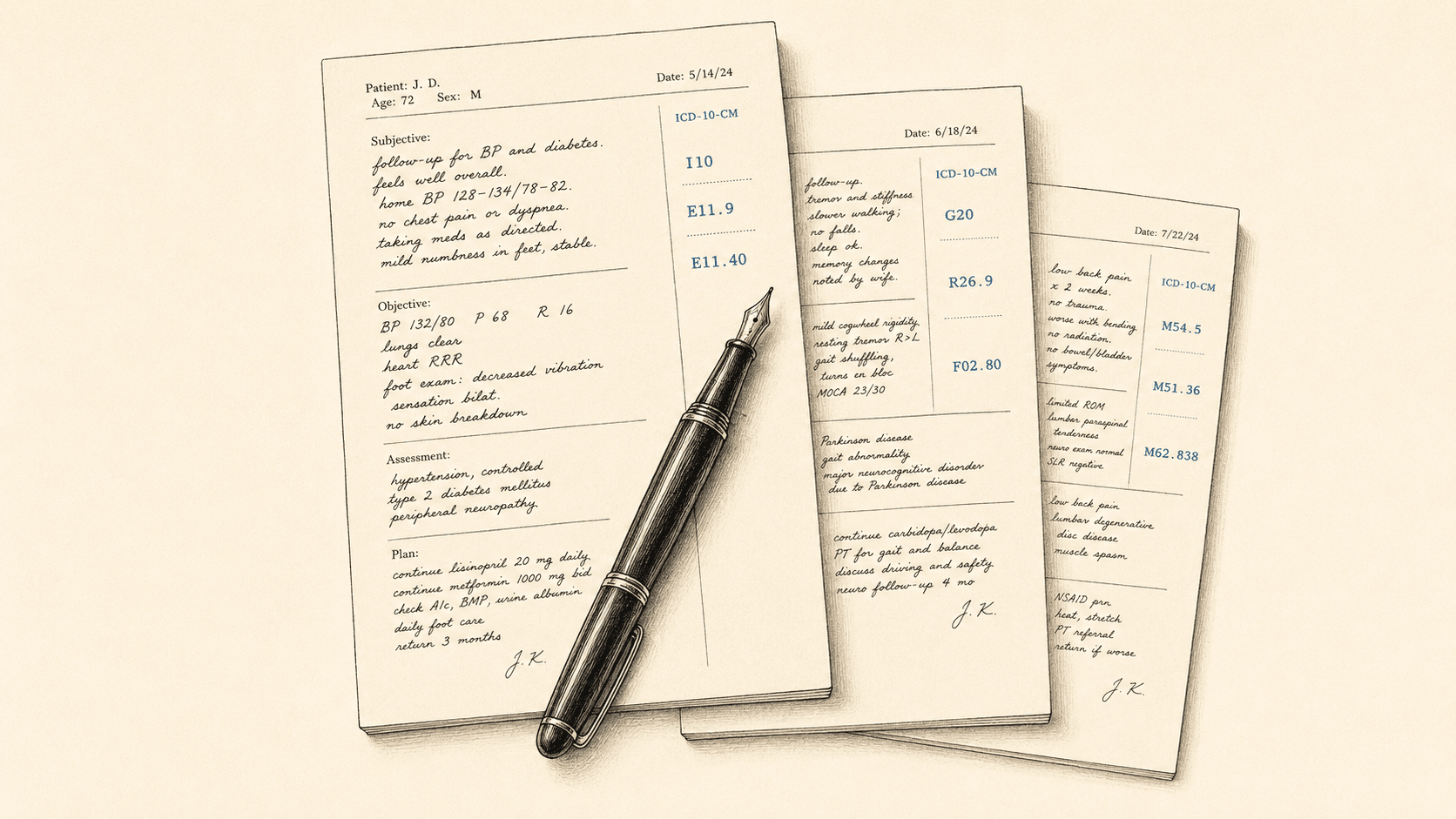
AI for prior authorization in 2026 has moved from pilot to production at scale. Cohere Health's Unify platform automates up to 90% of prior-auth decisions on the payer side. Waystar's AltitudeAI hits 98.5% first-pass clean claims on the provider side. The American Medical Association's 2026 Prior Authorization survey found that 89% of physicians still describe PA as a high burden, but the financial picture has begun to shift: average cost per PA dropped from $25 to under $11 at automated sites, per the CAQH 2025 Index. Below we map the current state for RCM directors.
Why prior authorization is still the most expensive friction in RCM
The CAQH 2025 Index reported that US providers and payers exchange over 220 million prior authorization transactions per year. The manual-portal-or-fax baseline costs the industry approximately $26 billion annually in labor and rework. Per the AMA's 2026 survey, the average practice spends 14 hours per provider per week on PA work, and 24% of physicians report that a PA has led to a serious adverse event for a patient.
The CMS Interoperability and Prior Authorization Final Rule (CMS-0057-F), with key provisions taking effect January 2026, mandates that payers use FHIR-based APIs and respond to standard PAs within 72 hours (urgent: 7 days). The rule applies to Medicare Advantage, Medicaid managed care, CHIP managed care, and qualified health plans on the federal exchange. Compliance creates real demand for the AI tools described below.
Which AI vendors lead prior-auth automation in 2026?
Three vendors dominate the conversation in 2026: Cohere Health (payer-side automation), Waystar (provider RCM), and the emerging cluster of clinical-context-aware platforms (Olive, SmarterDx). Each addresses a different segment of the PA workflow.
Cohere Health
Cohere sits on the payer side. Its Unify platform integrates with health plans to automate medical necessity decisions, citing a 90% PA-automation rate across deployed plans. Coverage spans musculoskeletal, cardiology, and oncology services first; expansion into behavioral health is underway. The 90% figure is verifiable in Cohere's case studies with Humana and Geisinger Health Plan, published in 2024-2025. For providers, the value is structural: plans on Cohere process PAs faster, reducing turnaround time from days to minutes for many requests. See the full Cohere Health profile.
Waystar
Waystar is the largest publicly traded provider-side RCM platform (NASDAQ:WAY). Its AltitudeAI module covers eligibility, claims, denial prevention, and patient payment. The reported 98.5% first-pass clean rate is a Waystar disclosure validated against KLAS Research's 2026 RCM platform report. Prior authorization specifically is handled within Waystar's authorization automation product, layered on top of payer connectivity built over the past decade. See the full Waystar profile.
Adjacent platforms
- SmarterDx: clinical-context-aware DRG and PA automation focused on inpatient settings.
- Rivet Health: revenue-recovery and PA automation tilted toward small and mid-sized practices.
- CodaMetrix: autonomous medical coding, ranked #1 by KLAS 2026; adjacent to PA via clean documentation that reduces PA volume upstream.
What automation rates are actually achievable?
Vendor claims of 90%+ automation are common. The operative number for provider organizations is the percentage of PAs that auto-approve on submission. KLAS Research's 2026 Prior Authorization report found a median of 58% auto-approval on Cohere-served plans and 41% on non-Cohere plans using third-party AI. The gap closes for routine, well-documented services and widens for novel therapies and specialty drugs.
Three friction points consistently block automation. First, clinical-criteria mismatch between payer policy and provider documentation. Second, payer-specific portal idiosyncrasies that defeat FHIR-based APIs. Third, specialty-drug PA requirements that mandate human medical review by statute. AI tools handle the first two well. The third remains stubbornly manual.
How should RCM directors evaluate PA AI in 2026?
Five evaluation criteria emerge from the KLAS 2026 RCM platform report and HFMA roundtables.
- Payer coverage. Which of your top-10 payers does the vendor have direct API connectivity with? The 90% claim is irrelevant if your largest payers aren't connected.
- EHR integration depth. Native Epic or Cerner integration that pulls clinical context from the chart, not just demographics. Tools requiring manual data entry rarely deliver the automation rates their decks claim.
- Specialty fit. PA automation rates vary 3x between specialties. Cohere is strongest in MSK, cardio, onc. Waystar covers broader RCM but with shallower specialty depth.
- Denial-prevention coupling. Some vendors couple PA automation with denial prevention. That bundle improves end-to-end clean rate by 8-15 percentage points in KLAS data.
- ROI math. Track FTE-time-saved, denial reduction, and days-in-AR change. Vendors that report on all three offer credible business cases. Those that report only the first don't.
What will change in PA automation through 2027?
Two structural shifts will drive the curve. First, CMS-0057-F enforcement will push commercial payers to match Medicare Advantage timelines, even where not explicitly mandated. KLAS 2026 expected the median PA turnaround time to drop from 5.7 days to under 48 hours by EOY 2027. Second, large language models with explicit clinical-reasoning chains will close the auto-approval gap on borderline cases, where today human medical reviewers still adjudicate manually.
For more on adjacent RCM workflows, see our best AI medical billing and coding guide, which compares CodaMetrix, Waystar, Fathom Health, and the rest of the autonomous-coding field.
Frequently asked questions
Will the CMS 2026 rule require my organization to use AI?
No. CMS-0057-F applies to payers (Medicare Advantage, Medicaid managed care, CHIP managed care, federal-exchange QHPs). It mandates FHIR-based APIs and faster turnaround, not specific technology. Providers benefit indirectly: faster payer responses reduce PA cycle time regardless of provider-side tooling.
Can I use Cohere as a provider, or only through my payer?
Cohere primarily contracts with health plans. Providers experience Cohere indirectly when submitting PAs to plans that use Unify. For provider-side workflow automation, evaluate Waystar, Olive (where still operating), SmarterDx, or your EHR's native PA module.
What's the realistic ROI on PA automation?
The CAQH 2025 Index puts manual PA cost at $25 per transaction and automated PA cost at $11. At a mid-sized practice running 5,000 PAs per month, that's $70,000 in monthly cost reduction, plus FTE redeployment and faster cycle times that accelerate revenue. ROI is typically realized within 6-12 months at this scale.
Is autonomous coding related to PA automation?
Adjacent, not identical. Clean coding upstream reduces some PA volume (correct CPT and ICD-10 selection avoids medical-necessity flags). CodaMetrix (#1 KLAS autonomous coding 2026) and Fathom Health complement PA automation rather than replace it.