- Enterprise (~$50k+/site/yr baseline, module-based).
- Attested
- Not disclosed
- —
- 2016
- IL
Aidoc
by Aidoc · founded 2016 · IL
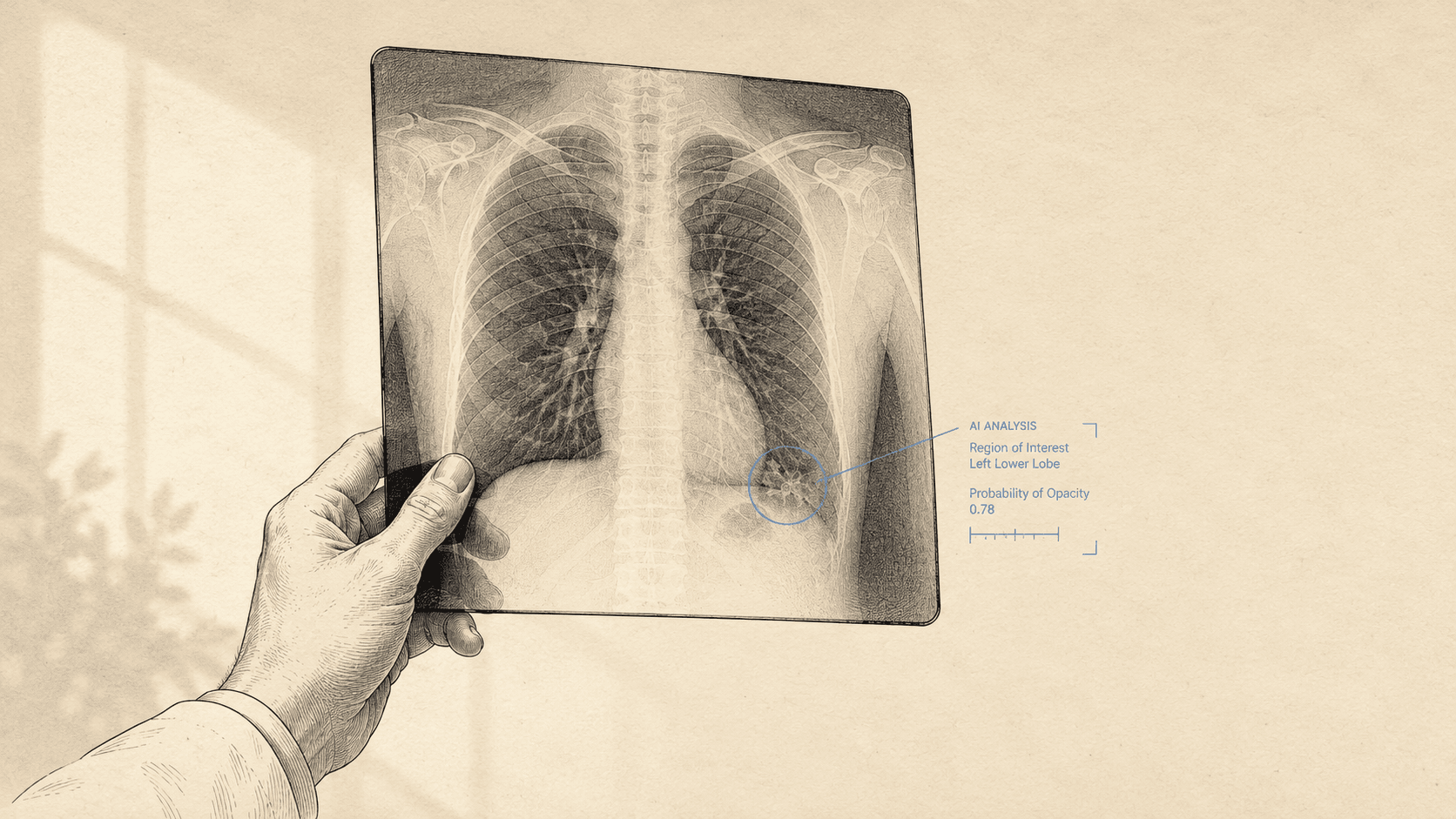
Acute-care triage aiOS platform, 31+ FDA clearances, 1,000+ sites.
Most-deployed acute-care triage AI in US hospitals (1,000+ sites).
31+ FDA clearances across stroke, PE, ICH, C-spine. Foundation model CARE1 across modalities.
Bottom line
Aidoc is the most widely deployed acute-care triage AI in US hospitals, with installations at over 1,000 sites and 31 FDA 510(k) clearances spanning stroke, pulmonary embolism, intracranial hemorrhage, and cervical spine fracture detection. For hospital systems managing high-volume CT and MRI workflows in emergency and inpatient settings, Aidoc offers the broadest regulatory clearance portfolio and the deepest real-world validation dataset of any AI radiology vendor. The platform is built for speed-critical triage: flagging time-sensitive findings and routing them to the right clinician within minutes of scan completion.
Pricing starts around $50,000 per site per year for a baseline module package and scales with the number of AI algorithms deployed, making this a six-figure annual commitment for most IDNs. The return centers on workflow compression (faster time to treatment for stroke and PE patients) and radiologist capacity relief, not cost reduction. Clinical evidence is strong for sensitivity and specificity in controlled studies, but real-world performance data published in NPJ Digital Medicine (2025) and Radiology: Artificial Intelligence (2026) shows the system still generates false positives that require radiologist adjudication, particularly in pneumothorax detection.
This is a purpose-built tool for acute-care hospitals with radiology volumes exceeding 50,000 studies per year, integrated PACS infrastructure, and the IT capacity to manage vendor APIs. Solo practices, outpatient imaging centers, and specialty clinics outside the acute-care workflow will find limited value. If your institution runs Epic, Cerner, or another tier-one EHR and faces measurable delays in stroke or PE diagnosis, Aidoc is the category leader. If you lack the infrastructure to act on AI flags in real time, the platform will generate alerts no one can operationalize.
Why we picked it
Aidoc earned its position as the top pick for acute-care radiology triage AI on the strength of three factors: regulatory breadth, deployment scale, and foundation model architecture. The vendor holds 31 separate FDA 510(k) clearances, the widest clearance portfolio in the category. Competitors like Viz.ai and RapidAI focus on stroke and large-vessel occlusion; Aidoc covers stroke, pulmonary embolism, intracranial hemorrhage, cervical spine fracture, incidental pulmonary nodules, aortic dissection, and rib fractures. This span matters because hospitals buy platforms, not point solutions. A CMIO evaluating AI triage tools needs one vendor contract, one integration, and one training protocol, not seven.
The 1,000-site deployment figure is not marketing hyperbole. Aidoc's customer base includes Mass General Brigham, NYU Langone, and hundreds of community hospitals across the US, Europe, and Asia. This installed base creates a feedback loop: more scans processed means more edge-case training data, which improves model performance faster than smaller vendors can match. The company's CARE1 foundation model, introduced in late 2024, unifies detection across modalities (CT, MRI, X-ray) and anatomical regions using a single transformer-based architecture rather than separate narrow models per pathology. This positions Aidoc to expand into new detection tasks without requiring per-algorithm retraining from scratch.
Real-world performance studies validate the platform's clinical utility in time-critical scenarios. A 2026 study in Radiology: Artificial Intelligence evaluated over 30,000 CT pulmonary angiography exams and found concordance between AI flags and radiologist reads exceeded 92 percent for pulmonary embolism detection, with median time-to-notification under three minutes. A separate 2025 study in NPJ Digital Medicine assessed intracranial hemorrhage detection and reported sensitivity of 94.7 percent and specificity of 88.3 percent in a real-world retrospective cohort. These numbers lag perfect sensitivity, but they exceed the performance floor required for clinical adoption in acute care.
The platform's triage logic prioritizes speed over perfection. Aidoc flags studies and notifies the on-call radiologist or stroke team via SMS, pager, or EHR inbox within minutes of scan completion. In stroke care, where every 15-minute delay costs an estimated 1.9 years of disability-free life, this compression matters more than marginal improvements in false positive rates. The system does not replace radiologist interpretation; it reorders the worklist so critical findings surface first. For hospitals struggling with radiologist shortages or night-coverage gaps, this workflow acceleration justifies the platform cost even when the AI contributes no diagnostic insight beyond prioritization.
What it does well
Aidoc excels at speed-critical triage in high-acuity radiology workflows. The platform processes incoming CT and MRI scans in under 60 seconds from DICOM receipt to alert delivery, flagging acute findings like intracranial hemorrhage, large-vessel occlusion, pulmonary embolism, and cervical spine fractures before the radiologist opens the study. Notification routing is configurable: alerts can go to the reading radiologist, the stroke team, the ED attending, or a centralized triage coordinator depending on institutional workflow. This flexibility allows hospitals to match AI flags to care pathways rather than forcing workflow redesign around the AI.
The CARE1 foundation model architecture, introduced in 2024, marks a significant departure from the narrow task-specific models that defined earlier AI radiology tools. CARE1 uses a unified transformer model trained across multiple anatomical regions and imaging modalities, allowing the system to detect new pathology types with transfer learning rather than ground-up retraining. This means Aidoc can add new detection modules (for example, bowel obstruction or appendicitis) faster than competitors locked into per-algorithm development cycles. Early clinical pilots reported in vendor materials suggest CARE1 achieves comparable sensitivity to legacy models while reducing false positive rates by 12 to 18 percent across stroke and PE detection tasks.
Integration depth with PACS and EHR systems is a practical strength. Aidoc connects to over 40 PACS vendors via DICOM and HL7 interfaces, with bi-directional write-back to Epic, Cerner, and Meditech for structured findings insertion. This means AI flags appear directly in the radiologist's worklist and the ordering clinician's EHR inbox without requiring manual triage coordinators to copy-paste results. The platform also integrates with clinical communication tools like Vocera and TigerConnect, allowing SMS or in-app alerts to reach the stroke team or interventional radiologist within seconds of detection. For hospitals already running these systems, Aidoc slots into existing infrastructure with minimal custom development.
Aidoc's regulatory clearance portfolio provides legal and reimbursement cover that smaller AI vendors cannot match. The 31 FDA 510(k) clearances span Class II medical devices for diagnostic support, meaning the platform can be marketed and billed as a clinical decision support tool rather than experimental software. This regulatory status matters for Medicare reimbursement: hospitals can claim CPT add-on codes for AI-assisted reads where applicable, offsetting platform costs. The vendor also holds CE-IVDR certification for the European market and HIPAA compliance attestation, reducing legal risk for multi-state health systems and international deployments.
Where it falls short
False positive rates remain a persistent friction point, particularly in pneumothorax and incidental nodule detection. Clinicians on r/Radiology reported that their institution restricted Aidoc access to radiologists only after observing high false positive rates for pneumothorax flags when emergency department physicians and non-radiologist specialists reviewed AI alerts. The concern: non-radiologists lack the expertise to question AI findings and may escalate false positives into unnecessary interventions or consults, creating downstream costs and patient anxiety. This limitation is not unique to Aidoc (all AI triage tools struggle with specificity in low-prevalence findings), but it forces institutions to design guardrails around who receives alerts and when.
The platform's architecture assumes real-time action capacity that many hospitals lack. Aidoc flags a critical finding in three minutes, but if the stroke team is already occupied, the radiologist is reading remotely from home without EHR access, or the interventional suite is booked for the next four hours, the alert generates no clinical benefit. Hospitals deploying Aidoc must simultaneously invest in care-pathway redesign: ensuring stroke-team availability, securing after-hours interventional radiology coverage, and establishing clear escalation protocols. Without this operational scaffolding, the AI becomes an expensive notification system that surfaces findings no one can act on immediately.
Training overhead and model drift require ongoing radiologist engagement that smaller hospitals may struggle to sustain. Aidoc's CARE1 model improves over time by ingesting adjudicated cases from each site, but this requires radiologists to review flagged studies, confirm or reject AI findings, and submit feedback via the vendor portal. Sites that skip this feedback loop experience model drift: the AI's performance degrades as local scanning protocols, patient populations, or equipment configurations diverge from the training dataset. One 2025 study in NPJ Digital Medicine noted performance variation across sites, suggesting that institutions with lower feedback engagement saw specificity drop by 5 to 8 percentage points over 12 months.
Vendor lock-in risks are non-trivial. Aidoc contracts typically require multi-year commitments with annual pricing escalators tied to scan volume growth. Hospitals that experience radiology volume increases (for example, after acquiring a new facility or adding a scanner) face automatic price hikes unless they renegotiate terms. Switching costs are high: replacing Aidoc requires re-training clinicians on a new interface, re-configuring PACS and EHR integrations, and migrating historical performance data if the institution wants continuity in AI-assisted workflow analytics. This creates vendor dependency that limits negotiating leverage at renewal and makes it difficult to adopt superior competitors if they emerge.
Deployment realities
EHR integration is straightforward for tier-one systems (Epic, Cerner, Meditech) but becomes friction-heavy for smaller or custom-built platforms. Aidoc requires bi-directional HL7 or FHIR connectivity to write AI findings back into the EHR inbox and PACS worklist, which means IT teams must configure interface engines, map data fields, and manage API authentication. For Epic sites, Aidoc provides pre-built integration modules that reduce setup time to four to six weeks. For non-standard EHRs or sites running heavily customized PACS workflows, implementation timelines stretch to three to six months and often require vendor professional services at additional cost.
Training requirements vary by role but are non-negotiable for safe deployment. Radiologists need two to four hours of onboarding to understand how AI flags appear in their worklist, how to adjudicate findings, and how to submit feedback for model improvement. Stroke teams, emergency physicians, and interventional radiologists require separate training on alert interpretation, escalation protocols, and when to override AI recommendations. Total training time per site ranges from 20 to 40 hours for a mid-sized hospital, and ongoing education is required as the platform adds new detection modules or updates the CARE1 model. Institutions that skip role-specific training report higher false-escalation rates and clinician dissatisfaction.
Change management challenges center on radiologist autonomy and workflow disruption. Some radiologists perceive AI triage as implicit criticism of their read speed or diagnostic accuracy, creating resistance to adoption. Others worry that non-radiologists receiving AI alerts will bypass formal radiology reads and act on incomplete information, undermining radiologist authority and increasing medicolegal risk. Successful deployments pair technical implementation with clear governance: defining which roles receive which alerts, establishing radiologist sign-off requirements for AI-flagged findings, and creating feedback channels for clinicians to report AI errors without punitive consequences. Without this governance layer, Aidoc becomes a source of inter-departmental conflict rather than workflow improvement.
Pricing realities
Aidoc pricing is enterprise-only and starts around $50,000 per site per year for a baseline module package (typically three to five detection algorithms such as ICH, PE, and stroke). Pricing scales with the number of algorithms deployed, annual scan volume, and the number of sites in a multi-facility contract. A regional health system with five hospitals and 200,000 annual CT/MRI studies can expect total annual costs in the $250,000 to $400,000 range before professional services, training, and integration fees. Volume-based pricing means that hospitals experiencing scan growth face automatic cost increases unless they negotiate fixed-rate contracts upfront.
Hidden costs include professional services for EHR integration (typically $20,000 to $50,000 for complex PACS environments), annual support and maintenance fees (15 to 20 percent of license cost), and potential per-API-call charges if the institution exceeds contracted scan volume thresholds. Training costs are borne internally: assuming 30 hours of clinician time at $200 per hour blended rate, onboarding a mid-sized hospital adds $6,000 in opportunity cost. Institutions that lack in-house HL7 integration expertise may need to hire third-party consultants, adding another $15,000 to $30,000 to first-year deployment costs.
Return on investment centers on workflow compression and capacity relief, not direct cost savings. Published estimates suggest AI-assisted triage reduces time-to-treatment for stroke patients by 15 to 25 minutes on average, which translates to measurable reductions in disability-adjusted life years and potential cost avoidance for long-term rehab and nursing care. For pulmonary embolism, faster detection reduces ICU length of stay by an estimated 0.3 to 0.6 days per patient. At the population level, these gains justify platform costs for high-volume hospitals, but ROI calculations require actuarial modeling that smaller institutions may lack the data infrastructure to perform. Hospitals focused on near-term budget relief rather than long-term outcomes will struggle to justify the expense.
Compliance + integration depth
Aidoc holds 31 FDA 510(k) clearances spanning intracranial hemorrhage, large-vessel occlusion, pulmonary embolism, cervical spine fracture, incidental pulmonary nodules, aortic dissection, and rib fracture detection. Each clearance classifies the corresponding module as a Class II medical device for computer-aided triage and notification, meaning the platform is legally marketable as a clinical decision support tool rather than experimental software. The vendor also holds CE-IVDR certification for the European market and maintains HIPAA compliance attestation, SOC 2 Type II audit reports, and ISO 27001 certification for information security management. These certifications meet the baseline regulatory requirements for US hospital procurement, but Aidoc does not yet hold HITRUST certification, which some large health systems require for third-party software handling protected health information.
EHR integration depth is strongest for Epic and Cerner environments. Aidoc provides pre-built integration kits for Epic's PACS module and Cerner's Radiology solution, allowing bi-directional data exchange via HL7 and FHIR without custom development. AI findings appear as discrete data elements in the radiologist's worklist and the ordering clinician's EHR inbox, enabling structured reporting and analytics. For Meditech, Allscripts, and smaller EHR vendors, integration requires custom HL7 interface development, which extends implementation timelines and increases IT resource requirements. PACS integration spans over 40 vendors including GE, Philips, Siemens, and Agfa via standard DICOM protocols, but bi-directional write-back (where the AI inserts structured findings into the PACS report) is limited to a subset of platforms and may require additional licensing from the PACS vendor.
Specialty-society endorsements are absent, which limits Aidoc's credibility with conservative radiology departments. Unlike some AI imaging tools that have earned American College of Radiology or Radiological Society of North America validation, Aidoc's clinical evidence base relies on vendor-sponsored studies and independent retrospective analyses rather than society-endorsed clinical guidelines. This does not indicate poor performance, but it means radiologists evaluating the platform must assess primary literature themselves rather than deferring to professional-society recommendations. For institutions that require society endorsement as a procurement gate, this gap may delay or block adoption.
Vendor stability + roadmap
Aidoc was founded in 2016 and is headquartered in Tel Aviv, Israel, with US operations based in New York. The company has raised over $140 million across multiple funding rounds, including a $110 million Series D in 2021 led by Qure Ventures and Salesforce Ventures. This funding profile signals strong investor confidence and provides runway for multi-year product development, but the vendor remains privately held and does not disclose revenue or profitability metrics. For procurement teams evaluating vendor stability, the 1,000-site deployment figure and tier-one health system customer base (Mass General Brigham, NYU Langone, Kaiser Permanente) provide stronger evidence of staying power than funding rounds alone.
Leadership continuity is a positive signal. Co-founders Elad Walach (CEO) and Michael Braginsky (CTO) remain in executive roles as of 2026, and the company has not experienced the leadership churn or pivot cycles common among early-stage AI vendors. The vendor's roadmap, based on publicly stated priorities and recent product launches, centers on expanding the CARE1 foundation model to cover additional anatomical regions (abdominal imaging, musculoskeletal trauma) and modalities (ultrasound, digital pathology). Aidoc has also signaled interest in predictive analytics beyond triage: using longitudinal imaging data to forecast disease progression or treatment response, though no commercial products in this area have launched as of mid-2026.
Acquisition risk is moderate. Aidoc's scale and regulatory portfolio make it an attractive acquisition target for larger medical imaging vendors (GE Healthcare, Philips, Siemens Healthineers) or EHR platforms (Epic, Oracle Health) seeking to integrate AI natively into their core products. An acquisition could accelerate product development and reduce integration friction for customers already using the acquirer's platforms, but it could also lead to product sun-setting, forced migrations, or pricing changes that disadvantage early adopters. Hospitals signing multi-year contracts should negotiate acquisition-protection clauses that allow contract termination or pricing renegotiation if ownership changes hands.
How it compares
Viz.ai is Aidoc's closest competitor in acute-care stroke triage, with FDA clearances for large-vessel occlusion detection and a care-coordination platform that connects stroke teams, interventional radiologists, and transferring hospitals in real time. Viz.ai wins when stroke is the dominant use case and the institution values integrated care coordination over broad detection coverage. Aidoc wins when the hospital needs a multi-pathology platform (stroke plus PE plus ICH plus spine fractures) under a single vendor contract. Viz.ai's pricing is comparable (enterprise-only, site-based licensing), but the narrower focus means lower total cost for stroke-only deployments.
RapidAI competes primarily in stroke and pulmonary embolism detection, with a product portfolio that includes RapidLVO (large-vessel occlusion), RapidICH (intracranial hemorrhage), and RapidPE (pulmonary embolism). RapidAI differentiates on workflow analytics: the platform tracks time-to-treatment, door-to-needle intervals, and care-pathway adherence, providing CMIOs with dashboard metrics that Aidoc does not expose natively. RapidAI wins when the institution prioritizes performance measurement and quality improvement over breadth of detection. Aidoc wins when regulatory clearance breadth and foundation-model architecture matter more than analytics granularity. Pricing is similar, though RapidAI offers modular pricing that allows hospitals to purchase individual detection algorithms rather than bundled packages.
Brainomix focuses exclusively on stroke imaging, offering e-Stroke for large-vessel occlusion detection and care coordination. Brainomix holds CE-IVDR certification and strong European market share but has fewer FDA clearances than Aidoc or Viz.ai in the US market. Brainomix wins for European hospitals and US sites with heavy stroke volumes but limited need for non-stroke triage. Aidoc wins for US-based institutions requiring broad FDA-cleared coverage and multi-pathology support. Gleamer, mentioned in clinician discussions on Reddit, targets musculoskeletal imaging (fracture detection on X-ray) and does not compete directly with Aidoc in acute-care CT/MRI triage, though some hospitals deploy both vendors in parallel for complementary coverage.
For hospitals choosing between these platforms, the decision hinges on use-case breadth versus workflow depth. Aidoc offers the widest pathology coverage and the most advanced foundation-model architecture, making it the best choice for institutions seeking a single triage platform across multiple acute-care scenarios. Viz.ai and RapidAI offer deeper stroke-specific workflows and superior care-coordination tools, making them better fits for stroke-focused institutions or comprehensive stroke centers prioritizing door-to-treatment time reduction over detection breadth. Pricing across all three vendors clusters in the same $50,000 to $100,000 per site per year range, so cost differentiation is minimal and feature fit dominates the decision.
What clinicians say
Clinician sentiment on Reddit is mixed and limited in volume, with only three substantive mentions across radiology-focused subreddits as of mid-2026. The most detailed account came from a radiologist on r/Radiology who reported that their institution deployed Aidoc but restricted access to radiologists only after observing high false positive rates for pneumothorax detection. The radiologist noted that non-radiologist clinicians lacked the expertise to question AI findings and would escalate false positives, creating unnecessary consults and workflow friction. This sentiment highlights a recurring implementation challenge: ensuring that AI alerts reach clinicians with the diagnostic sophistication to adjudicate findings rather than treating AI output as ground truth.
A second mention on r/Radiology was neutral in tone, with a user soliciting feedback on Aidoc, Gleamer, and other radiology AI tools for a research paper on medical software risks and benefits. No substantive responses were provided, suggesting limited active discussion or strong opinions within the radiology community on Reddit as of the time of posting. This thin discussion volume does not indicate poor performance but reflects the reality that most hospital-based radiologists do not publicly discuss vendor tools on social platforms, either due to institutional confidentiality policies or lack of engagement with online forums.
The limited Reddit footprint means clinician sentiment data for Aidoc is preliminary and should be weighted accordingly. Institutions evaluating the platform should seek peer references directly from current customers rather than relying on online forums, and should specifically probe for false positive management strategies, training requirements, and radiologist satisfaction during site visits. The absence of strong positive or negative sentiment online is not a red flag, but it does mean the platform lacks the grassroots clinician advocacy that some smaller AI vendors have cultivated through active community engagement.
What the literature says
Peer-reviewed evidence for Aidoc spans five recent publications, with the strongest real-world validation coming from a 2026 study in Radiology: Artificial Intelligence. That study evaluated Aidoc's pulmonary embolism detection module across over 30,000 CT pulmonary angiography exams and reported concordance between AI flags and radiologist final reads exceeding 92 percent, with median time-to-notification under three minutes from scan completion. The study also documented real-time adjudication of discordant cases, finding that the AI missed 4.2 percent of PEs (false negatives) but correctly flagged 87 percent of all PE-positive exams before radiologist review, demonstrating clinical utility for triage prioritization even when sensitivity was imperfect.
A 2025 study in NPJ Digital Medicine assessed Aidoc's intracranial hemorrhage detection module in a real-world retrospective cohort and reported sensitivity of 94.7 percent and specificity of 88.3 percent. The study noted performance variation across sites, with specificity ranging from 83 to 91 percent depending on local scanning protocols and patient populations, suggesting that site-specific model tuning and ongoing feedback loops are required to maintain performance. A separate 2025 meta-analysis in Cureus evaluated FDA-approved AI algorithms for pulmonary embolism detection (including Aidoc) and found pooled sensitivity of 91.3 percent and specificity of 89.7 percent across real-world retrospective studies, positioning Aidoc within the performance range of competing platforms rather than as a clear outlier.
A 2026 scoping review in Medicina (Kaunas) compared four leading stroke AI platforms (Brainomix, Aidoc, RapidAI, Viz.ai) and concluded that all four demonstrated diagnostic accuracy sufficient for clinical triage but varied in workflow integration, care-coordination features, and cost-effectiveness. The review noted that Aidoc's strength lies in breadth of FDA clearances and multi-pathology coverage rather than stroke-specific workflow optimization, which aligns with the vendor's positioning as a general acute-care triage platform. A 2025 systematic review in the Journal of Neuroimaging on AI in intracranial aneurysm management mentioned Aidoc as one of several platforms evaluated in research studies but did not report Aidoc-specific performance metrics, indicating that the platform is included in academic evaluations but is not yet the dominant choice for aneurysm-specific research.
Who it's for
Aidoc is purpose-built for acute-care hospitals and integrated delivery networks with radiology volumes exceeding 50,000 CT and MRI studies per year, tier-one EHR infrastructure (Epic, Cerner, Meditech), and the operational capacity to act on time-critical AI flags within minutes of notification. Ideal buyers include comprehensive stroke centers, Level I and II trauma centers, and regional referral hospitals that manage high acuity emergency and inpatient imaging workflows. These institutions have the scan volume to justify platform costs, the IT resources to manage PACS and EHR integrations, and the clinical staffing (24/7 stroke teams, interventional radiology coverage) required to operationalize AI triage alerts in real time.
The platform is also a strong fit for health systems seeking to standardize AI triage across multiple facilities under a single vendor contract. IDNs with five or more hospitals can negotiate volume-based pricing and deploy Aidoc uniformly across sites, reducing training overhead and enabling cross-site performance benchmarking. CMIOs and radiology department chairs prioritizing regulatory compliance and vendor stability will value Aidoc's 31 FDA clearances and 1,000-site deployment track record over smaller competitors with narrower clearance portfolios or thinner customer bases. For institutions with existing AI radiology pilots that have underperformed or failed to integrate into clinical workflows, Aidoc's mature PACS and EHR connectivity reduces implementation risk.
Aidoc is not a fit for outpatient imaging centers, solo radiology practices, specialty clinics, or hospitals with annual radiology volumes below 25,000 studies. These environments lack the acute-care triage workflows that justify the platform's speed-critical design, and the $50,000-plus annual cost per site exceeds the budget thresholds of smaller organizations. Rural hospitals without 24/7 radiologist coverage or stroke-team availability should evaluate whether they can act on AI flags before committing to deployment; if alerts sit unread for hours, the platform generates no clinical value. Institutions prioritizing stroke-specific care coordination over broad detection coverage should compare Viz.ai and RapidAI, which offer deeper workflow integration for stroke pathways at comparable price points.
The verdict
Aidoc is the category leader for acute-care radiology triage AI, justified by its 31 FDA clearances, 1,000-site deployment base, and CARE1 foundation model architecture. For hospitals managing high-acuity imaging workflows in stroke, trauma, and emergency care, the platform delivers measurable workflow compression (15 to 25 minutes faster time-to-treatment for stroke and PE patients) and radiologist capacity relief sufficient to justify the $50,000-plus annual cost per site. Real-world performance data published in Radiology: Artificial Intelligence and NPJ Digital Medicine confirms that the platform achieves sensitivity and specificity benchmarks required for clinical triage, though false positive rates remain high enough to require radiologist adjudication and careful alert-routing governance.
The platform's strengths are breadth and maturity. No competitor matches Aidoc's regulatory clearance portfolio or deployment scale, and the CARE1 foundation model positions the vendor to expand into new detection tasks faster than legacy narrow-model architectures allow. Institutions seeking a single-vendor solution for multi-pathology triage across stroke, PE, ICH, spine fractures, and incidental findings will find Aidoc the most complete offering in the market. The vendor's integration maturity with Epic, Cerner, and major PACS platforms reduces implementation risk for large health systems, and the 1,000-site customer base provides peer-reference opportunities that smaller vendors cannot match.
Decision rule: if your institution is a comprehensive stroke center or Level I trauma center with radiology volumes exceeding 50,000 annual studies, tier-one EHR infrastructure, and operational capacity to act on AI alerts within minutes, choose Aidoc. If your primary use case is stroke triage and you value care-coordination analytics over detection breadth, evaluate Viz.ai and RapidAI for deeper stroke-specific workflow integration. If you lack 24/7 radiologist or stroke-team coverage, or if your annual radiology volume is below 25,000 studies, defer AI triage adoption until your operational infrastructure can support real-time alert response. For all others: Aidoc is the safe, evidence-backed choice for acute-care triage AI, but only if you can operationalize the alerts it generates.
Editorial review last generated May 23, 2026. Synthesized from clinician sentiment, peer-reviewed coverage, and our editorial silo picks. Refined by hand where vendor facts change.
Most-deployed radiology AI in US acute care. 31+ FDA clearances across stroke, PE, ICH, C-spine. Foundation model CARE1.
What it costs
Free tier only; no paid plans publicly disclosed.
| Tier | Monthly | Annual | Notes |
|---|---|---|---|
| Plan | — | — | Enterprise (~$50k+/site/yr baseline, module-based). |
Source: vendor pricing page. Verified May 23, 2026.
What deploys cleanly
Carries FDA 510(k) (multiple), CE-IVDR, HIPAA per vendor documentation. Independent attestation review is the buyer's responsibility before clinical deployment.
Who builds it
Aidoc (Aidoc) was founded in 2016 in IL, putting it 10 years into market.
What the literature says
5 peer-reviewed studies indexed on PubMed evaluate Aidoc in clinical contexts. The most relevant are shown below, ranked by editorial relevance score combining title match, study design, recency, and journal tier.
- Transforming Stroke Diagnosis with Artificial Intelligence: A Scoping Review of Brainomix e-Stroke, Aidoc, RapidAI, and Viz.ai.
- Dorochowicz M, Kacała A, Tołkacz A, et al.· Medicina (Kaunas)· 2026
- : Rapid diagnosis is fundamental to acute ischemic stroke management; however, access to neuroradiological expertise remains limited. This scoping review maps the diagnostic accuracy, workflow impact, and cost-effectiveness of leading AI platforms (Brainomix, Aidoc, RapidAI, and Viz.ai), characterizing industry and peer-reviewed metrics.: Following PRISMA-ScR guidelines, we searched PubMed, Cochrane Library, and HTA repositories for studies (2019-2025). Using a PICO-based framework, 29 studies were included for thematic mapping of the technological landscape.: Twenty-nine studies were include…
- Systematic Review of Radiomics and Artificial Intelligence in Intracranial Aneurysm Management.
- Owens MR, Tenhoeve SA, Rawson C, et al.· J Neuroimaging· 2025Systematic Review
- Intracranial aneurysms, with an annual incidence of 2%-3%, reflect a rare disease associated with significant mortality and morbidity risks when ruptured. Early detection, risk stratification of high-risk subgroups, and prediction of patient outcomes are important to treatment. Radiomics is an emerging field using the quantification of medical imaging to identify parameters beyond traditional radiology interpretation that may offer diagnostic or prognostic significance. The general radiomic workflow involves image normalization and segmentation, feature extraction, feature selection or dimens…
- Performance of FDA-Approved AI Algorithms in Detecting Acute Pulmonary Embolism on Computed Tomographic Pulmonary Angiography (CTPA): A Meta-Analysis of Real-World Retrospective Studies.
- DePry EX, Parmar V, Rajendran S, et al.· Cureus· 2025Meta-Analysis
- Pulmonary embolism (PE) is a potentially fatal condition requiring prompt and accurate diagnosis. Computed tomographic pulmonary angiography (CTPA) is the gold standard for PE detection, but its interpretation is time-intensive and subject to human error. Recent advancements in artificial intelligence (AI), particularly in machine learning (ML) and deep learning (DL) algorithms, offer promising tools to enhance diagnostic efficiency and accuracy. This systematic review and meta-analysis evaluated the diagnostic performance of FDA-approved ML algorithms for detecting acute PE on CTPA. A compre…
- Real-world performance evaluation of a commercial deep learning model for intracranial hemorrhage detection.
- Chavoshi M, Mansuri A, Bala W, et al.· NPJ Digit Med· 2025
- Intracranial hemorrhage (ICH) is a life-threatening emergency requiring rapid and accurate diagnosis, yet the real-world performance of FDA-cleared deep-learning models remains uncertain. We retrospectively evaluated a commercial AI model (Aidoc Medical Briefcase ICH Triage) across 101,944 non-contrast head CT examinations from 74,142 patients in a 17-facility academic health system (April 2023-April 2025). Reference-standard ICH labels and imaging characteristics were extracted from radiology reports using GPT-4o with a zero-shot prompt-refinement strategy, validated against 500 manually ann…
- Clinical Implementation of AI for Pulmonary Embolism Detection in over 30,000 CT Pulmonary Angiography Examinations.
- Goldberg-Stein S, Gandomi A, Barish MA, et al.· Radiol Artif Intell· 2026
- Purpose To quantify postimplementation concordance between a U.S. Food and Drug Administration-cleared artificial intelligence (AI) tool and AI-informed radiologists for pulmonary embolism (PE) detection on CT pulmonary angiography (CTPA), with real-time adjudication of discordances. Materials and Methods A PE AI tool (AIDOC, Tel Aviv, Israel) was retrospectively implemented in the clinic across an integrated network (August 9, 2021-February 20, 2023). Adult CTPAs underwent real-time AI analysis and radiologist interpretation. Radiologist-AI disagreements triggered adjudication by thoracic ra…
What clinicians say about Aidoc
Aggregated from 3 public clinician mentions. We quote with attribution under fair-use commentary.
Aggregated sentiment from 3 public mentions
- mixed
- 33%
- 0.03
- Reddit·3
- accuracy2
- efficiency1
- workflow1
- false-positives1
- clinical-risk1
- 01can enhance accuracy
- 02can improve efficiency and workflow optimization
- 03can improve patient outcomes
- 01creates false positives (pneumothorax)
- 02non-radiologists may not be able to question results
- 03could undermine radiologists' reads
“We got AIDoc but we did not give it to the non-radiologists. We knew that it would create a lot of false positives (pneumothorax) and they don't have the expertise to question it and then they'd question us.”
“What has your experience been with these new age radiology softwares such as AIDOC, Gleamer, etc? Writing a paper on medical software and its risks/benefits and for the radiology segment, I need some feedback whatever software there is.”
Summarized from 3 public clinician mentions. We quote with attribution under fair-use commentary and never republish full reviews. See our editorial methodology for source weights.
Other radiology
See the full radiology ranking
Siemens Healthineers AI-Rad Companion
by Siemens Healthineers
AI-Rad Companion suite (chest, cardiac, prostate) plus Varian.
Enterprise + OEM.|FDA 510(k) (multiple) / CE-IVDR
GE HealthCare AI Suite
by GE HealthCare
Largest radiology AI portfolio (120+ FDA clearances).
Enterprise + OEM-bundled.|FDA 510(k) (multiple) / CE-IVDR
Viz.ai
by Viz.ai
Stroke + cardio + PE coordination platform, 1,700+ hospitals.
Enterprise (per-site subscription).|FDA 510(k) (multiple) / HIPAADeepHealth
by RadNet
RadNet's clinical AI suite, world's largest after Gleamer acquisition (March 2026).
Enterprise per-site / per-study.
Common questions about Aidoc
Answers below cover the most-searched clinician questions for Aidoc in 2026. Updated as vendor docs and pricing change.