- No public price. Demo request only.
- Not disclosed
- Not disclosed
- —
- —
- FR
Radiology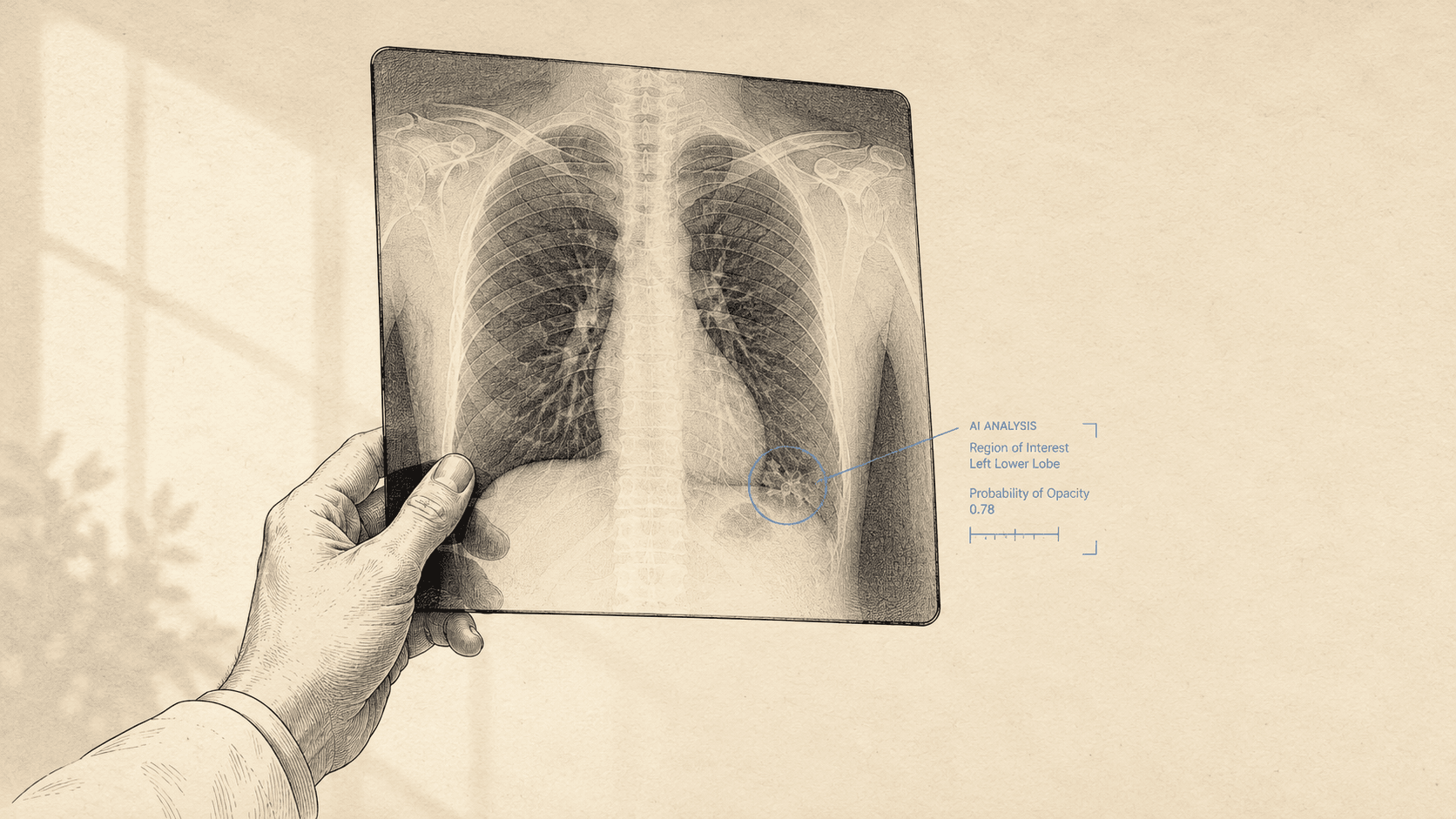

Gleamer
by Gleamer SAS · FR
Radiology AI for fracture and chest X-ray findings, plus CT, MRI and mammography; part of RadNet DeepHealth since March 2026.
On this page
56/100
Editorial rating 4.0 / 5
- Regulatory & Compliance18/28
FDA cleared (6 K-numbers on record)
- Clinical Integration0/6.6
No EHR integrations listed
- Evidence Strength18.2/26
5 peer-reviewed papers
- Vendor & Market8.4/18
Mid-tier funding and adoption
- Sentiment & Transparency2.5/5
Pricing on request, no public amounts
▸ Show all 11 dimensions▾ Hide dimension detail
- FDA clearance18/18
FDA cleared (6 K-numbers on record)
- HIPAA / SOC2 / BAA0/10
No public HIPAA/SOC2/BAA attestation
- EHR integrations (count)0/4
No EHR integrations listed
- Top-3 EHR coverage (Epic / Oracle / Athena)0/2
None of the top-3 EHRs covered
- Peer-reviewed papers18/18
5 peer-reviewed papers
- RCT / meta-analysis / systematic review0/8
No RCT, meta-analysis, or systematic review
- Funding & adoption signal8/12
Mid-tier funding and adoption
- Years in market0/6
Founded year not recorded
- Pricing transparency3/5
Pricing on request, no public amounts
Radiology AI for fracture and chest X-ray findings, plus CT, MRI and mammography; part of RadNet DeepHealth since March 2026.
No public price. Demo request only.
Evidence record
510(k)K252486 (opens in new tab)September 9, 2026
ChestView US (1.1)
510(k)K241620 (opens in new tab)February 27, 2025
ChestView US
510(k)K241593 (opens in new tab)February 5, 2025
BoneMetrics (US)
510(k)K213253 (opens in new tab)June 30, 2023
Pixyl.Neuro
510(k)K222176 (opens in new tab)March 2, 2023
BoneView
Show 1 more
510(k)K212365 (opens in new tab)March 1, 2022
BoneView
5 studies on PubMed: 5 other, published 2025 to 2026. Read the literature summary
- Score computed November 2, 2026, method 1.2.0
- Review written November 2, 2026
MedAI Verdict, Gleamer record, https://medaiverdict.com/tools/gleamer, version November 2, 2026
Bottom line
RadNet announced in March 2026 that it had acquired Gleamer SAS of Paris, the company behind BoneView and ChestView, for up to EUR 230M, with Gleamer to be integrated into RadNet's DeepHealth subsidiary. The products are still sold under the Gleamer name. FDA's records list five Gleamer clearances for BoneView, BoneMetrics and ChestView, from March 2022 to September 2026. Emergency departments and orthopedic imaging groups reading fracture and chest films are the natural buyers. A group that needs Gleamer's CT, mammography or lumbar MRI tools in the US has no confirmed FDA record to rely on.
What does Gleamer sell?
Gleamer calls Copilot "the all-in-one solution for radiology", with an AI set and a reporting set (Voice and AutoReport). Gleamer says BoneView finds fractures, dislocations, bone lesions and effusions on X-rays of the limbs, pelvis, spine and rib cage in adults and children over 2. It says ChestView flags pneumothorax, consolidation, nodule, mediastinal mass and pleural effusion and measures the cardiothoracic ratio on PA films for patients over 15. The range extends to BoneMetrics, BoneAge, LungCT, BoneCT, BreastView, Pixyl MRI tools and LumbarMR.
On workflow, Gleamer describes a Shadow Mode in which results appear on the native images for the reader to accept or reject, worklist prioritization that plugs into the RIS, and a single gateway that pseudonymizes data. It lists partnerships with the Siemens Healthineers Digital Marketplace (September 2024) and Konica Minolta Healthcare (December 2024).
The latest clearance is ChestView US 1.1 (K252486) from September 2026. BreastView, LungCT, BoneCT, BoneAge, LumbarMR, Voice and AutoReport do not appear under Gleamer's applicant names.
What do the studies show?
The accuracy figures on Gleamer's site come from references the vendor chose: a negative predictive value above 99% for BoneView (Regnard, 2022), patient wise missed fractures falling from 35.2% to 24.8% (Guermazi, 2021), and ChestView pneumothorax sensitivity moving from 52.4% to 78.6% (Bennani, Radiology 2023). Several are reader studies the vendor ran or co-authored, and affiliations are not verified.
PubMed also lists studies on BoneView and ChestView, many from independent teams. A 2026 prospective crossover study in the International Journal of Medical Informatics compared three commercial musculoskeletal algorithms in real world use (PMID 40975012). A 2025 Frontiers in Oncology piece titled "the case for Gleamer's ChestView" is advocacy and not a trial.
What does the RadNet deal change?
Gleamer's website now says "Gleamer is now part of DeepHealth". The EUR 230M figure is a ceiling, made up of about EUR 215.0M in cash at close and about EUR 15.0M in milestones. Gleamer claims 3,500+ clinical sites in 50+ countries, which is the vendor's unaudited figure. Pricing starts with a demo request, and the effect of the acquisition on price and product roadmap is unknown.
The verdict
Emergency and orthopedic imaging groups reading X-rays are the core audience, with a published literature on BoneView and ChestView and RadNet as the new owner. For CT, mammography or lumbar MRI from Gleamer in the US, the regulatory status is unknown.
Editorial review last generated November 2, 2026. Synthesized from clinician sentiment, peer-reviewed coverage, and our editorial silo picks. Refined by hand where vendor facts change.
What it costs
All tiers are custom-quoted. The vendor does not publish per-provider list pricing.
| Tier | Monthly | Annual | Notes |
|---|---|---|---|
| Enterprise | Not stated | Not stated | No public price. Demo request only. |
Source: vendor pricing page. Last checked November 2, 2026.
What deploys cleanly
Carries FDA 510(k) per vendor documentation. Independent attestation review is the buyer's responsibility before clinical deployment.
What the literature says
5 peer-reviewed studies indexed on PubMed evaluate Gleamer in clinical contexts. The most relevant are shown below, ranked by editorial relevance score combining title match, study design, recency, and journal tier.
- Opinion paper: artificial intelligence as a clinical ally in lung cancer detection-the case for Gleamer's ChestView. (opens in new tab)
- Zavaleta-Monestel E, Arguedas-Chacón S, Mora-Jiménez J, et al.· Front Oncol· 2025
- AI model for automatic spinopelvic and spinal alignment parameters measurement from EOS. (opens in new tab)
- Albano D, Zanardo M, De Micheli NA, et al.· Eur Spine J· 2026
- PURPOSE: To evaluate the reliability of spinopelvic and spinal alignment parameters measurements generated by Gleamer BoneMetrics® artificial intelligence (AI) tool on full-spine EOS® exams. MATERIALS AND METHODS: Consecutive full-spine EOS® radiographs were retrospectively evaluated to extract a total of 12 spinopelvic and spinal alignment parameters, including Cobb angle, thoracic kyphosis, lumbar lordosis, pelvic incidence, sacral slope, pelvic tilt, sagittal vertical axis (SVA), and spino-sacral angle automatically obtained by Gleamer BoneMetrics®. Each parameter was m…
- Fracture Detection on Bone Radiographs: The Impact of an AI Tool on Orthopaedic Night Shifts. (opens in new tab)
- Albano D, Vignati G, D'Andrea S, et al.· J Imaging· 2026
- We evaluated how using an artificial intelligence (AI)-based diagnostic tool impacts orthopaedists' accuracy in detecting fractures during night shifts without the support of on-site radiologists. We compared diagnostic discrepancies between orthopaedists and radiologists in recorded cases from our emergency department between September 2024 and June 2025. In February 2025, we introduced Gleamer BoneViewto help orthopaedists with automated fracture detection during shifts without on-site radiologists. Statistical analyses measured the rates of fracture misdiagnosis before and after implementa…
- Precision of AI-Based Lower Limb Assessment in Children and Adolescents with Open Growth Plates. (opens in new tab)
- Hohenberger S, Herten M, Simmler LA, et al.· Diagnostics (Basel)· 2026
- X-rays are the most reliable and widely available imaging modality for diagnosing deformities of the lower extremities in paediatric orthopaedic patients. This raises the question of whether AI-generated analysis of key parameters is comparable to manual measurement.This retrospective, single-center observational study included patients with radiographically confirmed open growth plates at a Level One university hospital in Germany between 2005 and 2022. Using the quality criteria (full-leg weight-bearing radiograph with the patella centered, showing both legs with the upper ankle joint and p…
- Effect of AI-assisted radiographic fracture detection on paediatric emergency department length of stay through fracture exclusion: A before-after cohort study. (opens in new tab)
- Graif N, Ovadia D, Rachevsky G, et al.· Injury· 2026
- Artificial intelligence-assisted radiographic fracture detection tools (AI-RFDT) have the potential to support confident fracture exclusion by physicians in the paediatric emergency department (ED), where presentations for suspected fractures substantially outnumber confirmed fractures. This study aimed to evaluate whether implementation of AI-RFDT in a paediatric ED is associated with reduced length of stay (LOS) among patients presenting with suspected fractures, and to determine whether any observed effect is specifically mediated through the fracture-exclusion pathway. This retrospective…
Other radiology
See the full radiology ranking
Siemens Healthineers AI-Rad Companion
by Siemens Healthineers
AI-Rad Companion: Chest CT, Chest X-ray, Brain MR, Prostate MR and Organs RT (radiotherapy contouring) modules, delivered through teamplay.
No public price on the vendor page.|FDA 510(k) (multiple) / CE Mark (MDD/MDR. MDR status not verified)
GE HealthCare AI Suite
by GE HealthCare
Portfolio of separately cleared AI-enabled GE HealthCare devices and software, including AIR Recon DL, Sonic DL, Critical Care Suite, Caption AI and icobrain.
No public price. Products are sold with scanners or as scanner options, on enterprise quotes.|FDA 510(k) (multiple)
Aidoc
by Aidoc
Clinical AI platform (aiOS) with FDA-cleared triage, notification and quantification algorithms for radiology and neurovascular care.
Private offer only. No trial is stated.|FDA 510(k) (multiple) / EU MDR 2017/745
Viz.ai
by Viz.ai
Care coordination platform with FDA-cleared imaging AI for stroke, vascular and cardiac conditions.
No public price. Sold to health systems after a demo request.|FDA 510(k) (multiple) / FDA De Novo (ContaCT, Viz HCM)