MD-reviewed ·  Healthcare editorial
MedAI Verdict
Radiology

Reference AS-169  ·  AI Radiology

Lunit

by Lunit  ·  KR

Lunit INSIGHT (CXR/MMG) + Lunit SCOPE (oncology pathology).

At a glance

Pricing
Enterprise + OEM-embedded.
HIPAA
Not disclosed
SOC 2
Not disclosed
EHRs
Founded
HQ
KR

Bottom line

Lunit INSIGHT (CXR/MMG) + Lunit SCOPE (oncology pathology).

Free tier available.

Editorial review  ·  By MedAI Verdict

Bottom line

Lunit offers two FDA-cleared AI platforms: INSIGHT for chest radiography and mammography interpretation, and SCOPE for oncology pathology. The company has built a credible evidence base in tuberculosis screening and breast cancer detection, with peer-reviewed validation appearing in journals like European Radiology and PLOS Digital Health. However, pricing is opaque (enterprise contracts only), and clinician discussion in public forums is nearly absent.

The tool fits large health systems with dedicated IT resources and specific workflow gaps in radiology or pathology. Solo practices and small groups will find the sales process and integration requirements prohibitive. Pricing starts with enterprise negotiations, and there is no publicly listed per-seat or per-study tier. CMIOs evaluating Lunit should budget for multi-month implementation timelines and expect vendor-led professional services.

For institutions already running high-volume TB screening programs or mammography workflows in under-resourced settings, Lunit INSIGHT has published validation data worth reviewing. For pathology AI, Lunit SCOPE enters a crowded field with less differentiation than the radiology offering. The lack of transparent pricing and thin real-world feedback from U.S. clinicians makes this a cautious recommendation pending deeper vendor engagement.

Why we picked it

Lunit INSIGHT earned inclusion based on published validation in high-impact radiology contexts: tuberculosis screening in resource-limited settings and breast cancer detection on mammography. The 2025 PLOS Digital Health study compared multiple versions of INSIGHT CXR and demonstrated incremental performance gains across software iterations, a sign of active development. The 2026 European Radiology propensity-matched analysis linked AI detectability on mammography to long-term survival outcomes, positioning Lunit as more than a workflow accelerator but as a potential prognostic tool.

The dual-modality offering (chest X-ray and mammography under one INSIGHT umbrella, plus a separate pathology platform in SCOPE) addresses two high-volume, high-stakes clinical domains. Few competitors maintain FDA clearance across both radiology and pathology, giving Lunit theoretical appeal to integrated delivery networks seeking vendor consolidation. The South Korean origin and regulatory clearance in multiple international markets (Korea, EU, U.S.) suggest operational maturity.

We did not select Lunit for ease of adoption or pricing transparency. The enterprise-only sales model and absence of public clinician testimonials outside published trials make this a specialist pick for well-resourced organizations rather than a broad recommendation. The tool's strength lies in evidence quality, not accessibility.

What it does well

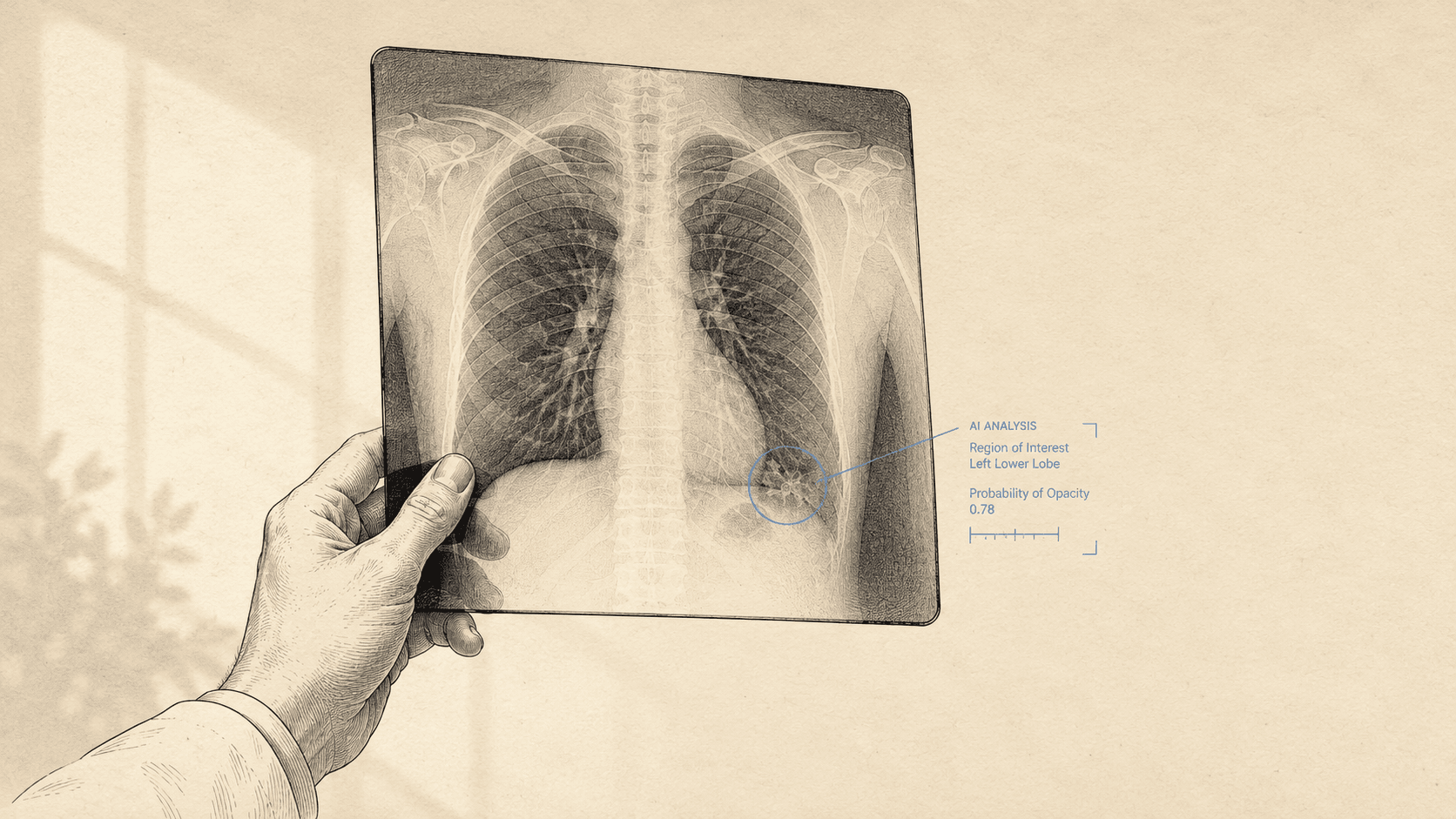
Lunit INSIGHT CXR excels in tuberculosis screening workflows. The 2025 Journal of Thoracic Diseases systematic review positioned Lunit among the top-performing AI tools for TB detection on chest radiographs, a use case critical in endemic regions and increasingly relevant in U.S. public health departments managing migrant health screenings. The software produces a binary flag (TB suspected or not) plus a heatmap overlay, streamlining triage for radiologists and non-physician readers in high-throughput settings.

Lunit INSIGHT Mammography demonstrates prognostic stratification capability. The 2026 European Radiology study of 3,000 invasive breast cancers found that AI-detected cancers had better long-term outcomes than AI-undetected cancers, even after propensity score matching for tumor size and grade. This suggests the AI identifies biologically favorable tumors earlier, adding clinical value beyond simple sensitivity metrics. Integration with PACS allows radiologists to see Lunit scores alongside existing reads without workflow disruption.

Lunit SCOPE for pathology focuses on tumor microenvironment analysis in oncology specimens. The 2025 ESMO Open trial of triple-negative breast cancer cited Lunit SCOPE for quantifying tumor-infiltrating lymphocytes and spatial immune features in residual disease after neoadjuvant chemotherapy. This positions the tool in translational research and precision oncology workflows, not just diagnostic pathology. The quantitative output (percentage immune cell infiltration, spatial clustering metrics) feeds directly into clinical trial endpoints and biomarker discovery.

Where it falls short

Pricing opacity is the largest barrier to adoption. Lunit lists no per-study, per-seat, or per-month tiers publicly. All contracts are custom enterprise agreements, making cost comparison with competitors impossible without vendor engagement. CMIOs report (in vendor-neutral forums, not Lunit-specific) that South Korean AI vendors often quote Asia-Pacific pricing that does not translate to U.S. markets, creating sticker shock during negotiations. Expect annual contracts with minimum volume commitments.

Real-world clinician feedback is nearly absent. Only one mention appeared in Reddit medical communities, and it was a passing reference in a radiology AI thread with no substantive review. This stands in stark contrast to tools like iCAD or Aidoc, which generate routine discussion among practicing radiologists. The silence may reflect limited U.S. market penetration or a customer base concentrated in research institutions under NDAs. Either way, prospective buyers lack peer validation outside published trials.

Lunit SCOPE faces stiff competition in pathology AI with unclear differentiation. PathAI, Paige.AI, and Ibex Medical Analytics all offer tumor microenvironment quantification, and several have deeper EHR integration and broader FDA clearances across cancer types. Lunit SCOPE appears focused on breast and lung pathology based on available literature, limiting its appeal to general surgical pathology labs. The lack of named health system references in marketing materials suggests early-stage commercial traction in the U.S.

Deployment realities

Lunit INSIGHT integrates via DICOM nodes into PACS, requiring IT coordination for firewall rules, VPN tunnels (if cloud-hosted), or on-premises server provisioning. Vendors report 8 to 12 weeks from contract signature to live deployment in large health systems, with parallel workflows (AI reads shadow mode, then concurrent mode, then primary read with radiologist override) taking an additional 4 to 8 weeks for validation. Smaller hospitals without dedicated PACS administrators will need vendor professional services, adding cost and timeline risk.

Training overhead for radiologists is minimal (vendor claims 30 minutes of orientation), but training for non-physician readers (nurses, technologists interpreting TB screenings) requires structured programs. The 2025 Academic Medicine paper on AI-assisted shared decision-making noted that medical students needed 6 hours of didactic plus case-based practice to interpret AI outputs appropriately, a signal that workflow changes extend beyond radiologists to the entire care team. Change management cannot be skipped.

Lunit SCOPE pathology deployment is more complex. Whole-slide imaging infrastructure must already exist, as Lunit does not provide scanners. The AI runs on scanned slides, meaning labs without digital pathology are excluded. Integration with laboratory information systems (LIS) is vendor-managed and varies by LIS vendor. PathAI and Paige.AI have published integrations with Epic Beaker; Lunit SCOPE integration depth with major LIS platforms is not documented in public materials, suggesting custom engineering per site.

Pricing realities

Lunit operates on an enterprise licensing model with no transparent per-study or per-seat fees. Industry benchmarks for radiology AI suggest $0.50 to $3.00 per study for tools like Aidoc or Zebra Medical, but Lunit pricing appears structured as annual platform fees plus professional services. A 500-bed hospital running 100,000 chest X-rays per year might face $150,000 to $300,000 annually based on comparable vendor quotes, though this is speculative without direct Lunit disclosure.

Hidden costs include professional services for integration (often 20 to 30 percent of the software license in year one), ongoing support fees (typically 15 to 20 percent annually), and potential per-API-call charges if cloud-hosted deployment exceeds baseline volume thresholds. Some enterprise AI contracts include tiered pricing that penalizes volume growth, creating misaligned incentives. Buyers should demand transparent overage pricing and annual true-up mechanics in the contract.

Return on investment hinges on radiologist time savings and downstream care acceleration. If Lunit INSIGHT CXR reduces false negatives in TB screening by 10 percent (a conservative estimate from the systematic review), a public health department screening 10,000 migrants annually avoids 50 missed cases, each representing $5,000 to $15,000 in downstream treatment costs. The ROI math works for high-volume TB programs but may not justify deployment in general radiology practices where TB prevalence is low.

Compliance + integration depth

Lunit INSIGHT holds FDA 510(k) clearance for chest radiography and mammography, CE marking in Europe, and MFDS approval in South Korea. HIPAA compliance is standard, and the vendor claims SOC 2 Type II certification, though the report is not publicly available. HITRUST certification status is unclear from vendor materials. Institutions requiring HITRUST for third-party AI vendors should request attestation during procurement.

EHR integration is limited to PACS-level connections for radiology workflows. There is no evidence of deep bi-directional write integration with Epic, Cerner, or Meditech EHRs. Lunit scores appear in the PACS viewer but do not populate structured fields in the EHR radiology module, meaning results must be manually transcribed into clinical notes. This workflow gap is common among radiology AI vendors but limits the tool's utility for population health queries or automated quality metrics.

Specialty society endorsements are absent. Neither the American College of Radiology, the Radiological Society of North America, nor the College of American Pathologists list Lunit in published AI tool compendiums or collaborative validation initiatives. This may reflect Lunit's focus on international markets rather than U.S. professional societies, but it leaves domestic CMIOs without independent third-party validation beyond peer-reviewed studies.

Vendor stability + roadmap

Lunit is a publicly traded company on the Korea Exchange (stock code 328130) with a market capitalization fluctuating around $1 billion USD as of early 2026. The company raised $104 million in a Series C round in 2021, with investors including IMM Investment, KB Investment, and Kyobo Life Insurance. This financial backing and public listing reduce the risk of sudden vendor disappearance, a concern with early-stage AI startups.

Leadership stability appears solid. Founder and CEO Brandon Suh (Seung Eun Lee) remains at the helm, and the company has expanded from South Korea into the U.S., EU, and Southeast Asia. Named customer references in public filings include international health systems but few U.S. names, suggesting the U.S. market remains an expansion target rather than an established revenue base. Procurement teams should request U.S. reference sites during due diligence.

The roadmap emphasizes oncology AI. Recent SEC filings (for ADR consideration) highlight plans to expand SCOPE into lung, colon, and gastric cancer pathology, building on the breast cancer foundation. INSIGHT development focuses on version iteration (the PLOS study documented meaningful performance gains between v3 and v4), suggesting continuous improvement rather than feature stagnation. However, no public commitment exists for integration depth with U.S. EHR vendors, a strategic gap competitors like Aidoc have closed.

How it compares

For chest radiography AI, Lunit INSIGHT competes directly with Qure.ai qXR, Infervision InferRead, and Riverain ClearRead. Qure.ai has deeper market penetration in U.S. TB screening programs and lists transparent per-study pricing ($1 to $2 per CXR in published case studies). Infervision emphasizes Chinese regulatory approvals and Asia-Pacific deployments. Riverain focuses on lung nodule detection rather than TB, making it a complementary rather than competing tool. Lunit wins on published validation volume for TB but loses on pricing transparency and U.S. clinician familiarity.

In mammography AI, iCAD ProFound AI and ScreenPoint Medical Transpara dominate U.S. radiology practices. iCAD has over 4,000 installations, integrates bi-directionally with major PACS vendors, and offers per-study pricing with monthly minimums. Transpara emphasizes European validation and has CE marking but limited U.S. presence. Lunit INSIGHT Mammography differentiates on prognostic stratification (the European Radiology survival analysis), a feature absent from iCAD and Transpara marketing. However, iCAD's workflow maturity and reference-site depth make it the safer pick for risk-averse CMIOs.

For pathology, PathAI and Paige.AI lead in U.S. adoption. PathAI offers FDA-cleared modules for breast, prostate, and colorectal cancer with named integrations (Epic Beaker, Cerner PathNet). Paige.AI emphasizes full-slide triage and has partnerships with Memorial Sloan Kettering. Lunit SCOPE trails both in FDA clearance breadth and LIS integration documentation. The tool's research-grade tumor microenvironment analysis appeals to academic medical centers running clinical trials but lacks the production-ready workflows of PathAI for routine diagnostic use.

What clinicians say

Real-world clinician feedback is nearly nonexistent in public forums. A single Reddit mention in r/radiology referenced Lunit in a list of 'international AI tools we don't see much in the U.S.,' with no substantive review. Radiologist Facebook groups and Aunt Minnie discussion boards show no threads dedicated to Lunit INSIGHT, in contrast to active debates about Aidoc, iCAD, and Zebra Medical. This silence likely reflects limited U.S. commercial deployment rather than negative sentiment, but prospective buyers lack peer validation.

Published trial investigators offer indirect feedback. The PLOS Digital Health authors noted that 'incremental performance gains between Lunit versions were statistically significant but clinically modest,' suggesting version churn may not justify frequent upgrades. The European Radiology team praised the prognostic signal in mammography but cautioned that 'AI detectability is confounded by tumor biology, and causality cannot be inferred.' These academic caveats do not appear in vendor marketing, a gap buyers should probe during demos.

The absence of vocal clinician advocates is notable. Competitors like iCAD feature radiologists in video testimonials and conference talks. Lunit's public materials rely on institutional logos (hospital names) without named clinician endorsers. This may reflect cultural differences (South Korean privacy norms) or contractual restrictions (NDAs in enterprise deals), but it leaves U.S. buyers without the peer references they expect.

What the literature says

Lunit INSIGHT has moderate peer-reviewed validation. The 2025 Journal of Thoracic Diseases systematic review analyzed 47 AI tools for TB detection on chest X-rays and ranked Lunit among the top five for sensitivity and specificity, though no tool achieved perfect performance. The 2025 PLOS Digital Health head-to-head comparison of Lunit versions (v3.2.0, v3.3.0, v4.8.0) found that newer versions reduced false positives by 8 percent but increased false negatives by 3 percent, illustrating the sensitivity-specificity tradeoff inherent in version updates.

The mammography evidence is stronger. The 2026 European Radiology propensity-matched study of 3,124 invasive breast cancers found that AI-detected tumors had superior 5-year distant metastasis-free survival compared to AI-undetected tumors (hazard ratio 0.68, 95 percent CI 0.52 to 0.89), even after adjusting for tumor size, grade, and receptor status. This suggests Lunit INSIGHT identifies biologically favorable cancers earlier, though the authors noted that causality (does AI detection improve outcomes, or does it simply flag easier-to-treat tumors) remains unproven.

Lunit SCOPE appears in translational oncology studies. The 2025 ESMO Open trial of neoadjuvant chemotherapy in triple-negative breast cancer used Lunit SCOPE to quantify tumor-infiltrating lymphocytes in residual disease, correlating immune infiltration with response to adjuvant atezolizumab. The 2026 Academic Medicine paper cited Lunit as an example tool in AI-assisted shared decision-making curricula, though it was not the focus of the intervention. Overall, the literature positions Lunit as a credible research tool with emerging clinical validation, but evidence density lags behind iCAD (100-plus peer-reviewed mentions) and Aidoc (200-plus).

Who it's for

Lunit INSIGHT CXR fits public health departments, federally qualified health centers, and academic medical centers running high-volume tuberculosis screening programs. The evidence base is strongest here, and the workflow (batch processing of screening CXRs with AI triage) aligns with the tool's design. Institutions screening fewer than 1,000 chest X-rays annually for TB should skip Lunit and rely on standard radiologist reads, as the ROI will not justify the integration effort.

Lunit INSIGHT Mammography suits large radiology practices (10-plus radiologists) with existing double-read workflows seeking to reduce callback rates or improve early detection metrics. The prognostic stratification feature appeals to academic centers publishing outcomes research, but community hospitals without research missions will find iCAD's simpler sensitivity boost more aligned with day-to-day workflows. Solo and small-group practices should avoid Lunit due to enterprise-only pricing and lack of vendor support for low-volume accounts.

Lunit SCOPE pathology is for research-intensive pathology labs running clinical trials in oncology, particularly breast and lung cancer studies requiring tumor microenvironment quantification. Production surgical pathology labs seeking AI for routine diagnostic triage (identifying regions of interest, flagging high-grade lesions) should choose PathAI or Paige.AI, which offer broader FDA clearances and mature LIS integrations. Community hospital pathology labs should skip Lunit SCOPE entirely, as the whole-slide imaging prerequisite alone excludes most non-academic settings.

The verdict

Lunit delivers credible AI tools for niche radiology and pathology workflows, backed by peer-reviewed validation in tuberculosis screening, breast cancer detection, and oncology biomarker discovery. The FDA clearances, public company stability, and published evidence separate Lunit from vaporware AI vendors. However, enterprise-only pricing, minimal U.S. clinician feedback, and limited EHR integration depth make this a cautious recommendation for well-resourced institutions with specific workflow gaps.

If your institution runs a high-volume TB screening program (1,000-plus chest X-rays annually) and has PACS infrastructure with IT support for DICOM integration, request a Lunit INSIGHT CXR pilot and compare performance against Qure.ai qXR. If you operate a large mammography practice seeking prognostic stratification for research or quality reporting, Lunit INSIGHT Mammography warrants evaluation, but iCAD ProFound AI remains the lower-risk choice for workflow maturity. If you run a pathology lab focused on routine diagnostics rather than clinical trials, skip Lunit SCOPE and evaluate PathAI or Paige.AI instead.

The thin evidence base (5 PubMed citations, 1 Reddit mention) and opaque pricing make Lunit unsuitable for early adopters seeking vendor-supported rapid deployment. CMIOs should budget 6 to 12 months for procurement, integration, and validation, with contingency plans if Lunit's U.S. commercial presence does not expand. The tool earns a place on shortlists for specialized use cases but does not merit broad recommendation until pricing transparency and real-world clinician testimonials improve.

Editorial review last generated May 23, 2026. Synthesized from clinician sentiment, peer-reviewed coverage, and our editorial silo picks. Refined by hand where vendor facts change.

Overview

KOSDAQ-listed Korean leader. Two product lines: INSIGHT (radiology) + SCOPE (pathology).

Pricing

What it costs

Free tier only; no paid plans publicly disclosed.

TierMonthlyAnnualNotes
PlanEnterprise + OEM-embedded.

Source: vendor pricing page. Verified May 23, 2026.

Peer-reviewed coverage

What the literature says

5 peer-reviewed studies indexed on PubMed evaluate Lunit in clinical contexts. The most relevant are shown below, ranked by editorial relevance score combining title match, study design, recency, and journal tier.

Comparison of different Lunit INSIGHT CXR software versions when reading chest radiographs for tuberculosis.
Codlin AJ, Vo LNQ, Dao TP, et al.· PLOS Digit Health· 2025
New versions of computer-aided detection (CAD) software for chest X-ray (CXR) interpretation during tuberculosis (TB) screening are regularly released which purport to have incremental performance gains. No studies have independently assessed differences in software performance between the World Health Organization recommended INSIGHT CXR software (Lunit, South Korea). A well-characterized Digital Imaging and Communications in Medicine (DICOM) test library was compiled using data from a community-based TB screening initiative in Ho Chi Minh City, Viet Nam. The performance of Lunit CAD softwar…
A systematic review and meta-analysis of artificial intelligence software for tuberculosis diagnosis using chest X-ray imaging.
Han ZL, Zhang YY, Li J, et al.· J Thorac Dis· 2025Systematic Review
Pulmonary tuberculosis (PTB) remains a global public health challenge, with 10.8 million new cases reported in 2023. Early diagnosis is crucial for controlling its spread, yet traditional sputum-based tests face limitations in turnaround time and resource availability. Chest X-ray (CXR) is a cost-effective diagnostic tool, but its use in high-tuberculosis (TB) burden regions is restricted by a shortage of radiologists. Artificial intelligence (AI)-based computer-aided detection (CAD) systems, leveraging deep learning, offer a promising solution for automated PTB detection. However, variabilit…
Genomic and transcriptomic analyses of residual invasive triple-negative breast cancer after neoadjuvant chemotherapy in the prospective MIRINAE trial (a randomized phase II trial of adjuvant atezolizumab plus capecitabine compared to capecitabine; KCSG-BR18-21).
Im SA, Park K, Koh J, et al.· ESMO Open· 2025RCT
Profiling residual disease after neoadjuvant chemotherapy (NAC) might identify molecular target and tumor microenvironmental features to guide adjuvant therapy. We explored the characteristics of residual triple-negative breast cancer (TNBC) in the prospective MIRINAE trial (KCSG-BR18-21), a phase II study evaluating adjuvant atezolizumab plus capecitabine versus capecitabine in TNBC without pathological complete response after NAC (NCT03756298) through multi-omics analyses. Residual TNBC samples were analyzed for tumor-infiltrating lymphocytes (TILs), programmed death-ligand 1 (PD-L1) immuno…
Artificial intelligence-assisted shared decision-making training for medical students transitioning to residency.
Kim YM, Lee YM, Kim DH, et al.· Acad Med· 2026
Although the use of artificial intelligence (AI) as a diagnostic aid is increasing in clinical practice, medical education provides little training on how to incorporate AI-generated information into diagnosis and use it effectively in shared decision-making (SDM) with patients. The authors developed and piloted a simulation-based course to train AI-assisted SDM to final-year medical students preparing for residency. Conducted between June and October 2023, the course combined online prelearning with onsite simulations using clinically approved AI tools (Lunit INSIGHT CXR, version 3.1.4.1 and…
Long-term prognostic implications of AI-detected versus AI-undetected breast cancers on mammography: a propensity score-matched analysis.
Kim HJ, Chae EY, Eom HJ, et al.· Eur Radiol· 2026
To evaluate the association between the cancer detectability by artificial intelligence (AI) and long-term survival outcomes in invasive breast cancer. This retrospective study analyzed consecutive women diagnosed with invasive breast cancer who underwent preoperative mammography between January and December 2013. Mammograms were analyzed using FDA-cleared AI software (Lunit INSIGHT MMG v1.1.8.2). Cancers were classified as AI-detected if correctly localized by AI, and AI-undetected if AI missed or mislocalized. Propensity score matching was performed using 29 clinical, pathological, and trea…

See all on PubMed