Bottom line
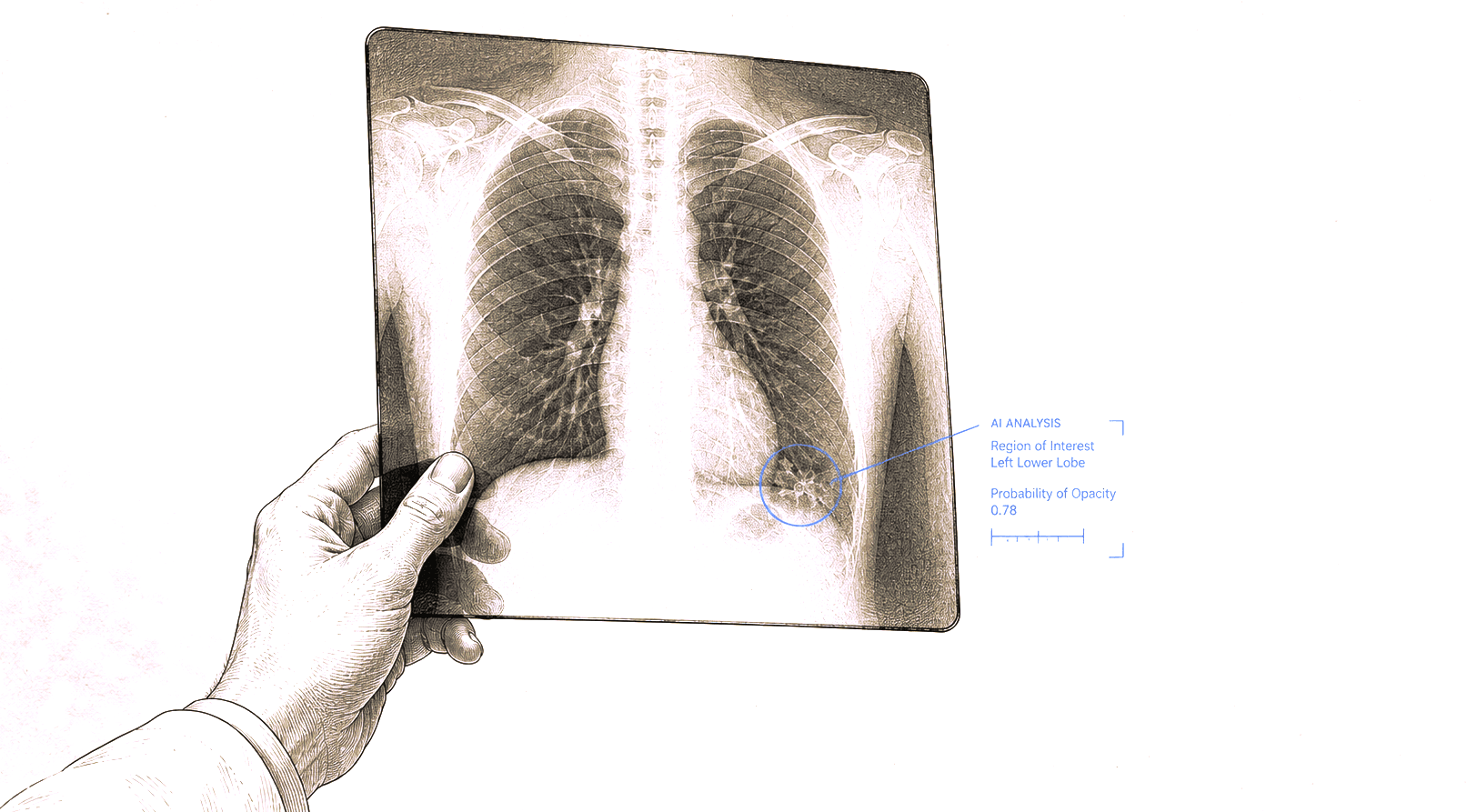
Pearl sells Second Opinion, AI that reads dental radiographs and marks suspected findings for the dentist, to dentists and dental service organizations. It covers bitewing, periapical and panoramic radiographs, with CBCT in a separate 3D product. Second Opinion has eight FDA decisions, the first in 2022 and seven in 2025. A general dentist or DSO that wants one vendor across film types fits. A practice centered on secondary caries has a moderate-sensitivity comparison of commercial systems to go on.
FDA-cleared dental x-ray AI (Second Opinion) that marks caries, bone loss and restorations, for dentists and DSOs.
No public price.
What does Second Opinion read?
Pearl's FAQ says it detects up to 18 findings per image, including incipient and progressed caries, periapical radiolucency, calculus, bone loss, defective restoration margins, impactions and existing restorations such as crowns, bridges, root canals and implants. Second Opinion 3D reviews CBCT for general dentists and launched on September 3, 2026 according to Pearl's news page. Practice analytics, claims, training and ambient-note tools sit alongside.
The company lists "40+ integrations," with DEXIS, Carestream, Open Dental and Eaglesoft among those named in the FAQ, and a standalone web app exists. Pearl's footer links a privacy policy, terms, accessibility and cookie pages, and carries no security or trust page.
Which FDA decisions has it received?
The base clearance, K210365 (Second Opinion, March 4, 2022), covers computer-aided detection of caries, restoration margin discrepancy, calculus, periapical radiolucency and existing restorations on bitewing and periapical films of permanent teeth in patients 12 and older. The 2025 decisions split by task. Caries detection came in versions for patients 19 and older (January) and for ages 4 and older with primary or mixed dentition (May), plus a periapical segmentation version (June). Periapical radiolucency contours (April), bone-level measurement (May) and CBCT 3D (May) followed. K250525 (Second Opinion Panoramic, November 14, 2025) covers caries, periapical radiolucency and impacted third molars on panoramic films.
Pearl's pages say 26 clearances. FDA records list eight Second Opinion decisions, and no list of the 26 is published.
What do two papers report on accuracy?
A 2025 Diagnostics paper (PMID 40507004) tested Second Opinion v1.1 and reported sensitivity of 91.0% for caries, 86.6% for periapical lesions, 80.2% for calculus and 91.1% for marginal bone loss, with caries specificity of 87%. A 2026 Caries Research study (PMID 42853759) compared five commercial systems, Second Opinion among them, on secondary caries in bitewings. Sensitivity ran from 0.327 to 0.487 and specificity from 0.957 to 0.986 across the systems, and the authors described all five as conservative with moderate sensitivity.
Pearl's own pages claim 94% accuracy, validated by an unnamed independent third party, and 30% more treatment acceptance at practice level.
Where does the company stand?
Pearl Inc. of Los Angeles was founded in 2019 per its About page. Its home page counts more than 29,000 practices and its About page 23,000, both vendor figures.
What does it cost?
No public price.
The verdict
A dental group that wants broad film coverage from one vendor fits Pearl. For a practice centered on secondary caries, the relevant number is the 2026 range of 0.327 to 0.487 across five systems, Second Opinion included.
Editorial review last generated November 2, 2026. Synthesized from clinician sentiment, peer-reviewed coverage, and our editorial silo picks. Refined by hand where vendor facts change.