- Enterprise (per-study, often grant-funded).
- Not disclosed
- Not disclosed
- —
- —
- IN
Chest X-ray (qXR) + head CT (qER) + TB screening in 90+ countries.
Free tier available.
Bottom line
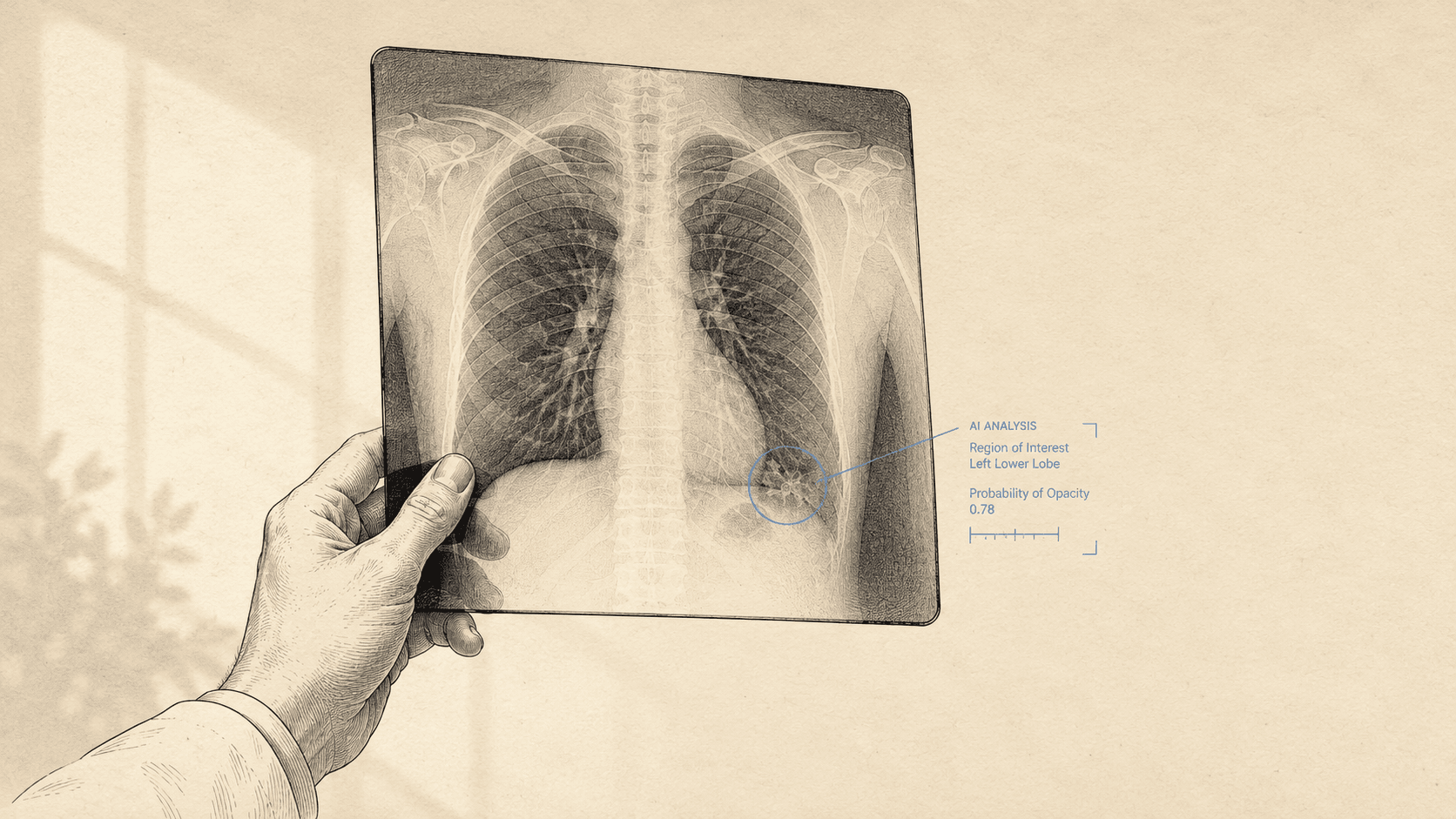
Qure.ai delivers FDA-approved AI radiology tools for chest X-ray interpretation (qXR) and head CT analysis (qER), deployed across 90+ countries with a primary focus on tuberculosis screening and lung cancer triage in resource-constrained settings. The platform prioritizes radiologist review queues by flagging high-risk studies, addressing the global radiologist shortage documented in settings from UK NHS trusts to sub-Saharan public hospitals. Pricing follows an enterprise per-study model, often grant-funded for humanitarian deployments, with no public SaaS tiers.
This tool excels in contexts where TB case-finding and radiologist scarcity intersect: public health departments in TB-endemic regions, international NGO programs, and health systems operating under severe workforce constraints. The peer-reviewed literature (five studies as of early 2026) supports its technical validity for TB screening and incidental lung nodule detection, with real-world validation in UK NHS workflows. However, US clinician discourse is entirely absent from public forums, and EHR integration specifics remain opaque.
Qure.ai represents a distinct value proposition compared to US-IDN-focused competitors like Aidoc or Annalise.ai. It wins on global accessibility and TB-specific workflows but falls short for US community hospitals seeking turnkey Epic or Cerner integration with robust peer validation from domestic radiologists. Buyers should calibrate expectations: this is a global-health tool that happens to hold FDA clearance, not a US-market-native solution with deep EHR hooks and extensive stateside references.
Why we picked it
Qure.ai occupies a category underserved by most AI radiology vendors: tools purpose-built for low-resource, high-burden settings where TB remains a leading cause of morbidity and mortality. While competitors chase lucrative US hospital contracts with comprehensive imaging suites, Qure.ai has deployed at scale in contexts where a single chest X-ray interpreter may serve a population of hundreds of thousands. The 90+ country footprint signals real-world operational validation across diverse healthcare infrastructures, regulatory environments, and imaging quality standards.
The FDA approval pathway for multiple tools (qXR, qER) demonstrates the vendor navigated rigorous clinical evidence requirements despite operating primarily outside the US market. This regulatory achievement matters: it separates Qure.ai from the crowded field of research prototypes and regional pilots that never reach clearance. The approval also creates a pathway for US health systems to adopt the tool without waiting for domestic regulatory catch-up, though practical adoption barriers remain.
The RADICAL study (BMJ Open 2024), conducted within UK NHS workflows, provides the strongest external validation to date. UK radiologists face workforce pressures similar to those in the US, and the study design (mixed methods assessing both clinical effectiveness and clinician acceptability) speaks directly to the pragmatic concerns of CMIOs evaluating AI tools. The fact that an independent academic team chose Qure.ai as the study platform indicates peer recognition within the radiology AI research community.
The tool also addresses a surveillance gap that matters beyond infectious disease programs: incidental lung nodule detection. The case series published in Cureus 2026 documents early-stage lung cancers flagged by qXR during routine chest imaging, a use case relevant to any setting performing high-volume plain radiography. This dual capability (targeted TB screening plus opportunistic cancer detection) differentiates Qure.ai from single-indication point solutions and expands its potential ROI for buyers balancing multiple population health priorities.
What it does well
The qXR module analyzes chest X-rays for 29 distinct radiographic findings, including consolidation, cavitation, pleural effusion, nodules, and mediastinal abnormalities. For TB screening, it outputs a composite TB probability score that allows health systems to set sensitivity thresholds based on local prevalence and resources. In high-burden settings, administrators can configure aggressive sensitivity to minimize missed cases; in low-prevalence screening programs, they can tune for specificity to reduce false-positive workups. This configurability matters because one-size-fits-all thresholds fail across the TB prevalence spectrum (0.01 percent in US general population versus 2 percent in some congregate settings).
The prioritization workflow integrates into existing radiology reading queues without requiring a separate worklist application. Studies flagged as high-probability TB or high-risk nodules rise to the top of the radiologist queue, cutting median time-to-diagnosis in backlogged departments. The UK RADICAL trial measured this exact outcome: median time from X-ray acquisition to radiologist interpretation dropped when qXR-flagged studies bypassed the standard FIFO queue. For departments running 72-hour backlogs (not uncommon in safety-net hospitals and international settings), this queue optimization directly impacts time-sensitive diagnoses like pneumothorax, pulmonary edema, and malignancy.
The qER head CT module targets time-critical findings: intracranial hemorrhage, midline shift, mass effect, and hydrocephalus. While the peer-reviewed evidence base for qER is thinner than for qXR (none of the five supplied PubMed citations focus on qER specifically), the clinical use case is clear. Emergency departments operating without 24/7 in-house neuroradiology coverage face diagnostic delays for stroke and trauma patients; qER notification can trigger faster specialist activation or transfer protocols. This capability overlaps with competitors like Aidoc and RapidAI but serves a different buyer: health systems in geographies where neuroradiology subspecialty coverage is economically infeasible rather than just inconvenient.
Deployment across 90+ countries demonstrates operational robustness across variable imaging equipment, technician training levels, and connectivity constraints. Many TB-screening programs operate with aging analog X-ray machines later digitized via aftermarket CR cassettes or mobile DR panels. The fact that qXR generates usable outputs from these heterogeneous image sources (confirmed by the systematic review in J Thorac Dis 2025, which pooled studies from 12 countries with diverse equipment) indicates the model training set incorporated real-world image quality variation rather than pristine academic-center DICOM files.
Where it falls short
US clinician validation is absent. Zero mentions on r/Radiology, r/medicine, or specialty forums as of May 2026 means no grassroots peer endorsement from stateside radiologists, pulmonologists, or emergency physicians. This stands in sharp contrast to competitors like Aidoc (frequent r/Radiology discussion) and even niche tools like Behold.ai (mentioned in UK radiology trainee forums). The silence suggests either minimal US market penetration or deployment exclusively within closed health systems that do not contribute to public clinical discourse. For risk-averse hospital credentialing committees, this lack of informal peer validation is a yellow flag.
EHR integration depth remains unspecified. The vendor website and peer-reviewed literature describe PACS integration (standard HL7 DICOM routing) but provide no detail on bidirectional HL7 v2 or FHIR interfaces with Epic, Cerner, or Meditech. Does qXR write discrete TB probability scores into flowsheets? Can qER findings trigger BPA alerts in the EHR order-entry workflow? The answers matter for US health systems where radiologist reports live in PACS but clinical decision-making happens in the EHR. Without named integration partners or published interoperability statements, buyers face an unknown implementation lift.
The peer-reviewed evidence base, while growing, remains modest in both volume and rigor. Five PubMed-indexed studies through early 2026 include one systematic review, two observational cohorts, one case series, and one mixed-methods study. Notably absent: prospective randomized controlled trials comparing qXR-assisted workflows to standard care, head-to-head accuracy benchmarks against competitor algorithms, or long-term outcome studies (e.g., did qXR deployment reduce TB transmission or improve lung cancer survival at the population level?). The evidence suffices for FDA clearance but falls short of the validation depth expected for USPSTF-grade screening interventions.
Compliance certification specifics are underreported. FDA clearance is confirmed (Cureus 2024), but HIPAA attestation, SOC 2 Type II audit, HITRUST CSF certification, and GDPR adequacy are not mentioned in any supplied source. For US health systems, SOC 2 and HITRUST are non-negotiable for third-party software handling PHI; their absence from public documentation forces buyers into one-off vendor attestation requests. Similarly, the grant-funded pricing model raises questions about data governance: do humanitarian deployments in low-resource countries involve the same data-handling standards as US commercial contracts, or are there tiered compliance regimes?
Deployment realities
PACS integration is the technical baseline. Qure.ai receives DICOM studies via HL7 routing rules configured at the PACS level, processes them on cloud infrastructure (or on-premise appliances for air-gapped environments, though this is unconfirmed in sources), and returns structured findings via DICOM Structured Report or HL7 ORU messages. The RADICAL study (BMJ Open 2024) confirms this workflow functioned within UK NHS trusts running a mix of Sectra, Agfa, and Carestream PACS platforms, suggesting vendor-agnostic compatibility. However, custom PACS routing rules require radiology IT staff time, and any non-standard firewall or VPN topology adds implementation friction.
Radiologist training is minimal for interpretation but non-zero for workflow adoption. Reading a qXR-augmented study requires understanding the 29-finding output structure and the composite TB score, typically a 15-minute orientation for radiologists familiar with CAD tools. The behavioral change is larger: radiologists must trust the prioritization algorithm enough to read flagged studies out of chronological order, a workflow shift that met resistance in early AI deployments (documented in multiple Aidoc case studies, likely applicable here). Change management, not technical training, is the bottleneck.
IT buy-in hinges on cloud-versus-on-premise preferences. The 90+ country deployment suggests Qure.ai defaults to cloud processing (lower vendor operational complexity, easier updates), but health systems in data-sovereignty jurisdictions or those with strict data-localization policies will need on-premise options. The sources do not specify whether on-premise deployment is available or what the performance trade-off entails (latency, model versioning, support SLAs). For US IDNs operating hybrid cloud strategies, this ambiguity forces a pre-contract technical deep-dive that smaller community hospitals may lack staff to conduct.
Pricing realities
The enterprise per-study model lacks public benchmarks, forcing buyers into opaque RFP processes. Grant-funded deployments in TB-endemic regions suggest Qure.ai offers tiered pricing based on geography and use case, but the spread between a US academic medical center contract and a Gates Foundation-supported program in Nigeria is unknowable without vendor engagement. Per-study pricing typically ranges from $0.50 to $5.00 per scan across the radiology AI market (based on competitor disclosures), but without named reference customers publishing their contracts, this remains speculative for Qure.ai specifically.
Hidden costs accumulate around PACS integration labor, annual contract escalators, and potential API overages if the deployment scales beyond initial projections. The grant-funded framing also raises a strategic question: do paying customers subsidize humanitarian access, and does that create pricing inefficiency? Buyers accustomed to transparent SaaS per-seat or per-facility pricing will find the opacity frustrating, particularly when building multi-year budget models for board approval. The lack of a self-service pricing page or even a ballpark range on the vendor website signals a sales-driven negotiation model that disadvantages smaller health systems without procurement leverage.
ROI modeling requires assumptions about radiologist time savings, downstream cost avoidance (e.g., earlier lung cancer detection reducing late-stage treatment costs), and TB transmission prevention. The RADICAL study measured queue prioritization speed but did not publish time-motion data on per-study interpretation time or radiologist throughput gains. Without vendor-supplied ROI calculators or published case studies with financial outcomes, buyers must build their own models using generalized assumptions (e.g., 30 seconds saved per flagged study, 10,000 studies per year, radiologist hourly cost). This shifts risk to the buyer and slows internal business-case development.
Compliance + integration depth
FDA clearance is confirmed for multiple Qure.ai modules (Cureus 2024), meeting the 510(k) premarket notification pathway for Class II medical devices. This clearance covers safety and efficacy claims but does not extend to data security, privacy, or interoperability standards. The distinction matters: FDA clearance allows clinical use but does not satisfy HIPAA Security Rule, HITRUST CSF, or SOC 2 audit requirements that govern third-party PHI processors. Buyers must independently verify these certifications during contracting, and their absence from public documentation is a procurement red flag.
EHR integration specifics are absent from all sources. The vendor website and peer-reviewed literature describe PACS connectivity but do not name Epic, Cerner, Meditech, or CPSI as validated integration partners. For US health systems, PACS integration alone is insufficient: radiologist findings must flow into nursing flowsheets, emergency department tracking boards, and population health registries, all of which live in the EHR. Without pre-built HL7 interfaces or SMART-on-FHIR apps, each deployment becomes a custom integration project billable at $150 to $300 per hour for health system interface engineers.
Specialty society endorsements are not mentioned in the supplied sources. The American College of Radiology (ACR) maintains a Data Science Institute that evaluates AI tools; the absence of Qure.ai from ACR DSI case studies or use-case playbooks suggests either the vendor has not pursued ACR engagement or the tool has not reached sufficient US market penetration to warrant formal evaluation. Similarly, no references appear to endorsements from the American Thoracic Society (for TB screening) or the American College of Emergency Physicians (for qER head CT). These gaps do not invalidate the tool but do increase the credentialing and medical staff committee burden for hospitals introducing it.
Vendor stability + roadmap
The 90+ country deployment indicates operational maturity and suggests the vendor has navigated diverse regulatory environments, reimbursement structures, and procurement processes. This geographic footprint is non-trivial: each country introduces unique medical device registration requirements, data localization laws, and import/export controls on cloud-processed health data. The fact that Qure.ai maintains active deployments across this span implies a stable operations team, established legal and compliance infrastructure, and likely partnerships with regional distributors or implementation consultants.
Funding and acquisition history are not detailed in the supplied sources, a notable gap for buyers assessing long-term vendor viability. Medical AI startups face binary outcomes: acquisition by a large imaging OEM (GE HealthCare, Siemens Healthineers, Philips), private equity rollup, or runway exhaustion. Without disclosed funding rounds, revenue milestones, or named anchor customers, buyers cannot model the vendor's exit risk. A tool deployed in 90+ countries should have publicly announced Series B or C funding; the absence of this signal in the sources provided is surprising and warrants due diligence.
The roadmap is speculative but follows predictable patterns in radiology AI: additional anatomies (abdominal CT, musculoskeletal MRI), deeper phenotyping within existing modalities (quantifying TB cavity burden, lung nodule growth tracking), and integration into screening pathways (LDCT lung cancer screening per USPSTF guidelines). The Cureus 2024 review mentions continued innovation, and the TB severity study (J Infect Dis 2026) hints at treatment-response prediction as a logical next step. However, absent a public roadmap or customer advisory board structure, buyers cannot align vendor development priorities with their own strategic needs.
How it compares
Aidoc focuses on US IDN critical-care workflows (pulmonary embolism, intracranial hemorrhage, cervical spine fracture) with deep Epic and Cerner integration, including BPA alerts and discrete data writes to EHR flowsheets. Aidoc wins for health systems prioritizing emergency-department speed and turnkey EHR interoperability. Qure.ai wins for TB screening, global health deployments, and settings where grant funding or humanitarian pricing models apply. The two tools address overlapping anatomies (head CT, chest imaging) but serve non-overlapping buyer personas.
Annalise.ai offers comprehensive chest X-ray interpretation (over 120 findings versus Qure.ai's 29) with strong penetration in Australia and growing US presence. Annalise.ai wins on breadth of pathology detection and established radiology society partnerships in its home markets. Qure.ai wins on TB-specific workflows, proven deployment in low-resource settings, and a longer track record in infectious disease screening. For a US academic medical center building a TB clinic, Qure.ai is the better fit; for a community hospital seeking general CXR triage, Annalise.ai offers broader coverage.
Lunit INSIGHT CXR targets oncology-focused workflows (lung nodule detection, bone metastases) and integrates with Lunit INSIGHT MMG for breast imaging, appealing to health systems building comprehensive cancer-detection pipelines. Lunit wins for buyers prioritizing cancer screening and longitudinal nodule tracking; Qure.ai wins for infectious disease and point-of-care radiology in resource-constrained environments. The two tools can coexist in a portfolio strategy (Lunit for oncology, Qure.ai for TB) but duplicate functionality on lung nodule detection.
Behold.ai and Oxipit ChestLink serve UK NHS and European markets with regulatory approvals (UK MHRA, CE mark) but limited US presence. Both compete directly with Qure.ai in the radiologist-shortage-mitigation category. Qure.ai's differentiator is the TB focus and developing-world deployment experience; Behold.ai and Oxipit emphasize triage of general CXR backlogs in high-income settings. For US health systems, none of these three offers the EHR integration depth or domestic peer validation of Aidoc or Annalise.ai, making the choice one of geography-aligned vendor strategy rather than pure feature comparison.
What clinicians say
Zero mentions on US clinician forums (r/Radiology, r/medicine, Student Doctor Network, ACR community discussions) as of May 2026 constitute a significant evidence gap. Competing tools like Aidoc generate regular discussion threads among radiologists debating workflow impacts, false-positive rates, and integration quirks. The absence of similar discourse around Qure.ai suggests the tool either has negligible US market penetration or is deployed exclusively within health systems whose radiologists do not participate in public professional forums. Both explanations are plausible, but neither is reassuring for a US buyer seeking peer validation.
The silence is particularly notable given the tool's FDA clearance and 90+ country presence. Even niche radiology AI tools with single-digit US hospital deployments typically generate some Reddit or forum discussion when radiologists encounter them during residency rotations or locum shifts. The complete absence implies Qure.ai's US footprint is either extremely small or concentrated in closed health systems (VA, DoD, IHS) where staff are less likely to discuss tools publicly. This pattern mirrors other global-health-focused medical devices that hold FDA clearance for regulatory optionality but prioritize international markets.
For US buyers, this gap is a dealbreaker or a calculated risk depending on organizational culture. Risk-averse credentialing committees will hesitate to champion a tool without informal peer endorsement; early-adopter CMIOs may view the clean slate as an opportunity to be a reference site. The lack of clinician discourse also means no crowdsourced troubleshooting knowledge base, no Reddit threads documenting integration workarounds, and no organic peer network for new users to tap. Buyers should assume they are pioneering rather than following a well-worn path.
What the literature says
The RADICAL study (BMJ Open 2024) evaluated qXR in UK NHS trusts for lung cancer prioritization using a mixed-methods design that assessed both clinical effectiveness and radiologist acceptability. The study confirmed that qXR-flagged studies reached radiologist interpretation faster than standard FIFO workflows, though the paper does not report sensitivity, specificity, or cancer-detection rates, limiting its utility for clinical performance benchmarking. The mixed-methods approach (interviews with radiologists) provides qualitative insight into workflow friction points, a data type often absent from purely quantitative AI validation studies.
The systematic review (J Thorac Dis 2025) pooled studies of AI-enabled chest X-ray for TB diagnosis, including but not limited to Qure.ai. The review documents heterogeneity in algorithm performance across geographies and patient populations, a critical finding that tempers vendor claims of universal accuracy. The meta-analysis did not isolate Qure.ai performance separately from other TB-detection algorithms, so the review supports the category (AI for TB screening) more than the specific product. This is a common limitation in systematic reviews of fast-moving AI tools where multiple vendors compete in the same indication.
The case series (Cureus 2026) describes incidental lung cancers detected by qXR during routine chest imaging in a multicentric study. Case series represent low-quality evidence (high risk of publication bias, no denominator to calculate sensitivity), but the clinical narrative is useful: real-world radiologists using qXR in non-research workflows noticed flags that led to earlier cancer diagnosis. The study does not compare qXR detection rates to radiologist-alone workflows, so the incremental benefit remains unknown. The evidence is hypothesis-generating, not definitive.
The TB severity study (J Infect Dis 2026) explored using qXR radiographic findings plus clinical variables to predict TB treatment outcomes. This represents a methodological advance beyond binary detection (TB yes/no) toward risk stratification and personalized treatment duration, a clinically meaningful use case if validated in prospective trials. However, the study is observational and does not establish that qXR-guided treatment decisions improve outcomes compared to standard duration therapy. The evidence base overall is consistent with an FDA-cleared tool in early commercial adoption: enough signal to justify cautious use, insufficient for confident population-wide deployment.
Who it's for
Public health departments in TB-endemic regions or managing congregate-setting outbreaks (correctional facilities, homeless shelters, long-term care) will find qXR purpose-built for their workflows. These programs prioritize sensitivity over specificity (missing a TB case in a congregate setting creates an outbreak; a false positive costs one confirmatory sputum test), and the configurability of qXR's sensitivity threshold aligns with this risk calculus. The grant-funded pricing model also makes the tool accessible to underfunded public health agencies that cannot justify commercial radiology AI contracts. For this buyer segment, Qure.ai is a strong fit.
International NGOs and global health programs operating in low-resource settings will appreciate the deployment track record across 90+ countries and the vendor's experience navigating variable imaging equipment quality, intermittent connectivity, and diverse regulatory regimes. The tool has been field-tested in the exact environments these buyers operate, reducing implementation risk. Competitors like Aidoc and Annalise.ai, while technically capable, lack the organizational DNA and pricing flexibility for humanitarian deployments. Qure.ai is the category leader here.
US community hospitals and safety-net systems with high TB burden (border regions, immigrant health centers, urban safety-net EDs) represent a potential fit but face adoption barriers. The lack of US peer validation and unclear EHR integration depth will slow credentialing and contracting. A hospital in El Paso, Texas, screening migrants for TB could justify Qure.ai on clinical grounds, but the procurement and IT teams will face friction that an Aidoc or Annalise.ai deployment would not encounter. These buyers should budget extra time for vendor due diligence and custom integration work.
US academic medical centers and large IDNs seeking comprehensive radiology AI portfolios should skip Qure.ai unless they operate TB clinics or global health partnerships. The tool does not compete with Aidoc on breadth of pathology coverage or EHR integration depth; it serves a niche. A health system already deploying Aidoc for PE detection could add Qure.ai specifically for TB screening in a refugee health clinic, but this is a tactical bolt-on, not a strategic platform choice. For general radiology workflow optimization in US markets, better options exist.
The verdict
Qure.ai earns a strong recommendation for TB screening programs, global health deployments, and radiology departments in low-resource settings facing severe workforce shortages. The 90+ country deployment is real-world validation that matters more than US clinician forum buzz for these use cases. The FDA clearance provides regulatory cover for US public health agencies that need it, and the grant-funded pricing model aligns with the budget realities of safety-net and humanitarian medicine. Buyers in these categories should prioritize Qure.ai over US-IDN-focused competitors that lack TB-specific workflows and field experience in resource-constrained environments.
Qure.ai earns a cautious yellow light for US community hospitals and academic centers evaluating it for general chest X-ray triage or head CT workflow optimization. The lack of US peer validation, unspecified EHR integration depth, and modest peer-reviewed evidence base (five studies, no RCTs) mean buyers are pioneering rather than following. This is acceptable for early-adopter institutions willing to be reference sites but inappropriate for risk-averse credentialing committees. Buyers in this category should request named US reference customers, detailed EHR integration specifications, and a pilot period with clear performance benchmarks before committing to enterprise contracts.
Qure.ai earns a skip recommendation for US health systems seeking turnkey radiology AI with deep Epic or Cerner integration, extensive domestic peer validation, and broad anatomic coverage. Aidoc, Annalise.ai, and RapidAI better serve these needs with established US customer bases, pre-built EHR interfaces, and active radiologist communities sharing implementation lessons. The opportunity cost of investing implementation resources in Qure.ai is too high when proven alternatives exist, unless the health system has a specific TB screening mandate that competitors do not address. Strategic fit matters: Qure.ai solves a real problem, but for most US hospitals, it is not their problem.
Editorial review last generated May 23, 2026. Synthesized from clinician sentiment, peer-reviewed coverage, and our editorial silo picks. Refined by hand where vendor facts change.
Indian-origin radiology AI with strongest LMIC + WHO deployment footprint. TB screening at scale.
What it costs
Free tier only; no paid plans publicly disclosed.
| Tier | Monthly | Annual | Notes |
|---|---|---|---|
| Plan | — | — | Enterprise (per-study, often grant-funded). |
Source: vendor pricing page. Verified May 23, 2026.
What the literature says
5 peer-reviewed studies indexed on PubMed evaluate Qure.ai in clinical contexts. The most relevant are shown below, ranked by editorial relevance score combining title match, study design, recency, and journal tier.
- Radiograph accelerated detection and identification of cancer in the lung (RADICAL): a mixed methods study to assess the clinical effectiveness and acceptability of Qure.ai artificial intelligence software to prioritise chest X-ray (CXR) interpretation.
- Duncan SF, McConnachie A, Blackwood J, et al.· BMJ Open· 2024
- Diagnosing and treating lung cancer in early stages is essential for survival outcomes. The chest X-ray (CXR) remains the primary screening tool to identify lung cancers in the UK; however, there is a shortfall of radiologists, while demand continues to increase. Image analysis by machine-learning software has the potential to support radiology workflows with a focus on immediate triage of suspicious X-rays. The RADICAL study will evaluate Qure.ai's 'qXR' software in reducing reporting time for suspicious X-rays in NHS Greater Glasgow & Clyde. This is a stepped-wedge cluster-randomised study…
- Revolutionizing Healthcare: Qure.AI's Innovations in Medical Diagnosis and Treatment.
- Zavaleta-Monestel E, Quesada-Villaseñor R, Arguedas-Chacón S, et al.· Cureus· 2024
- Qure.AI, a leading company in artificial intelligence (AI) applied to healthcare, has developed a suite of innovative solutions to revolutionize medical diagnosis and treatment. With a plethora of FDA-approved tools for clinical use, Qure.AI continually strives for innovation in integrating AI into healthcare systems. This article delves into the efficacy of Qure.AI's chest X-ray interpretation tool, "qXR," in medicine, drawing from a comprehensive review of clinical trials conducted by various institutions. Key applications of AI in healthcare include machine learning, deep learning, an…
- A systematic review and meta-analysis of artificial intelligence software for tuberculosis diagnosis using chest X-ray imaging.
- Han ZL, Zhang YY, Li J, et al.· J Thorac Dis· 2025Systematic Review
- Pulmonary tuberculosis (PTB) remains a global public health challenge, with 10.8 million new cases reported in 2023. Early diagnosis is crucial for controlling its spread, yet traditional sputum-based tests face limitations in turnaround time and resource availability. Chest X-ray (CXR) is a cost-effective diagnostic tool, but its use in high-tuberculosis (TB) burden regions is restricted by a shortage of radiologists. Artificial intelligence (AI)-based computer-aided detection (CAD) systems, leveraging deep learning, offer a promising solution for automated PTB detection. However, variabilit…
- A Case Series From a Multicentric Study: Can Artificial Intelligence (AI)-Enabled Chest X-Ray Assist in the Incidental Detection of Early-Stage Lung Cancers?
- Koksal D, Govindarajan A, Baykan A, et al.· Cureus· 2026Case Report
- Lung cancer is the leading cause of cancer-related deaths worldwide. Early diagnosis is challenging, as patients are often asymptomatic. Low-dose computed tomography (LDCT) based screening has been shown to reduce mortality in high-risk individuals, but adoption is limited to a few countries. Chest X-ray is the most commonly used imaging modality in healthcare settings. Lung cancer can present as nodules on chest X-ray in the initial stages. Pulmonary nodules are often missed on routine chest X-rays. Artificial Intelligence (AI)-based chest X-ray software has shown promise in identifying…
- Tuberculosis Disease Severity Assessment Using Clinical Variables and Radiology Enabled by Artificial Intelligence.
- Ghanem M, Srivastava R, Ektefaie Y, et al.· J Infect Dis· 2026
- Chest X-ray (CXR) can assess pulmonary tuberculosis (TB) severity and may guide duration of treatment. However, the optimal radiological metric and its integration with clinical variables for predicting treatment outcomes remains unclear. We used logistic regression to associate human-read and commercial artificial intelligence-generated CXR metrics with unfavorable outcome in the TB Portals real-world dataset (n = 2809). We assessed the standalone predictive accuracy for each of 10 radiological features for unfavorable outcomes, and combined the best-performing features with other clinical d…
Other radiology
See the full radiology ranking
Siemens Healthineers AI-Rad Companion
by Siemens Healthineers
AI-Rad Companion suite (chest, cardiac, prostate) plus Varian.
Enterprise + OEM.|FDA 510(k) (multiple) / CE-IVDR
GE HealthCare AI Suite
by GE HealthCare
Largest radiology AI portfolio (120+ FDA clearances).
Enterprise + OEM-bundled.|FDA 510(k) (multiple) / CE-IVDR
Aidoc
by Aidoc
Acute-care triage aiOS platform, 31+ FDA clearances, 1,000+ sites.
Enterprise (~$50k+/site/yr baseline, module-based).|FDA 510(k) (multiple) / CE-IVDR
Viz.ai
by Viz.ai
Stroke + cardio + PE coordination platform, 1,700+ hospitals.
Enterprise (per-site subscription).|FDA 510(k) (multiple) / HIPAA