
- No public price.
- Not disclosed
- Not disclosed
- —
- —
- US
Radiology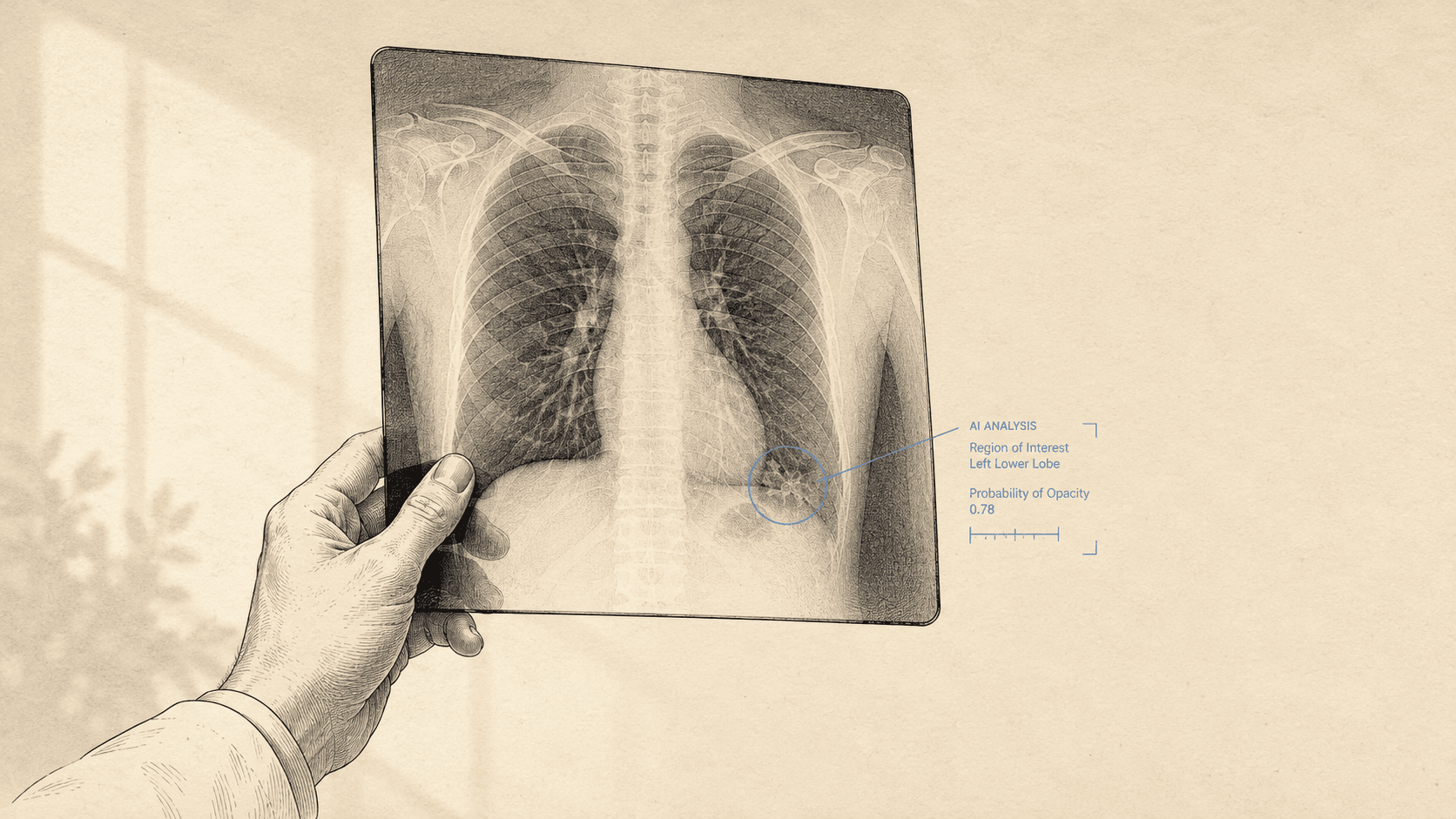
Tempus AI Imaging
by Tempus AI · US
Tempus Pixel (formerly Arterys): cloud imaging AI for radiology and oncology reads, with cardiac MR, lung, breast and prostate tools.
On this page
24/100Niche fit
- Regulatory & Compliance18/28
FDA cleared (8 K-numbers on record)
- Clinical Integration0/26
No EHR integrations listed
- Evidence Strength0/26
No peer-reviewed coverage
- Vendor & Market6/18
Early-stage company
- Sentiment & Transparency2.5/14
Pricing on request, no public amounts
▸ Show all 11 dimensions▾ Hide dimension detail
- FDA clearance18/18
FDA cleared (8 K-numbers on record)
- HIPAA / SOC2 / BAA0/10
No public HIPAA/SOC2/BAA attestation
- EHR integrations (count)0/14
No EHR integrations listed
- Top-3 EHR coverage (Epic / Oracle / Athena)0/8
None of the top-3 EHRs covered
- Bidirectional write-back0/4
No bidirectional write-back documented
- Peer-reviewed papers0/18
No peer-reviewed coverage
- RCT / meta-analysis / systematic review0/8
No RCT, meta-analysis, or systematic review
- Funding & adoption signal6/12
Early-stage company
- Years in market0/6
Founded year not recorded
- Clinician sentiment (Reddit)0/9
No clinician sentiment data available
- Pricing transparency3/5
Pricing on request, no public amounts
Tempus Pixel (formerly Arterys): cloud imaging AI for radiology and oncology reads, with cardiac MR, lung, breast and prostate tools.
No public price.
Bottom line
Tempus Pixel, formerly Arterys, is a cloud imaging platform from Tempus AI that bundles radiology and oncology tools for cardiac MR, lung, breast and prostate. Several of those parts run on third-party engines, and the FDA labels differ by module. The platform has a long 510(k) history under the Arterys name, with the latest clearance in September 2025. It suits a radiology or cardiology department that wants one cloud viewer for oncology measurement and cardiac MR. Access is by enterprise quote.
What is Tempus Pixel and where does it come from?
Tempus AI, Inc. is based in Chicago and led by founder and CEO Eric Lefkofsky. It has traded on Nasdaq as TEM since June 14, 2024. Tempus acquired Arterys in 2022, and Arterys, Inc. is still the applicant name on the FDA records.
Tempus describes Pixel as an AI-powered cardiac imaging platform in a September 2025 press release. Its radiology page frames Pixel for radiology as a way to read images, detect findings and generate reports, and Pixel for oncology as a way to monitor disease progression.
What does it do, module by module?
Radiology covers automated lesion segmentation and measurement, longitudinal tracking and RECIST-style response reports. Oncology offers one-click lesion segmentation on CT and MR with editable reports. The cardiac module analyzes cardiac MR, and the 2025 update lets Pixel generate T1 and T2 inline maps from raw MRI data. Lung handles nodule detection, quantification and tracking on chest CT. Breast detects and tracks lesions on 2D and 3D images. Prostate does lesion detection and risk classification.
Tempus claims 100 or more health systems, over 2 billion images and more than 20 algorithms. It says Pixel integrates with existing PACS, EHR, worklist, notification and dictation systems.
Which parts are Tempus's own?
Not all of them. The page names five third-party engines: DeepLook Precise (K202084), InferRead CT from Infervision (K192880), iCAD ProFound AI (K203822), Quibim QP-Prostate (K203582) and QP-Prostate CAD (K242683). The breast, prostate and lung components use these partners.
A footnote on the page states that Pixel Lung is FDA cleared (K203744) but is not indicated for lung nodule detection, which in the US comes from a third-party engine. Nodule detection is CE marked in the EU.
What is FDA cleared?
The FDA lists eight 510(k)s under the applicant name Arterys, Inc., running from the Arterys Software v2.0 in October 2016 to Tempus Pixel (K252539) on September 3, 2025. The ones between them include Arterys Cardio DL (K163253, January 2017), Arterys Viewer (K171544, July 2017), Arterys Oncology DL (K173542, January 2018) and three Arterys MICA clearances, the latest K203744 in March 2022. Tempus also holds separate AI-ECG clearances, which belong to a different product line.
What studies does Tempus cite?
The vendor's footnotes cite studies about the underlying engines or an earlier research product, including Conant 2019 in Radiology: Artificial Intelligence on concurrent AI for digital breast tomosynthesis, Kozuka 2020 in the Japanese Journal of Radiology on lung CAD, and a 2019 JACC abstract by Narang on left ventricular volumes. They describe parts of the platform and not necessarily its current version.
How is Pixel sold?
Pixel is sold by enterprise quote, and the radiology page lists no price.
The verdict
Pixel is a suite of modules built on different engines, each with its own label. The cardiac MR and oncology measurement tools carry the Arterys lineage and the longest FDA history. A department that wants only breast, prostate or lung nodule detection is buying a partner's clearance through Tempus, and a buyer who wants one vendor's own algorithm across all organs will not find that here.
Editorial review last generated October 15, 2026. Synthesized from clinician sentiment, peer-reviewed coverage, and our editorial silo picks. Refined by hand where vendor facts change.
What it costs
All tiers are custom-quoted. The vendor does not publish per-provider list pricing.
| Tier | Monthly | Annual | Notes |
|---|---|---|---|
| Enterprise | — | — | No public price. |
Source: vendor pricing page. Last checked October 15, 2026.
What deploys cleanly
Carries FDA 510(k) per vendor documentation. Independent attestation review is the buyer's responsibility before clinical deployment.
Who builds it
It was previously known as Arterys, an acquisition or rebrand that healthcare-AI buyers should track when reviewing prior independent coverage.
Other radiology
See the full radiology ranking
Siemens Healthineers AI-Rad Companion
by Siemens Healthineers
AI-Rad Companion: Chest CT, Chest X-ray, Brain MR, Prostate MR and Organs RT (radiotherapy contouring) modules, delivered through teamplay.
No public price on the vendor page.|FDA 510(k) (multiple) / CE Mark (MDD/MDR. MDR status not verified)
GE HealthCare AI Suite
by GE HealthCare
Portfolio of separately cleared AI-enabled GE HealthCare devices and software, including AIR Recon DL, Sonic DL, Critical Care Suite, Caption AI and icobrain.
No public price. Products are sold with scanners or as scanner options, on enterprise quotes.|FDA 510(k) (multiple)
Aidoc
by Aidoc
Clinical AI platform (aiOS) with FDA-cleared triage, notification and quantification algorithms for radiology and neurovascular care.
Private offer only. No trial is stated.|FDA 510(k) (multiple) / EU MDR 2017/745
Viz.ai
by Viz.ai
Care coordination platform with FDA-cleared imaging AI for stroke, vascular and cardiac conditions.
No public price. Sold to health systems after a demo request.|FDA 510(k) (multiple) / FDA De Novo (ContaCT, Viz HCM)