- No public price.
- Not disclosed
- Not disclosed
- —
- 2014
- KR
Radiology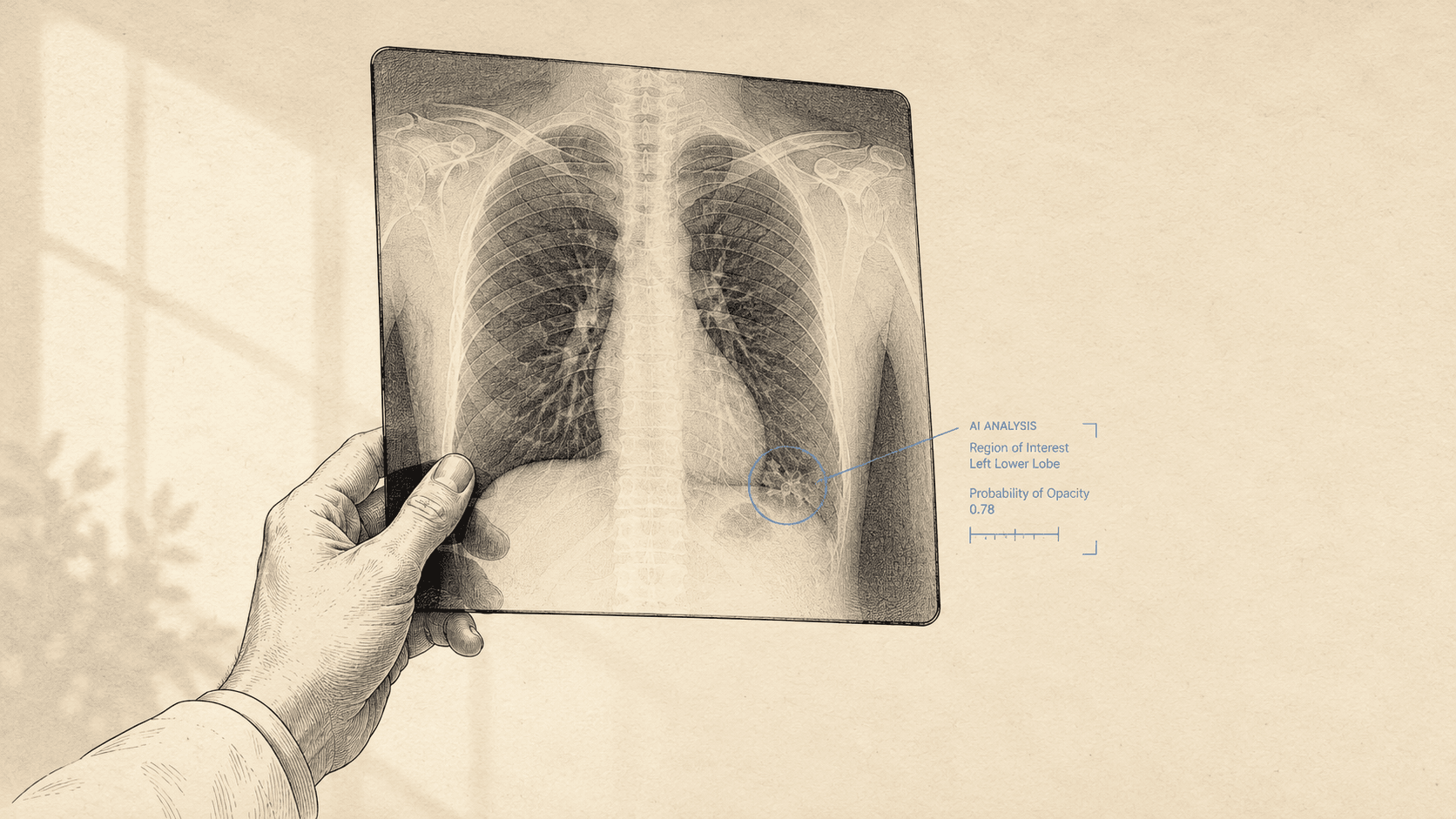
VU
VUNO
by VUNO Inc. · founded 2014 · KR
FDA-cleared AI for chest X-ray triage and brain MR volumetry, plus Korean-approved bone age and retinal screening tools.
On this page
73/100
Editorial rating 5.0 / 5
- Regulatory & Compliance18/28
FDA cleared (2 K-numbers on record)
- Clinical Integration0/6.6
No EHR integrations listed
- Evidence Strength26/26
5 peer-reviewed papers
- Vendor & Market14.4/18
Mid-tier funding and adoption
- Sentiment & Transparency2.5/5
Pricing on request, no public amounts
▸ Show all 11 dimensions▾ Hide dimension detail
- FDA clearance18/18
FDA cleared (2 K-numbers on record)
- HIPAA / SOC2 / BAA0/10
No public HIPAA/SOC2/BAA attestation
- EHR integrations (count)0/4
No EHR integrations listed
- Top-3 EHR coverage (Epic / Oracle / Athena)0/2
None of the top-3 EHRs covered
- Peer-reviewed papers18/18
5 peer-reviewed papers
- RCT / meta-analysis / systematic review8/8
1 RCT/Meta-Analysis/Systematic Review
- Funding & adoption signal8/12
Mid-tier funding and adoption
- Years in market6/6
Founded 2014 (12 years)
- Pricing transparency3/5
Pricing on request, no public amounts
FDA-cleared AI for chest X-ray triage and brain MR volumetry, plus Korean-approved bone age and retinal screening tools.
No public price.
Evidence record
510(k)K241439 (opens in new tab)November 15, 2024
VUNO Med-Chest X-ray Triage / VUNO Med-CXR Link Triage
510(k)K231398 (opens in new tab)October 4, 2023
VUNO Med-DeepBrain
5 studies on PubMed: 3 other, 1 observational, 1 RCT, published 2024 to 2026. Read the literature summary
- Score computed November 2, 2026, method 1.2.0
- Review written November 2, 2026
MedAI Verdict, VUNO record, https://medaiverdict.com/tools/vuno, version November 2, 2026
Bottom line
VUNO is a Seoul company with six product lines: chest X-ray, brain MR, retinal fundus, bone age, cardiac arrest risk from vital signs and a personal-health platform. FDA cleared two of them, DeepBrain brain MR volumetry in October 2023 and a chest X-ray triage tool for pleural effusion and pneumothorax in November 2024, and US availability of the triage tool is not stated. Hospitals that want brain MR volumetry fit. Bone age and retinal screening carry Korean MFDS approvals, and the company history records CE marking of five VUNO Med solutions in June 2020.
What did FDA clear?
K231398 (VUNO Med-DeepBrain, October 4, 2023) covers automatic labeling, visualization and volumetric quantification of brain structures and lesions from MR, for trained healthcare professionals. The vendor's page describes 3D T1 input, white matter hyperintensity from 2D T2 FLAIR, and comparison against normative percentiles. K241439 (VUNO Med-Chest X-ray Triage and Med-CXR Link Triage, November 15, 2024) is computer-assisted triage and notification for adult chest X-rays with pleural effusion and/or pneumothorax.
The chest page describes screening support for five major findings across lung cancer, tuberculosis and pneumonia. The FDA record for the chest tool covers pleural effusion and pneumothorax triage.
What else does the company hold?
MFDS approved Med-BoneAge in May 2018, which the company history calls Korea's first AI medical device, and Med-Fundus AI as Class III in April 2020. DeepCARS, which estimates cardiac arrest risk within 24 hours from vital signs in general-ward patients, holds an FDA Breakthrough designation from June 2023. A Breakthrough designation is not a clearance.
What do the studies show?
For DeepBrain, a 2022 PLoS One study (PMID 36107961) reported 96.4% sensitivity and 89.9% specificity for moderate to severe white matter hyperintensity volume, graded by Fazekas classification. No peer-reviewed accuracy paper for the chest tool was found in PubMed. The chest page gives no accuracy numbers and cites an RSNA 2019 abstract and an MFDS clinical trial at Asan Hospital.
Bone age, which has no FDA decision, has the most papers, including a comparison with BoneXpert in Turkish children (PMID 39221654). Several studies are Korean single-country work, and independence from VUNO is not verified.
What is the company?
VUNO Inc. was founded in December 2014 and listed on KOSDAQ in February 2021. Its privacy policy lists ISO/IEC 27001:2022. The US entity is VUNO MED INC.
Pricing
No public price.
The verdict
VUNO fits a hospital that wants brain MR lesion volumetry or effusion and pneumothorax triage from a Korean vendor. A bone age or retinal screening program works from Korean MFDS approvals, with no FDA decision for either product. The Breakthrough designation held by DeepCARS is the only other FDA status in the company history.
Editorial review last generated November 2, 2026. Synthesized from clinician sentiment, peer-reviewed coverage, and our editorial silo picks. Refined by hand where vendor facts change.
What it costs
All tiers are custom-quoted. The vendor does not publish per-provider list pricing.
| Tier | Monthly | Annual | Notes |
|---|---|---|---|
| Enterprise | Not stated | Not stated | No public price. |
Source: vendor pricing page. Last checked November 2, 2026.
What deploys cleanly
Carries FDA 510(k), CE, ISO/IEC 27001:2022, ISO/IEC 27701:2019 per vendor documentation. Independent attestation review is the buyer's responsibility before clinical deployment.
Who builds it
VUNO (VUNO Inc.) was founded in 2014 in KR, putting it 12 years into market.
What the literature says
5 peer-reviewed studies indexed on PubMed evaluate VUNO in clinical contexts. The most relevant are shown below, ranked by editorial relevance score combining title match, study design, recency, and journal tier.
- A comparison of two artificial intelligence-based methods for assessing bone age in Turkish children: BoneXpert and VUNO Med-Bone Age. (opens in new tab)
- Özmen E, Özen Atalay H, Uzer E, et al.· Diagn Interv Radiol· 2025
- This study aimed to evaluate the validity of two artificial intelligence (AI)-based bone age assessment programs, BoneXpert and VUNO Med-Bone Age (VUNO), compared with manual assessments using the Greulich-Pyle method in Turkish children. This study included a cohort of 292 pediatric cases, ranging in age from 1 to 15 years with an equal gender and number distribution in each age group. Two radiologists, who were unaware of the bone age determined by AI, independently evaluated the bone age. The statistical study involved using the intraclass correlation coefficient (ICC) to measure the level…
- Clinical Effectiveness of AI-Based Cardiac Arrest Prediction System for General Ward Patients (VITAL-MD): Protocol for a Multicenter Pragmatic Stepped Wedge Cluster Randomized Controlled Trial. (opens in new tab)
- Kim M, Kim KH, Kim M, et al.· JMIR Res Protoc· 2026
- In-hospital cardiac arrest (IHCA) remains a frequent and devastating event, and conventional early warning scores (EWSs) coupled with rapid response systems (RRSs) have shown inconsistent effects on patient-centered outcomes, largely owing to limited predictive accuracy and high false-alarm burden. AI-based EWSs (AI-EWSs) have demonstrated superior discrimination retrospectively, but high-quality prospective evidence in true external validation environments remains scarce. Existing AI-EWS trials have either been confined to internal-development settings or bundled the algorithm with specific…
- Combined diagnostic accuracy of two artificial intelligence systems for glaucoma diagnosis using color fundus photography. (opens in new tab)
- da Silva Filho GV, Caiado GC, Yamamoto FZ, et al.· PLoS One· 2026
- To evaluate the diagnostic accuracy of two commercially available artificial intelligence (AI) systems based on color fundus photography (CFP), the Laguna ONhE and VUNO Med-Fundus AI, for glaucoma detection, both independently and in combination. This retrospective cross-sectional study included 370 eyes from 193 patients (248 eyes with primary open-angle glaucoma and 122 healthy eyes). All eyes underwent structural evaluation with swept-source optical coherence tomography (Triton, Topcon) and visual field testing (Octopus 900, Haag-Streit AG). Fundus photographs were analyzed using Laguna ON…
- Comparison of Two Artificial Intelligence Programs for Bone Age Assessment Using Hand-Wrist Radiographs in Korean Children and Adolescents Undergoing Orthodontic Diagnosis. (opens in new tab)
- Park EJ, Shin HW, An SY· Children (Basel)· 2026
- Accurate assessment of skeletal maturation is important for timing pediatric dental and orthodontic interventions. This study compared bone age estimates generated by two AI-based programs, CRESCOM MediAI-BA and VUNO Med-BoneAge, in Korean children and adolescents undergoing orthodontic diagnostic evaluation.This retrospective study compared bone-age estimates generated by CRESCOM MediAI-BA and VUNO Med-BoneAgeusing left hand-wrist radiographs from 200 Korean children and adolescents (100 boys and 100 girls; 6-17 years) undergoing orthodontic diagnostic evaluation. Chronological age and progr…
- Impact of white matter hyperintensity volumes estimated by automated methods using deep learning on stroke outcomes in small vessel occlusion stroke. (opens in new tab)
- Lee M, Suh CH, Sohn JH, et al.· Front Aging Neurosci· 2024
- Although white matter hyperintensity (WMH) shares similar vascular risk and pathology with small vessel occlusion (SVO) stroke, there were few studies to evaluate the impact of the burden of WMH volume on early and delayed stroke outcomes in SVO stroke. Using a multicenter registry database, we enrolled SVO stroke patients between August 2013 and November 2022. The WMH volume was estimated by automated methods using deep learning (VUNO Med-DeepBrain, Seoul, South Korea), which was a commercially available segmentation model. After propensity score matching (PSM), we evaluated the impact of WM…
Other radiology
See the full radiology ranking
Siemens Healthineers AI-Rad Companion
by Siemens Healthineers
AI-Rad Companion: Chest CT, Chest X-ray, Brain MR, Prostate MR and Organs RT (radiotherapy contouring) modules, delivered through teamplay.
No public price on the vendor page.|FDA 510(k) (multiple) / CE Mark (MDD/MDR. MDR status not verified)
GE HealthCare AI Suite
by GE HealthCare
Portfolio of separately cleared AI-enabled GE HealthCare devices and software, including AIR Recon DL, Sonic DL, Critical Care Suite, Caption AI and icobrain.
No public price. Products are sold with scanners or as scanner options, on enterprise quotes.|FDA 510(k) (multiple)
Aidoc
by Aidoc
Clinical AI platform (aiOS) with FDA-cleared triage, notification and quantification algorithms for radiology and neurovascular care.
Private offer only. No trial is stated.|FDA 510(k) (multiple) / EU MDR 2017/745
Viz.ai
by Viz.ai
Care coordination platform with FDA-cleared imaging AI for stroke, vascular and cardiac conditions.
No public price. Sold to health systems after a demo request.|FDA 510(k) (multiple) / FDA De Novo (ContaCT, Viz HCM)