
- No public price. The website offers a partner contact route and an app download link.
- Attested
- Not disclosed
- —
- 2011
- DE
Patient triage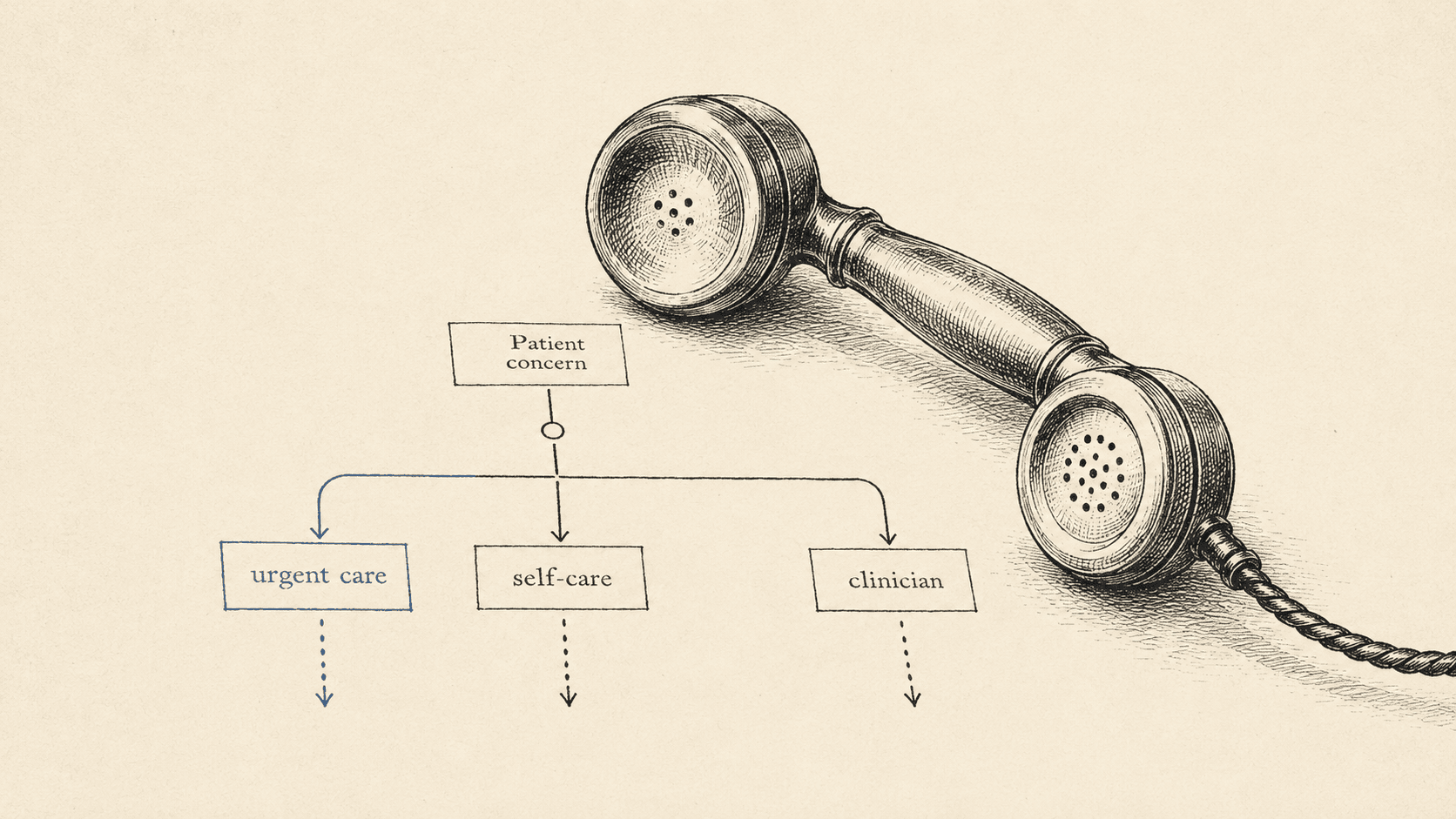
Ada Health
by Ada Health GmbH · founded 2011 · DE
Symptom assessment app and care-navigation software for health systems and life-sciences companies.
On this page
37/100Competitive
- Regulatory & Compliance7.8/28.6
Partial attestation (one of HIPAA / SOC2 / BAA)
- Clinical Integration0/26
No EHR integrations listed
- Evidence Strength15.8/20
4 peer-reviewed papers
- Vendor & Market14.4/18
Mid-tier funding and adoption
- Sentiment & Transparency2.5/15.8
Pricing on request, no public amounts
▸ Show all 11 dimensions▾ Hide dimension detail
- FDA clearance0/16
No FDA clearance listed
- HIPAA / SOC2 / BAA8/13
Partial attestation (one of HIPAA / SOC2 / BAA)
- EHR integrations (count)0/14
No EHR integrations listed
- Top-3 EHR coverage (Epic / Oracle / Athena)0/8
None of the top-3 EHRs covered
- Bidirectional write-back0/4
No bidirectional write-back documented
- Peer-reviewed papers10/14
4 peer-reviewed papers
- RCT / meta-analysis / systematic review6/6
1 RCT/Meta-Analysis/Systematic Review
- Funding & adoption signal8/12
Mid-tier funding and adoption
- Years in market6/6
Founded 2011 (15 years)
- Clinician sentiment (Reddit)0/11
No clinician sentiment data available
- Pricing transparency3/5
Pricing on request, no public amounts
Most-downloaded consumer symptom checker with white-label B2B API.
Bayesian probabilistic engine. CE-MDR. Berlin-based.
Bottom line
Ada is a symptom assessment engine: a patient answers questions and gets a list of possible conditions with a suggestion on how urgently to seek care. It began as a consumer app and now sells mainly to health systems and life-sciences companies. It fits a health system that wants structured intake and navigation in front of its call centre or portal. It cannot replace triage nurses or ED judgement, because in an emergency department randomized crossover trial Ada undertriaged many patients and missed potentially life-threatening diagnoses.
What is Ada and who sells it?
Ada Health GmbH is a private company in Berlin, founded in 2011 by Claire Novorol, Martin Hirsch and Daniel Nathrath. The consumer app launched in 2016. Novorol is co-founder and chief medical officer. Tracxn lists about $167M raised over five rounds, the latest a Series B in February 2022, but that is a third-party figure and Ada publishes no total.
The company's current pitch is "Automated care navigation built on clinical intelligence". Its site names two lines: Ada Patient Finder, a direct-to-consumer product for pharma and life-sciences clients, and a health-system integration for triage and navigation.
What does it do?
The assessment is probabilistic. The user answers adaptive questions and receives possible conditions plus a care-urgency suggestion. It supports multiple languages.
The About page shows a live counter of 14,082,058 users and 34,611,676 symptom assessments. Clinician-facing figures on the same page come from 2023 post-market research with Ada's clients: 94% agreed the advice was safe and appropriate, 83% said the top suggestion matched the physician's diagnosis, and 93% said Ada gave useful information before the consultation. All of that is vendor data.
What does the independent evidence say?
A randomized crossover trial in an emergency department compared Ada with Symptoma (PMC11372320). Both tools missed a substantial number of potentially life-threatening diagnoses, and Ada undertriaged many patients.
A smaller ED study (JMIR mHealth 2023, PMID 37788063) compared Ada, WebMD, ChatGPT 3.5 and physicians. Ada's triage agreed with the reference 62% of the time, 14% of its advice was unsafe and 24% was too cautious. ChatGPT 3.5 was unsafe in 41% of cases. Two more ED studies of symptom checker apps (JMIR mHealth 2022, PMID 36121688, and J Med Internet Res 2025, PMID 40173434) looked at accuracy, usability and the effect on the patient-physician conversation.
The favourable study is the 2020 BMJ Open vignette comparison, in which Ada listed the right condition in its top three 71% of the time against an average of 38% for the other apps tested. Ada co-led that study, so it is not independent.
A UK GP commentary from 2026 calls Ada useful for triage, not a diagnosis tool.
What about integration and compliance?
Ada's quality page lists EU MDR Class IIa with CE mark 0123 for Ada Assess, plus ISO 27001, ISO 13485, GDPR and HIPAA compliance. The notified body for the MDR certificate was TUV SUD, announced in December 2022. An older version of the page described the consumer app as Class I under the previous directive. No FDA clearance is stated, and no SOC 2 or HITRUST attestation is listed.
Ada says it "integrates with your system" but names no EHR.
How much does Ada cost?
Ada lists no price. The site offers an App Store download and a "Partner with Ada" contact route. Third-party directories describe the consumer app as free, and enterprise licensing is quote only (as of October 2026).
Who is it for?
A hospital or payer building a digital front door can pilot Ada for intake and navigation, provided it measures undertriage against its own nurse line before going live. A patient can use the app to organise symptoms before an appointment. Ada is the wrong pick for a primary care practice looking for diagnostic help at the point of care and for anyone who wants an EHR-native tool, since Ada names no EHR.
Symptoma, K Health, Infermedica, Isabel and Buoy Health are among the alternatives.
Editorial review last generated October 15, 2026. Synthesized from clinician sentiment, peer-reviewed coverage, and our editorial silo picks. Refined by hand where vendor facts change.
What it costs
All tiers are custom-quoted. The vendor does not publish per-provider list pricing.
| Tier | Monthly | Annual | Notes |
|---|---|---|---|
| Partners and health systems | — | — | No public price. The website offers a partner contact route and an app download link. |
Source: vendor pricing page. Last checked October 15, 2026.
What deploys cleanly
Carries EU MDR Class IIa (CE 0123), ISO 27001, ISO 13485, HIPAA per vendor documentation. Independent attestation review is the buyer's responsibility before clinical deployment.
Who builds it
Ada Health (Ada Health GmbH) was founded in 2011 in DE, putting it 15 years into market.
What the literature says
4 peer-reviewed studies indexed on PubMed evaluate Ada Health in clinical contexts. The most relevant are shown below, ranked by editorial relevance score combining title match, study design, recency, and journal tier.
- Impact of a Symptom Checker App on Patient-Physician Interaction Among Self-Referred Walk-In Patients in the Emergency Department: Multicenter, Parallel-Group, Randomized, Controlled Trial.
- Schmieding ML, Kopka M, Bolanaki M, et al.· J Med Internet Res· 2025
- Symptom checker apps (SCAs) are layperson-facing tools that advise on whether and where to seek care, or possible diagnoses. Previous research has primarily focused on evaluating the accuracy, safety, and usability of their recommendations. However, studies examining SCAs' impact on clinical care, including the patient-physician interaction and satisfaction with care, remain scarce. This study aims to evaluate the effects of an SCA on satisfaction with the patient-physician interaction in acute care settings. Additionally, we examined its influence on patients' anxiety and trust in the treati…
- Comparison of Diagnostic and Triage Accuracy of Ada Health and WebMD Symptom Checkers, ChatGPT, and Physicians for Patients in an Emergency Department: Clinical Data Analysis Study.
- Fraser H, Crossland D, Bacher I, et al.· JMIR Mhealth Uhealth· 2023
- Diagnosis is a core component of effective health care, but misdiagnosis is common and can put patients at risk. Diagnostic decision support systems can play a role in improving diagnosis by physicians and other health care workers. Symptom checkers (SCs) have been designed to improve diagnosis and triage (ie, which level of care to seek) by patients. The aim of this study was to evaluate the performance of the new large language model ChatGPT (versions 3.5 and 4.0), the widely used WebMD SC, and an SC developed by Ada Health in the diagnosis and triage of patients with urgent or emergent cli…
- Study protocol for a pilot prospective, observational study investigating the condition suggestion and urgency advice accuracy of a symptom assessment app in sub-Saharan Africa: the AFYA-'Health' Study.
- Millen E, Salim N, Azadzoy H, et al.· BMJ Open· 2022
- Due to a global shortage of healthcare workers, there is a lack of basic healthcare for 4 billion people worldwide, particularly affecting low-income and middle-income countries. The utilisation of AI-based healthcare tools such as symptom assessment applications (SAAs) has the potential to reduce the burden on healthcare systems. The purpose of the AFYA Study (AI-based Assessment oF health sYmptoms in TAnzania) is to evaluate the accuracy of the condition suggestions and urgency advice provided by a user on a Swahili language Ada SAA. This study is designed as an observational prospec…
- Evaluation of Diagnostic and Triage Accuracy and Usability of a Symptom Checker in an Emergency Department: Observational Study.
- Fraser HSF, Cohan G, Koehler C, et al.· JMIR Mhealth Uhealth· 2022
- Symptom checkers are clinical decision support apps for patients, used by tens of millions of people annually. They are designed to provide diagnostic and triage advice and assist users in seeking the appropriate level of care. Little evidence is available regarding their diagnostic and triage accuracy with direct use by patients for urgent conditions. The aim of this study is to determine the diagnostic and triage accuracy and usability of a symptom checker in use by patients presenting to an emergency department (ED). We recruited a convenience sample of English-speaking patients presenting…
Other patient triage
See the full patient triage rankingInfermedica
by Infermedica
Symptom triage, intake and a call-center voice agent for care providers, certified as a Class IIb medical device under EU MDR.
Enterprise (quote).|EU MDR Class IIb / UK MHRA registered
K Health
by K Health
AI-enabled virtual care and patient intake (PatientGPT) for health systems, with 24/7 primary care from board-certified doctors.
$49/mo
Hippocratic AI
by Hippocratic AI
Voice AI agents for patient outreach, scheduling, intake and care management. The vendor says they do not diagnose or prescribe.
No public price or rate card. Third parties report about $9 per agent-hour, billed for active agent time (third-party, not confirmed by the vendor). No self-serve trial found.
Hyro
by Hyro
AI agents for health system call centers, websites and SMS: appointments, FAQ answers and conversation analytics.
No public price. Request a demo.
Common questions about Ada Health
Answers below cover the most-searched clinician questions for Ada Health in 2026. Updated as vendor docs and pricing change.