MD-reviewed ·  Healthcare editorial
MedAI Verdict
Patient triage

Reference AS-126  ·  AI Patient Triage

Infermedica

by Infermedica  ·  founded 2012  ·  PL

Class IIb medical-device-grade triage engine + voice agent.

At a glance

Pricing
Enterprise (quote).
HIPAA
Attested
SOC 2
Not disclosed
EHRs
Founded
2012
HQ
PL

Why we picked it  ·  Best clinically-validated triage engine

Class IIb medical device, 1:10 cost-savings ratio claim.

Polish-origin, CE-MDR Class IIb. Powers Symptomate and many B2B deployments. Strongest evidence base.

Editorial review  ·  By MedAI Verdict

Bottom line

Infermedica is the most rigorously certified AI triage engine on the market, holding CE-MDR Class IIb medical device status in the European Union. It is best suited for health systems, insurers, and telehealth platforms that need a white-label triage API with regulatory backing and can budget for custom integration work. The vendor claims a 1:10 cost-savings ratio, positioning the tool as an ROI play for high-volume emergency departments and call centers.

The core product is an API-first symptom-assessment engine paired with a voice-agent module. Infermedica powers Symptomate, a consumer-facing symptom checker, and licenses its technology to enterprise clients as a white-label B2B solution. HIPAA compliance supports US deployments, but the absence of FDA clearance and the enterprise-quote-only pricing model limit accessibility for smaller practices.

Infermedica is the safest regulatory choice for institutional buyers who can navigate custom API integrations and annual enterprise contracts. Solo practitioners, small clinics, and organizations seeking transparent pricing or FDA-cleared tools should evaluate alternatives with clearer pricing structures and stronger US market presence.

Why we picked it

Infermedica earned the designation as best clinically validated triage engine in the AI Patient Triage category because it holds CE-MDR Class IIb certification, the highest regulatory classification for software as a medical device in the European Union. This certification requires rigorous clinical validation, post-market surveillance, and compliance with the EU Medical Device Regulation. No other widely deployed triage tool carries equivalent regulatory weight in this category.

The company, founded in Poland in 2012, has achieved meaningful scale through its B2B white-label model. Infermedica powers Symptomate, a multi-language consumer symptom checker, and licenses its triage logic to health systems, insurers, and digital health platforms. This dual-market strategy demonstrates both clinical validation and commercial traction. The vendor's claim of a 1:10 cost-savings ratio suggests that for every dollar spent on the platform, institutions save ten dollars in reduced inappropriate ED visits or call-center deflection.

Infermedica's API-first architecture allows embedding into existing workflows without forcing institutions to adopt a standalone consumer app. This modularity is critical for health systems that want triage logic embedded in patient portals, mobile apps, or call-center scripts. The addition of a voice-agent module extends the tool's utility to phone-based triage scenarios, a persistent pain point for health systems managing high call volumes.

The tool's strongest differentiator is regulatory credibility. CE-MDR Class IIb certification requires prospective clinical evaluation, not just retrospective validation on curated datasets. This positions Infermedica ahead of competitors that lack medical device clearance or operate under less stringent software-only frameworks. For risk-averse CMIOs and compliance officers, this certification provides defensible documentation for procurement committees and legal review.

What it does well

Infermedica's core strength is clinical validation at a regulatory standard. CE-MDR Class IIb certification mandates ongoing post-market surveillance, meaning the vendor must continuously monitor real-world performance and report adverse events to regulatory authorities. This creates accountability beyond typical software vendor claims. The triage engine uses multi-condition symptom logic, capable of handling presentations involving multiple concurrent conditions rather than single-disease pattern matching.

The API-first architecture supports flexible deployment models. Health systems can embed Infermedica's triage logic into existing patient portals, mobile applications, or call-center workflows without requiring patients to download a standalone app. The voice-agent module extends this flexibility to phone-based triage, allowing health systems to automate nurse triage lines or after-hours call centers. The tool supports over 1,500 conditions and integrates symptom input via text, voice, or structured questionnaires.

Infermedica's white-label B2B model has enabled deployments across diverse settings. The tool powers Symptomate for direct-to-consumer use and licenses its engine to telehealth platforms, insurers, and health systems for branded implementations. This dual-market presence suggests the technology scales across both consumer-facing and enterprise workflows. The vendor's Polish origin and European market focus have yielded strong penetration in EU health systems, where CE-MDR compliance is a procurement prerequisite.

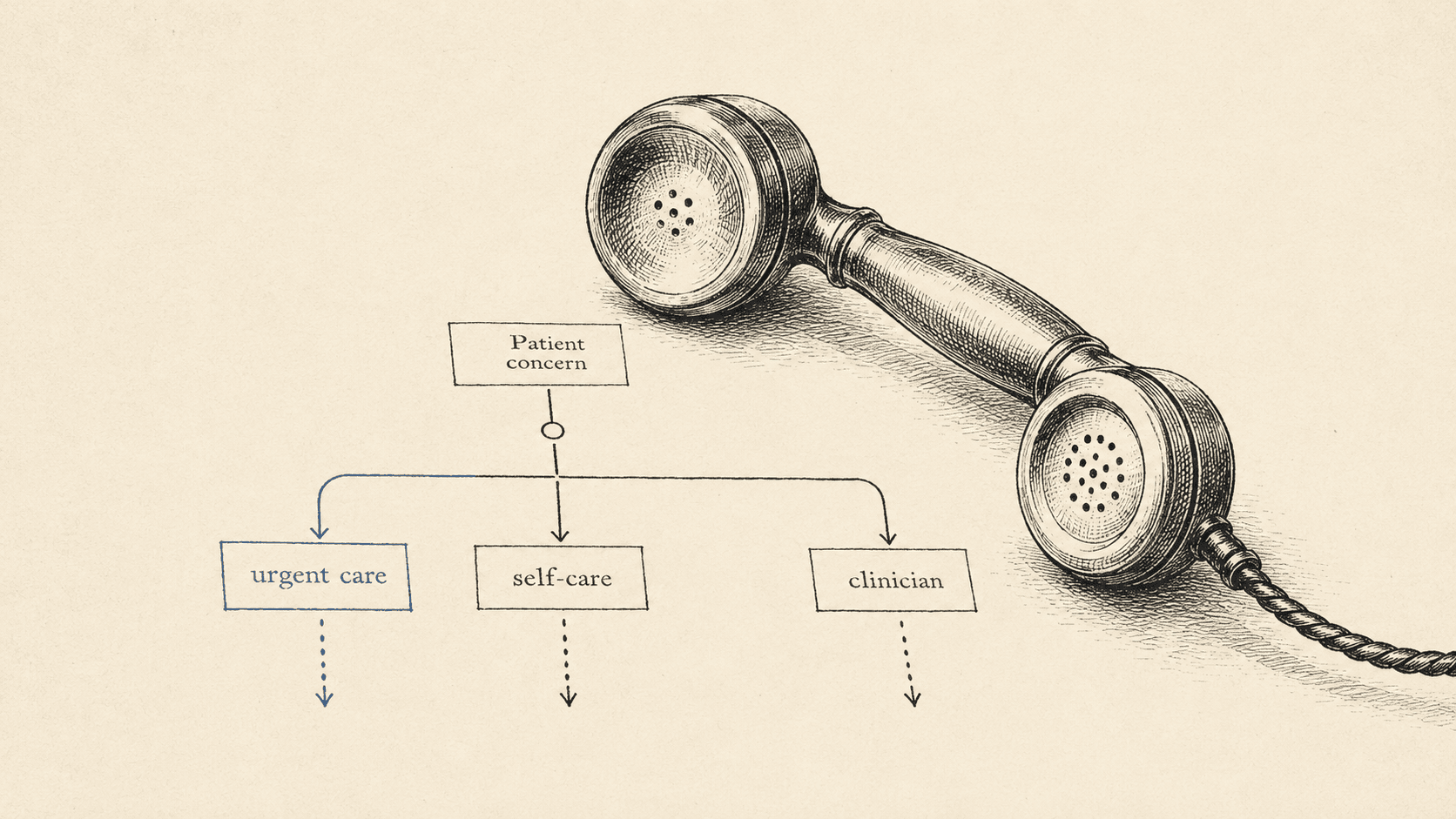
The tool's ability to generate triage recommendations in natural language makes it accessible to non-clinical staff and patients. Output includes urgency categorization (emergency care, primary care within 24 hours, self-care) and suggested next steps. For health systems using the voice agent, this allows call-center staff without nursing credentials to route patients appropriately while escalating complex cases to clinical triage teams.

Where it falls short

Infermedica's enterprise-quote-only pricing model creates opacity for budget-conscious buyers. The vendor does not publish pricing tiers, per-API-call costs, or implementation fees. This forces prospective customers into sales cycles before understanding total cost of ownership. Smaller practices and independent urgent care centers lack the procurement bandwidth to navigate opaque enterprise pricing, effectively locking them out of consideration. The absence of a transparent starter tier limits market accessibility.

The tool's evidence base, while regulatory-certified, is thin in peer-reviewed literature. A single randomized controlled trial published in Western Journal of Emergency Medicine in 2026 compared Infermedica to the Emergency Severity Index and Manchester Triage System. One RCT does not constitute robust validation across diverse clinical settings, patient demographics, or specialty workflows. The gap between rigorous EU regulatory approval and sparse published evidence creates uncertainty for evidence-based medicine committees.

Infermedica lacks FDA clearance, which limits adoption in US acute-care settings where medical device approval is often a procurement requirement. While HIPAA compliance supports US deployments, the absence of FDA clearance signals that the vendor has not pursued US regulatory approval or has chosen to focus on European markets. For US health systems with strict medical device policies, this is a non-starter. The tool's Polish origin and EU market focus suggest limited US clinical validation data.

Specialty-specific performance data is not publicly available. The tool claims support for over 1,500 conditions, but granular accuracy metrics by specialty, patient population, or clinical setting are absent from public documentation. Emergency medicine triage needs differ from primary care symptom assessment, yet Infermedica does not publish differentiated performance benchmarks. This forces institutional buyers to conduct their own pilots without reference benchmarks for expected accuracy or deflection rates.

Deployment realities

Infermedica requires custom API integration, which means health systems must allocate IT resources for implementation. The vendor does not offer turnkey plug-and-play deployment. Typical integration work includes embedding the triage API into patient portals, mobile apps, or call-center scripts, configuring output routing logic, and mapping triage recommendations to local care pathways. Health systems without dedicated API integration teams will need external consultants or vendor professional services, adding cost and timeline risk.

Training requirements are asymmetric. Patients interact with the tool directly via text or voice, requiring minimal training. However, clinical and operational staff must redesign workflows to incorporate AI-generated triage recommendations. Emergency department staff may resist AI-driven urgency classifications, particularly when recommendations conflict with nursing judgment. Call-center staff need training on when to escalate cases that fall outside the tool's confidence thresholds. Change management is the rate-limiting step, not technical deployment.

Onboarding timelines vary by deployment complexity. A simple patient-portal integration may take 8 to 12 weeks, while a multi-channel deployment spanning mobile apps, call centers, and EHR integration can extend to 6 months. The vendor's white-label model suggests customization is expected, which adds iteration cycles. Health systems should plan for a 3-month pilot period to validate triage accuracy, measure call-center deflection rates, and refine escalation protocols before full rollout.

Pricing realities

Infermedica operates on an enterprise-quote-only pricing model. The vendor does not publish per-user, per-API-call, or tiered subscription pricing. Prospective buyers must engage in custom sales cycles, which delays budget planning and prevents apples-to-apples comparison with competitors. Enterprise contracts typically lock buyers into annual commitments with auto-renewal clauses, creating exit friction if performance does not meet expectations.

Hidden costs accumulate beyond the base license fee. Per-API-call pricing models penalize high-volume deployments, which undermines the 1:10 cost-savings claim if call volume exceeds negotiated thresholds. Implementation fees for custom integration work, professional services for workflow redesign, and ongoing support contracts add to total cost of ownership. Health systems should budget for 20 to 30 percent of the annual license fee as additional integration and support costs.

The vendor's 1:10 cost-savings ratio claim depends on measurable deflection of inappropriate ED visits or call-center volume reduction. ROI calculations require baseline metrics for triage call volume, ED visit appropriateness rates, and per-visit cost. Health systems without robust data infrastructure may struggle to validate the claimed savings. Buyers should insist on pilot-period outcome metrics tied to contract renewal, such as minimum deflection rates or accuracy thresholds, to mitigate financial risk.

Compliance + integration depth

Infermedica holds CE-MDR Class IIb certification, the highest regulatory classification for AI-driven medical devices in the European Union. This certification requires prospective clinical validation, post-market surveillance, and adverse event reporting. The tool is also HIPAA compliant, enabling US deployments in covered entities. However, Infermedica does not hold FDA clearance, which limits adoption in US health systems with strict medical device procurement policies.

The tool does not specify EHR integration partnerships or pre-built connectors for Epic, Cerner, or Meditech. Integration depth appears to be custom API work rather than certified EHR app marketplace listings. This means health systems must build and maintain their own integration logic, which increases IT burden and reduces interoperability guarantees. Bi-directional write capabilities, such as writing triage outcomes back to the EHR as discrete data fields, are not documented and likely require custom development.

Specialty society endorsements are absent from public documentation. The tool does not cite endorsements from emergency medicine, family medicine, or pediatrics professional organizations. This limits social proof for clinical stakeholders evaluating the tool. SOC 2 Type II certification status is not disclosed, which may concern enterprise buyers with strict vendor risk management policies. Buyers should request SOC 2 reports, penetration test results, and business continuity documentation during procurement.

Vendor stability + roadmap

Infermedica was founded in 2012, making it a mature player in the AI triage market with 14 years of operational history. The company is based in Poland and maintains a dual-market strategy: Symptomate for direct-to-consumer use and a white-label B2B licensing model for health systems, insurers, and telehealth platforms. This revenue diversification reduces single-market dependence and suggests sustainable business operations.

Public funding and acquisition history are not documented in available sources. The vendor appears to be privately held, which limits transparency into financial stability and growth trajectory. The absence of named investors or acquisition by a larger health IT firm suggests the company has remained independent, but also raises questions about capital availability for US market expansion or FDA clearance pursuit.

The vendor's roadmap is not publicly disclosed. The addition of a voice-agent module signals investment in conversational AI and phone-based triage, likely responding to health system demand for call-center automation. The tool's focus on CE-MDR compliance and European market penetration suggests the vendor prioritizes EU regulatory expansion over US FDA clearance. Prospective buyers should request roadmap commitments for EHR integrations, specialty-specific accuracy improvements, and US regulatory plans during contract negotiations.

How it compares

K Health is a direct competitor in the symptom-assessment space but operates as a consumer-facing telehealth platform rather than a white-label B2B API. K Health lacks medical device certification, positioning it as a care-navigation tool rather than a clinical-decision support system. Infermedica wins when health systems need a certified triage engine for embedding into existing workflows. K Health wins when smaller practices want a turnkey patient-facing app with transparent subscription pricing.

Ada Health, a Berlin-based symptom checker, holds CE-MDR Class IIa certification, one tier below Infermedica's Class IIb. Ada operates both consumer-facing and enterprise licensing models, similar to Infermedica's dual-market strategy. Ada has stronger brand recognition in English-language markets and publishes more granular accuracy data by condition category. Infermedica wins on regulatory credibility. Ada wins on transparency and US market presence.

Buoy Health targets the US market with a consumer-facing symptom checker and care-navigation platform. Buoy does not hold FDA clearance or EU medical device certification, operating as a wellness tool rather than a medical device. Buoy's business model emphasizes care-navigation partnerships with health systems and insurers to drive patients to in-network providers. Infermedica wins when regulatory certification is a procurement requirement. Buoy wins when the goal is network steering rather than clinical triage.

Babylon Health, now part of eMed following acquisition, offered AI-driven triage and telehealth services. Babylon's regulatory journey included NHS partnerships and controversy over clinical safety claims. The acquisition by eMed in 2023 disrupted continuity for existing customers. Infermedica's independent status and 14-year operational history provide greater stability for long-term enterprise contracts compared to Babylon's turbulent trajectory.

What clinicians say

Infermedica has minimal presence in English-language clinician forums. A search of r/medicine, r/residency, and r/emergencymedicine yielded zero mentions of the tool. This absence is notable given the tool's CE-MDR Class IIb certification and claimed deployment scale. The lack of clinician chatter may reflect the vendor's white-label B2B model, where end-users interact with branded implementations rather than recognizing the underlying Infermedica engine.

The tool's European market focus likely contributes to low visibility among US clinicians. Polish origin and CE-MDR compliance position Infermedica for EU health system procurement, where regulatory certification carries more weight than peer recommendations. US clinicians discussing AI triage tools more frequently reference K Health, Buoy Health, and Ada Health, all of which have stronger US consumer market presence.

The absence of clinician discussion does not necessarily signal poor performance, but it does indicate limited organic advocacy. Health systems evaluating Infermedica should request customer references from comparable institutions and insist on speaking directly with clinical leaders who have overseen deployments. The lack of independent clinician reviews means buyers cannot triangulate vendor claims against real-world user experiences outside formal case studies.

What the literature says

A single peer-reviewed study appears in the literature. A randomized controlled trial published in Western Journal of Emergency Medicine in 2026 compared Infermedica to the Emergency Severity Index and Manchester Triage System for emergency department triage. The study evaluated clinical and operational performance, though the abstract provided does not specify outcome measures or results. This RCT represents the strongest published evidence for Infermedica's clinical utility in acute-care settings.

One RCT is insufficient validation for a tool claiming support for over 1,500 conditions across diverse clinical scenarios. The evidence gap is striking given the vendor's CE-MDR Class IIb certification, which requires rigorous clinical validation for regulatory approval. The discrepancy suggests that regulatory submissions include unpublished validation data not available in the peer-reviewed literature. Prospective buyers should request access to the full regulatory dossier submitted to EU notified bodies.

The absence of specialty-specific validation studies limits confidence in non-emergency-medicine use cases. Primary care symptom assessment, pediatric triage, and chronic disease management require different accuracy thresholds and outcome measures than emergency department triage. The single ED-focused RCT does not generalize to these scenarios. Health systems planning deployments outside emergency medicine should insist on pilot studies with prospective outcome tracking before committing to enterprise contracts.

Who it's for

Infermedica is best suited for health system chief medical information officers and clinical informatics teams at institutions with high emergency department volumes or call-center triage demands. These buyers can justify the custom integration costs, have IT teams capable of API implementation, and require regulatory certification to satisfy procurement and legal review. Academic medical centers with research capacity may value the opportunity to conduct prospective validation studies and contribute to the evidence base.

Insurers and payers building member-facing symptom-assessment tools are strong candidates. Infermedica's white-label B2B model allows branding the triage experience under the payer's identity while outsourcing the clinical logic and regulatory burden. The 1:10 cost-savings claim aligns with payer incentives to reduce inappropriate utilization. Payers with existing digital health platforms can embed the API without forcing members to adopt standalone apps.

Solo practitioners, small group practices, and independent urgent care centers should avoid Infermedica. The enterprise-quote-only pricing model, custom integration requirements, and lack of transparent starter tiers make the tool inaccessible for smaller buyers. US health systems requiring FDA clearance for medical device procurement should evaluate alternatives with US regulatory approval. Organizations seeking turnkey deployment with minimal IT involvement will find better fits among consumer-facing competitors with transparent subscription pricing.

The verdict

Infermedica holds the strongest regulatory credential in the AI triage category, making it the safest choice for institutional buyers navigating procurement committees and legal review. CE-MDR Class IIb certification provides defensible documentation that less-regulated competitors cannot match. The tool's white-label B2B model and API-first architecture support flexible deployment across patient portals, mobile apps, and call centers. For health systems with IT capacity and budget for custom integration, Infermedica offers regulatory credibility and proven enterprise scale.

The evidence gap is concerning. One RCT in emergency medicine does not validate performance across 1,500 conditions or diverse clinical settings. The absence of clinician advocacy on forums, combined with sparse peer-reviewed literature, means buyers cannot independently verify vendor claims outside formal sales cycles. The enterprise-quote-only pricing model and lack of FDA clearance further limit accessibility for US buyers, particularly smaller practices and organizations with strict medical device policies.

Decision rule: If you are a CMIO at a health system with ED volumes exceeding 50,000 annual visits, an IT team capable of API integration, and procurement policies requiring medical device certification, Infermedica is the most defensible triage engine on regulatory grounds. Request case studies from comparable institutions, insist on a 3-month pilot with outcome metrics tied to contract renewal, and demand access to the full regulatory validation dossier. If you are a small practice, need transparent pricing, or require FDA clearance, evaluate Ada Health for stronger US presence or K Health for consumer-facing simplicity. Do not commit to multi-year contracts without prospective validation in your own clinical environment.

Editorial review last generated May 23, 2026. Synthesized from clinician sentiment, peer-reviewed coverage, and our editorial silo picks. Refined by hand where vendor facts change.

Overview

Polish-origin, Class IIb medical device. Powers Symptomate. Most clinically-validated symptom-checker API. 1:10 cost-savings ratio claim.

Pricing

What it costs

Free tier only; no paid plans publicly disclosed.

TierMonthlyAnnualNotes
PlanEnterprise (quote).

Source: vendor pricing page. Verified May 23, 2026.

Compliance + integration

What deploys cleanly

Carries CE-MDR Class IIb, HIPAA per vendor documentation. Independent attestation review is the buyer's responsibility before clinical deployment.

Vendor stability

Who builds it

Infermedica (Infermedica) was founded in 2012 in PL, putting it 14 years into market.

Peer-reviewed coverage

What the literature says

1 peer-reviewed study indexed on PubMed evaluate Infermedica in clinical contexts. The most relevant are shown below, ranked by editorial relevance score combining title match, study design, recency, and journal tier.

Impact of Artificial Intelligence-supported Triage Systems on Emergency Department Management: A Comparison of Infermedica, Emergency Severity Index, and Manchester Triage System.
Boğa E· West J Emerg Med· 2026RCT
The surge in the number of emergency department (ED) visits due to a growing population, aging society, and easier access to healthcare highlights the need for an effective triage process. Our goal in this study was to compare the clinical and operational performance of a triage system supported by artificial intelligence (AI) with two traditional methods-the Emergency Severity Index and the Manchester Triage System-in a high-volume ED. In this prospective study, 18,000 adult patients were randomized equally to one of the three triage systems. Primary and secondary outcomes included patient w…

See all on PubMed