
Bottom line
Clarus Care, LLC began as a call-handling service in Nashville in 2013 and now sells an AI agent that takes, makes and resolves calls for medical practices and home health agencies. It is "A Graham Holdings Company." The agent follows scripts the practice approves and sends urgent calls to the on-call provider. Practices with heavy after-hours, refill and scheduling call volume are the buyers it describes, and the vendor gives no urgency classifier to evaluate.
AI agent and call handling for medical practices and home health: scheduling, refills, records requests and on-call routing.
No public price. Vendor page: "book a demo". HIPAA + SOC 2 Type II attested. integrates with athenaOne, eClinicalWorks, NextGen (and 5 more).
How does Clarus handle an urgent call?
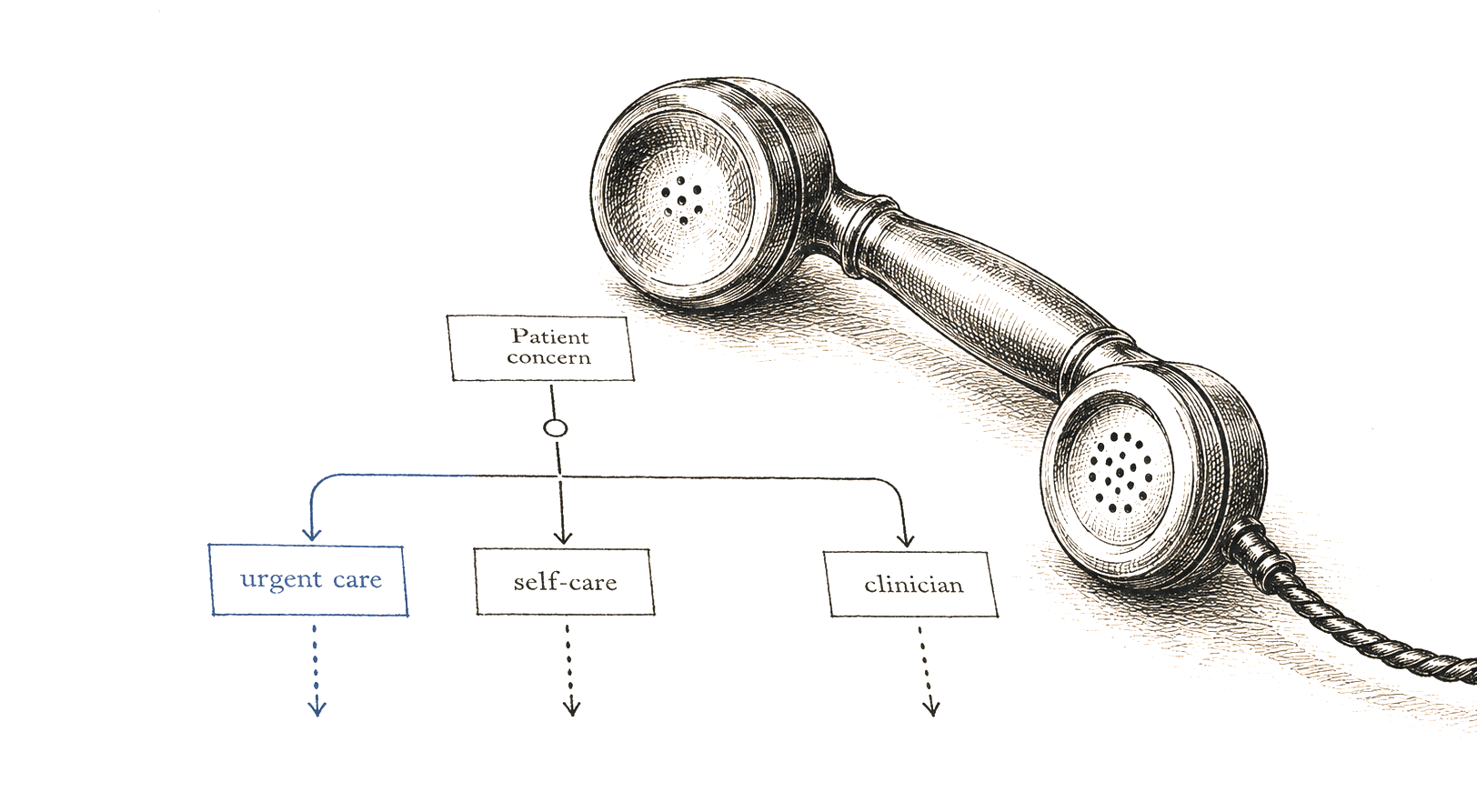
The inbound agent works from practice-approved scripts. It "does not diagnose or give medical advice" and never approves prescriptions. A caller describing an emergency is told to hang up and call 911. Urgent calls that are not emergencies go to the on-call provider or staff under the practice's rules, and anything the agent cannot handle is transferred or taken as a message. Urgency comes from the caller's answers set against practice rules, in specialty-specific workflows. How misclassification is handled or validated is not described.
Routine work includes scheduling against real-time availability, refills, records requests, payments and results. Outbound campaigns cover reminders, overdue visits, copay collection and monitoring. A provider app called OnCall transcribes messages, shows the recording and response options, and masks the provider's phone number.
What numbers does Clarus quote?
The vendor counts 70 million or more calls managed, more than 30,000 providers and staff, over 40 specialties and 99% client retention, and displays a 2026 KLAS Top Emerging Healthcare Solution badge. Logos include HCA Healthcare, LifePoint Health and Norton Healthcare. Its outcome claims are 50% fewer no-shows, 33% fewer inbound calls at Graham Healthcare Group and 300 to 400 hours saved per clinic per month. The vendor quotes no study behind these figures. Clarus gives no headquarters city or funding, and says Graham Holdings acquired it in 2019.
Which systems does it connect to?
The inbound page names athenaOne, eClinicalWorks, NextGen, Greenway, Veradigm, Meditech, Epic and Oracle Health, and the home page adds Cerner, HubSpot and Salesforce. The telephony carrier is not named, and practices can choose conversational AI or a rules-based IVR. Clarus calls itself HIPAA compliant and SOC 2 audited, shows an AICPA badge without a report type, and stores data for seven years.
What do its customers say about cost?
Clarus sells through a demo, and its testimonials page carries the cost signals. A testimonial from MidState Pulmonary says the bill is "about a third" of the old system's cost, one from Kansas City Bone and Joint says "less than 50%," and PromptCare reports savings of $7,000 to $10,000 a year.
The verdict
A practice or home health agency that needs after-hours coverage gets, in writing, a script-driven agent that sends emergencies to 911 and urgent calls to the on-call provider. A health system that wants a symptom-urgency method it can audit would be buying something Clarus does not describe.
Editorial review last generated November 2, 2026. Synthesized from clinician sentiment, peer-reviewed coverage, and our editorial silo picks. Refined by hand where vendor facts change.