- No public price. Kara is priced on call volume rather than per-seat licenses.
- Not disclosed
- Type II
- 11
- —
- US
Patient triage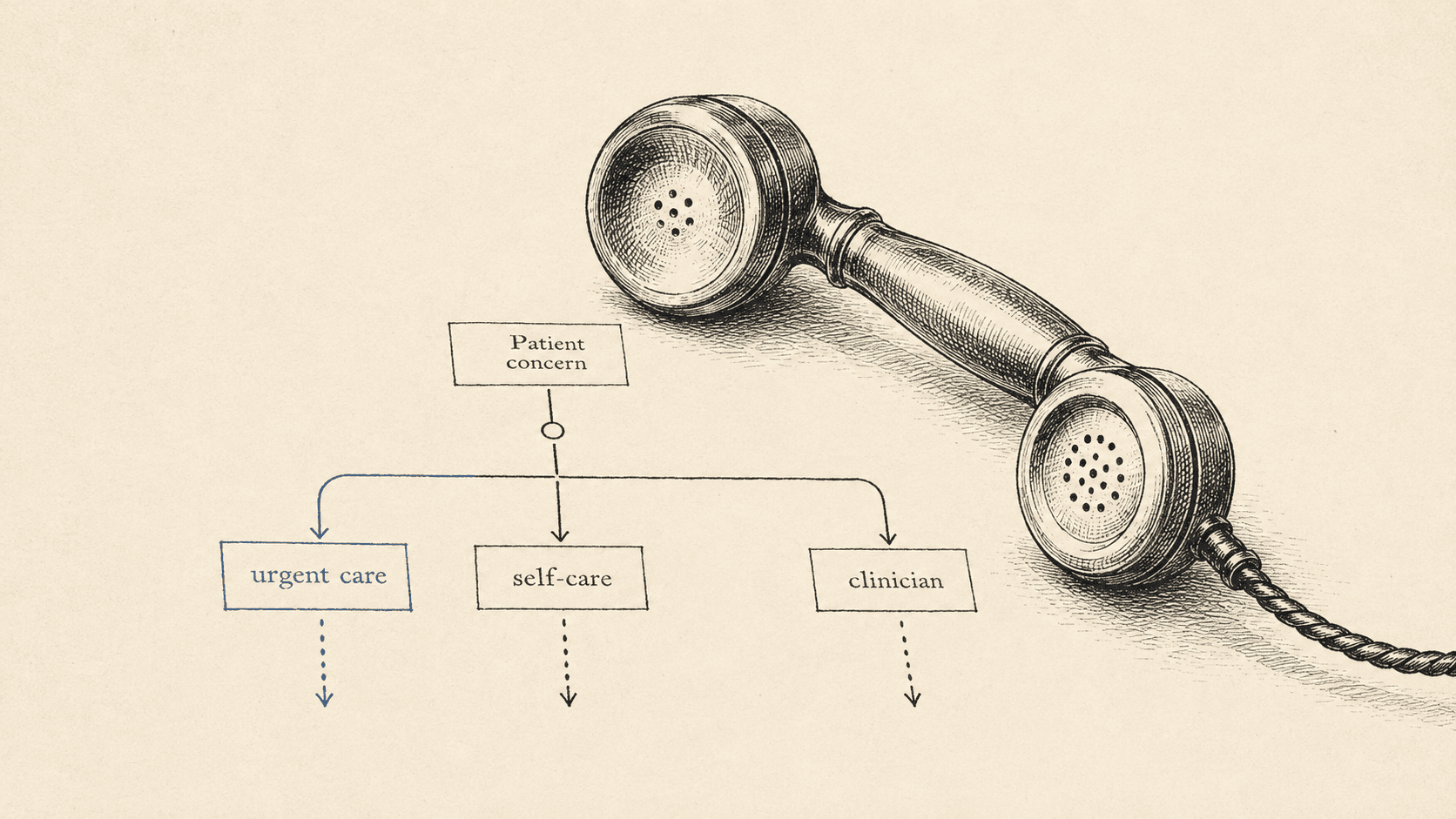

Keona Health
by Keona Health · US
Kara AI call agent answers and books patient calls. Nurse Triage software supports nurses with protocol-based call routing.
On this page
32/100
Editorial rating 2.5 / 5
- Regulatory & Compliance7.8/28.6
Partial attestation (one of HIPAA / SOC2 / BAA)
- Clinical Integration17.8/26
11 EHR integrations
- Evidence Strength0/20
No peer-reviewed coverage
- Vendor & Market3/18
Seed-stage or unfunded
- Sentiment & Transparency2.5/5
Pricing on request, no public amounts
▸ Show all 11 dimensions▾ Hide dimension detail
- FDA clearance0/16
No FDA clearance listed
- HIPAA / SOC2 / BAA8/13
Partial attestation (one of HIPAA / SOC2 / BAA)
- EHR integrations (count)10/14
11 EHR integrations
- Top-3 EHR coverage (Epic / Oracle / Athena)8/8
Epic + Oracle Cerner + Athena
- Bidirectional write-back0/4
No bidirectional write-back documented
- Peer-reviewed papers0/14
No peer-reviewed coverage
- RCT / meta-analysis / systematic review0/6
No RCT, meta-analysis, or systematic review
- Funding & adoption signal3/12
Seed-stage or unfunded
- Years in market0/6
Founded year not recorded
- Pricing transparency3/5
Pricing on request, no public amounts
Kara AI call agent answers and books patient calls. Nurse Triage software supports nurses with protocol-based call routing.
No public price. Kara is priced on call volume rather than per-seat licenses. SOC 2 Type II attested. integrates with Epic, Allscripts, athena Practice (and 8 more).
Evidence record
No FDA decision cited in our research as of November 2, 2026.
- Score computed November 2, 2026, method 1.2.0
- Review written November 2, 2026
MedAI Verdict, Keona Health record, https://medaiverdict.com/tools/keona-health, version November 2, 2026
Bottom line
Keona Health, based in Chapel Hill, North Carolina, sells five products: Kara (AI call answering, chat and web), a staff copilot, Engage (self-service booking), Nurse Triage and CareDesk, a healthcare CRM and contact-center platform. Nurse Triage and Kara are the two relevant to calls. Nurse Triage is decision-support software built on Schmitt-Thompson content that the pages describe as licensed, not as a cleared device. Kara answers and books patient calls. The case studies feature orthopedic groups and a health system, and Keona lists no AI that decides urgency without a nurse.
What does Nurse Triage do?
The software uses Schmitt-Thompson Clinical Content, which Keona describes as "600+ adult and pediatric topics." The version is not stated. Calls queue by acuity, and dispositions run from self-care and same-day visit to urgent care and emergency services. The nurse documents into the chart in one click. The protocols are branching logic for a nurse to work through.
What does Kara do?
Keona says Kara answers 24/7 with unlimited concurrent calls and covers scheduling under provider rules, refills, results, billing and after-hours callbacks. The company summarizes it this way: "AI handles repetition. Humans ensure completion."
When Kara is uncertain, Keona says the case goes to a human with full context in the staff console. The page says 1 in 8 calls is escalated and 90% of edge cases are flagged for nurse review. It gives no clinical detail for urgent calls, and the cardiology page says only that urgent cardiac symptoms "route to the right place." Whether Kara applies the protocols itself or hands calls to nurses who do is not stated.
Keona's own numbers: 99% first-time-correct scheduling, 90% of calls completed, 50% less nurse workload and go-live in 4 to 6 weeks. It also cites "independent audits showing over 95% alignment with human decisions" and names no audit.
Who appears in the case studies?
The case studies cover Golden State Ortho (23 offices, 58 providers), EmergeOrtho, Intermountain Healthcare, Voice Exchange (headline "95% Handoff Completion") and Central Maine Healthcare. Total customers, legal name, ownership, founding year and funding are not stated.
Which systems and controls does it list?
Named EHRs are Epic, Allscripts, athena Practice and athenaNext, ClinicalWorks, Greenway, Cerner, Meditech, Veradigm, Altera and ModMed. RingCentral is the telephony vendor named, and other CTI is described generically. The security page claims SOC 2 Type I and Type II, HIPAA "standards," a Vanta-monitored Trust Center and Azure hosting, with the report on request under an NDA.
The verdict
An orthopedic group or health system that wants fewer routine calls reaching staff has the most to compare, since Kara's tasks are listed and the nurse software is a separate product. Keona says Kara is priced on call volume rather than per seat, and it publishes no figures.
Editorial review last generated November 2, 2026. Synthesized from clinician sentiment, peer-reviewed coverage, and our editorial silo picks. Refined by hand where vendor facts change.
What it costs
All tiers are custom-quoted. The vendor does not publish per-provider list pricing.
| Tier | Monthly | Annual | Notes |
|---|---|---|---|
| Enterprise | Not stated | Not stated | No public price. Kara is priced on call volume rather than per-seat licenses. |
Source: vendor pricing page. Last checked November 2, 2026.
What deploys cleanly
Carries SOC 2 Type II per vendor documentation. Independent attestation review is the buyer's responsibility before clinical deployment. Integrates with 11 EHRs: Epic, Allscripts, athena Practice, athenaNext, ClinicalWorks, Greenway, Cerner, Meditech, Veradigm, Altera, ModMed.
Other patient triage
See the full patient triage ranking
Ada Health
by Ada Health GmbH
Symptom assessment app and care-navigation software for health systems and life-sciences companies.
No public price. The website offers a partner contact route and an app download link.|EU MDR Class IIa (CE 0123) / ISO 27001Infermedica
by Infermedica
Symptom triage, intake and a call-center voice agent for care providers, certified as a Class IIb medical device under EU MDR.
Enterprise (quote).|EU MDR Class IIb / UK MHRA registered
K Health
by K Health
AI-enabled virtual care and patient intake (PatientGPT) for health systems, with 24/7 primary care from board-certified doctors.
$49/mo
Hippocratic AI
by Hippocratic AI
Voice AI agents for patient outreach, scheduling, intake and care management. The vendor says they do not diagnose or prescribe.
No public price or rate card. Third parties report about $9 per agent-hour, billed for active agent time (third-party, not confirmed by the vendor). No self-serve trial found.